


A Brazilian judge on Friday froze about US$300 million in assets owned by a former Rio de Janeiro state governor, five of his aides and French tire maker Michelin over illegal tax breaks.
Judge Neusa Larsen ordered the freeze in the wake of a Rio court decision last month ordering the parties to reimburse the government the amount of illegal tax breaks received beginning in 2010.
At the time, Sergio Cabral was Rio de Janeiro state governor. The tax incentives were given to support the expansion of a Michelin tire plant in the city of Resende, Brazil.
Larsen ordered a freeze of 1.03 billion reais (US$300.9 million) that should have gone to the Brazilian National Treasury, said a statement published on Friday, which did not specify a breakdown for Cabral, the five aides and the company.
The tax breaks for Michelin “violated legal and constitutional precepts ... that caused serious injuries to public coffers,” she said.
The illegal tax advantages “certainly contributed to the financial crisis that is devastating Rio de Janeiro state,” Larsen added.
Michelin said it would appeal.
The company insisted that the incentives were part of Rio’s economic and social development fund, an effort begun in 1997 to spur investment in the state and which is currently under investigation by authorities.
The French company said it has been present in Brazil for decades and that all its activities are conducted “with total integrity and respect for laws and their institutions.”
The court freeze comes after last week’s arrest of Cabral, who governed from 2007 to 2014, on bribe-taking and money laundering charges.
Federal police swooped in on his home on Nov. 17, an offshoot of the sprawling anti-corruption investigation codenamed operation Car Wash.
Cabral, of Brazilian President Michel Temer’s Brazilian Democratic Movement Party, is charged with being part of a group that allegedly embezzled 220 million reais from public works projects, including Rio’s Maracana Stadium.
Authorities are probing alleged embezzlement and bribery by some of the country’s highest-ranking politicians in a scheme that ransacked state oil company Petroleo Brasileiro SA.


Taiwan’s foreign exchange reserves fell below the US$600 billion mark at the end of last month, with the central bank reporting a total of US$596.89 billion — a decline of US$8.6 billion from February — ending a three-month streak of increases. The central bank attributed the drop to a combination of factors such as outflows by foreign institutional investors, currency fluctuations and its own market interventions. “The large-scale outflows disrupted the balance of supply and demand in the foreign exchange market, prompting the central bank to intervene repeatedly by selling US dollars to stabilize the local currency,” Department of Foreign

Intel Corp is joining Elon Musk’s long-shot effort to develop semiconductors for Tesla Inc, Space Exploration Technologies Corp and xAI, marking a surprising twist in the chipmaker’s comeback bid. Intel would help the Terafab project “refactor” the technology in a chip factory, the company said on Tuesday in a post on X, Musk’s social media platform. That is a stage in the development process that typically helps make chips more powerful or reliable. The chipmaker’s shares jumped 4.2 percent to US$52.91 in New York trading on Tuesday. The Terafab project is a grand plan by Musk to eventually manufacture his own chips for
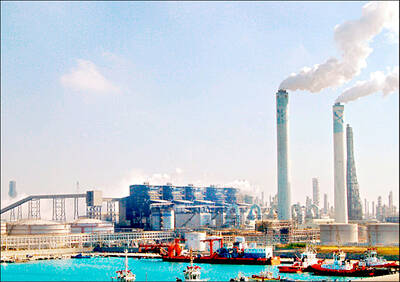
Taiwan Power Co (Taipower, 台電) yesterday said it plans to resume operations at two coal-fired power generators for three months to boost security of electricity supply as liquefied natural gas (LNG) supply risks are running high due to the Middle East conflict. The two coal-fired power generators are at Mailiao Power Plant in Yunlin County’s Mailiao Township (麥寮). The plant, operated by Formosa Plastics Group (台塑集團), supplied electricity to Taipower’s power grid until the end of last year. Taipower’s decision came about one month after Minister of Economic Affairs Kung Ming-hsin (龔明鑫) on March 10 said that the nation had no imminent
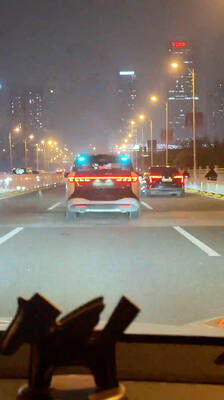
Some robotaxi passengers were left stranded in the middle of fast-moving traffic in a major Chinese city after their driverless vehicles stopped running, according to police and media reports on Wednesday. A preliminary investigation indicates more than 100 robotaxis came to a halt because of a “system malfunction,” police in the city of Wuhan said in a statement, without elaborating. No injuries were reported. One passenger told Chinese media that their robotaxi stopped after turning a corner. An instruction on a screen read: “Driving system malfunction. Staff are expected to arrive in 5 minutes.” After no one showed up, the passenger pushed


 RSS
RSS