


China’s Meitu Inc (美圖) is about to test the price of beauty.
The developer of selfie apps is in talks with investors ahead of its planned initial public offering (IPO) in Hong Kong and is discussing a share sale that would value the company at about US$5 billion, according to people with direct knowledge of the matter.
However, investors are split in their view of that value, with local Chinese funds willing to pay up for what they see as the next big growth opportunity and international investors more skeptical about the company’s potential, the people said.
450 MILLION USERS
Meitu’s apps, with about 450 million monthly active users, help people appear more attractive in photographs by slimming faces, lengthening limbs and even applying make-up.
The Xiamen-based company is convinced these beauty-conscious loyalists can be turned into a lucrative base for e-commerce and advertising opportunities, the people said.
Skeptics say the company still generates 95 percent of its revenue from selling mobile phones and has limited proof it can profit from the popularity of its apps.
Valuation is to be a key area of discussion as Meitu and its investment bankers talks with potential investors from this week through Friday next week, according to terms for the deal obtained by Bloomberg.
The company has said it is aiming to raise about US$750 million, which would make it Hong Kong’s biggest technology listing in about a decade.
WAYS TO MONETIZE
“There should be ways to monetize the user experience,” said Lee Kai-fu (李開復), an early Meitu investor and a non-executive director at the company. “I think there’s excellent progress being made from photos to videos and from a tool to a social network. When those two businesses are believed to be more mature, that would be a great time to add more monetization.”
Meitu has to balance valuation and stability. If it sold most of the IPO shares to the Chinese funds, it could reach US$5 billion or perhaps higher, the people said.
Yet the company is seeking big-name financial institutions as cornerstone investors to limit volatility of the shares when they start trading, they added.
That might push the valuation below US$5 billion, they said.
Meitu’s revenue rose more than threefold to 585.5 million yuan (US$88 million) in the first six months of the year. It had an operating loss of 279 million yuan during the same period, narrowing about 8 percent from a year earlier.
China’s technology market has proven tumultuous for its high-flying stars.
Smartphone company Xiaomi Corp (小米) earned a valuation of US$46 billion in 2014 and climbed to the top of China’s handset market. However, it has since fallen to fourth in the nation and its valuation would likely be lower if it had to raise money today.
Meitu plans to test demand this week from investors in Hong Kong, London, New York and Boston, and will conduct calls with Singapore money managers.
It will meet with select Asian investors next week, according to the terms reviewed by Bloomberg.
The company plans to use about 35 percent of the IPO proceeds to expand its “smart” hardware business, while about 25 percent would go toward strategic investments and acquisitions.
Morgan Stanley, Credit Suisse Group AG and China Merchants Securities Co are joint sponsors of the offering, according to a pre-listing filing with the Hong Kong stock exchange.

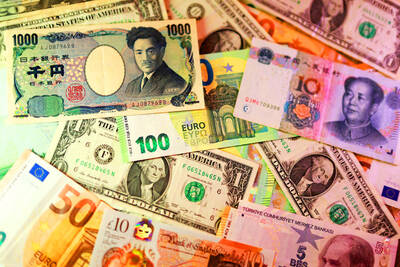
Taiwan’s foreign exchange reserves fell below the US$600 billion mark at the end of last month, with the central bank reporting a total of US$596.89 billion — a decline of US$8.6 billion from February — ending a three-month streak of increases. The central bank attributed the drop to a combination of factors such as outflows by foreign institutional investors, currency fluctuations and its own market interventions. “The large-scale outflows disrupted the balance of supply and demand in the foreign exchange market, prompting the central bank to intervene repeatedly by selling US dollars to stabilize the local currency,” Department of Foreign
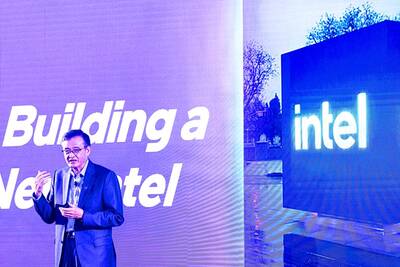
Intel Corp is joining Elon Musk’s long-shot effort to develop semiconductors for Tesla Inc, Space Exploration Technologies Corp and xAI, marking a surprising twist in the chipmaker’s comeback bid. Intel would help the Terafab project “refactor” the technology in a chip factory, the company said on Tuesday in a post on X, Musk’s social media platform. That is a stage in the development process that typically helps make chips more powerful or reliable. The chipmaker’s shares jumped 4.2 percent to US$52.91 in New York trading on Tuesday. The Terafab project is a grand plan by Musk to eventually manufacture his own chips for
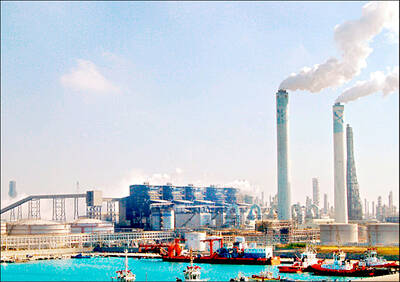
Taiwan Power Co (Taipower, 台電) yesterday said it plans to resume operations at two coal-fired power generators for three months to boost security of electricity supply as liquefied natural gas (LNG) supply risks are running high due to the Middle East conflict. The two coal-fired power generators are at Mailiao Power Plant in Yunlin County’s Mailiao Township (麥寮). The plant, operated by Formosa Plastics Group (台塑集團), supplied electricity to Taipower’s power grid until the end of last year. Taipower’s decision came about one month after Minister of Economic Affairs Kung Ming-hsin (龔明鑫) on March 10 said that the nation had no imminent

Some robotaxi passengers were left stranded in the middle of fast-moving traffic in a major Chinese city after their driverless vehicles stopped running, according to police and media reports on Wednesday. A preliminary investigation indicates more than 100 robotaxis came to a halt because of a “system malfunction,” police in the city of Wuhan said in a statement, without elaborating. No injuries were reported. One passenger told Chinese media that their robotaxi stopped after turning a corner. An instruction on a screen read: “Driving system malfunction. Staff are expected to arrive in 5 minutes.” After no one showed up, the passenger pushed


 RSS
RSS