


Tencent Holdings Ltd’s (騰訊) main movie arm plans to spend at least 2 billion yuan (US$295.31 million) investing in Hollywood and Chinese films in the two years through next year to expand its presence in global entertainment production, according to people familiar with the matter.
Tencent Pictures, which helped finance domestic smash Warcraft and the upcoming Kong: Skull Island, is investing 1 billion yuan this year and more than that next year on a plethora of local and foreign movie projects, the people said, requesting not to be named because the matter is private.
That figure covers only movie financing and does not include the company’s budget for intellectual property and content acquisition, the people said.
China’s largest social media company, which owns dominant messaging services WeChat and QQ, is laying the groundwork for a global entertainment empire.
Founded last year, its film-making arm is beginning to produce movies based on its trove of popular in-house content, adopting a franchise model akin to Walt Disney Co and Marvel Entertainment LLC. The company announced in September that it would bankroll 21 projects based on content including Tibet Code, a fantasy series involving a hunt for ancient treasure. It is beefing up its stable of mobile games by buying Clash of Clans developer Supercell Oy.
Tencent spokeswoman Canny Lo (羅琳) declined to comment on its film financing plans.
Tencent teamed with Legendary Entertainment LLC (傳奇電腦公司) on Warcraft and has announced that it is working with David Goyer, a writer on movies including Batman Begins and The Dark Knight. Legendary and Warner Bros Entertainment Inc are producing Kong: Skull Island.
Tencent is competing with Alibaba Group Holding Ltd (阿里巴巴) to win a share of what could soon become the world’s largest box office. Tencent’s Internet industry rival last month bought a stake in Steven Spielberg’s Amblin Partners LLC, the latest in a spree of deals over the past two years intended to help US studios tap a growing cinema audience.
China has become a focus for Hollywood studios in recent years as the US film market has stagnated. Ticket sales in the Asian country are set to grow 22 percent to US$10.4 billion next year, according to average projections by IHS Markit Ltd and PricewaterhouseCoopers LLP.
The country is also rapidly becoming a well of financing. US studios have been looking to Chinese partners for funding and ways to maximize their revenue from a country that limits the number of foreign firms exhibited annually. That aligns with the ambitions of a coterie of local media houses trying to reach worldwide audiences — and has not been shy about paying for it.
Apart from Tencent and Alibaba — which backed the latest Mission Impossible installment among other projects — billionaire Wang Jianlin’s (王健林) Dalian Wanda Group Co (萬達集團) has also been making its presence felt in the global entertainment industry.
This month, Wanda agreed to pay US$1 billion for Golden Globe Awards producer Dick Clark Productions Inc, adding a US television industry asset to the tycoon’s expanding media empire.
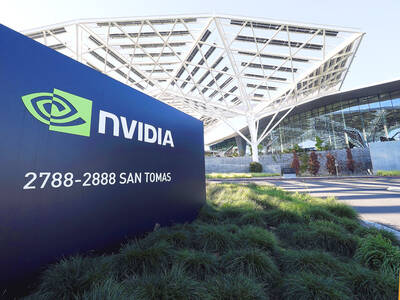
CHIP RACE: Three years of overbroad export controls drove foreign competitors to pursue their own AI chips, and ‘cost US taxpayers billions of dollars,’ Nvidia said China has figured out the US strategy for allowing it to buy Nvidia Corp’s H200s and is rejecting the artificial intelligence (AI) chip in favor of domestically developed semiconductors, White House AI adviser David Sacks said, citing news reports. US President Donald Trump on Monday said that he would allow shipments of Nvidia’s H200 chips to China, part of an administration effort backed by Sacks to challenge Chinese tech champions such as Huawei Technologies Co (華為) by bringing US competition to their home market. On Friday, Sacks signaled that he was uncertain about whether that approach would work. “They’re rejecting our chips,” Sacks

Taiwan’s exports soared 56 percent year-on-year to an all-time high of US$64.05 billion last month, propelled by surging global demand for artificial intelligence (AI), high-performance computing and cloud service infrastructure, the Ministry of Finance said yesterday. Department of Statistics Director-General Beatrice Tsai (蔡美娜) called the figure an unexpected upside surprise, citing a wave of technology orders from overseas customers alongside the usual year-end shopping season for technology products. Growth is likely to remain strong this month, she said, projecting a 40 percent to 45 percent expansion on an annual basis. The outperformance could prompt the Directorate-General of Budget, Accounting and

NATIONAL SECURITY: Intel’s testing of ACM tools despite US government control ‘highlights egregious gaps in US technology protection policies,’ a former official said Chipmaker Intel Corp has tested chipmaking tools this year from a toolmaker with deep roots in China and two overseas units that were targeted by US sanctions, according to two sources with direct knowledge of the matter. Intel, which fended off calls for its CEO’s resignation from US President Donald Trump in August over his alleged ties to China, got the tools from ACM Research Inc, a Fremont, California-based producer of chipmaking equipment. Two of ACM’s units, based in Shanghai and South Korea, were among a number of firms barred last year from receiving US technology over claims they have

BARRIERS: Gudeng’s chairman said it was unlikely that the US could replicate Taiwan’s science parks in Arizona, given its strict immigration policies and cultural differences Gudeng Precision Industrial Co (家登), which supplies wafer pods to the world’s major semiconductor firms, yesterday said it is in no rush to set up production in the US due to high costs. The company supplies its customers through a warehouse in Arizona jointly operated by TSS Holdings Ltd (德鑫控股), a joint holding of Gudeng and 17 Taiwanese firms in the semiconductor supply chain, including specialty plastic compounds producer Nytex Composites Co (耐特) and automated material handling system supplier Symtek Automation Asia Co (迅得). While the company has long been exploring the feasibility of setting up production in the US to address


 RSS
RSS