


Japanese brewery Ozawa Shuzo hums with activity as boxed bottles of sake are loaded onto trucks. However, due to a shrinking domestic market, more of it is bound for burgeoning overseas markets where the centuries-old drink is all the rage.
The small establishment has recently drawn interest from potential new customers in Thailand, Vietnam and South Korea, on top of a coterie of existing ones in the US, France and Singapore.
Sake, a fermented drink made of rice, has hit hard times in its homeland amid changing tastes, but manufacturers are welcoming growing popularity overseas.
A steady flow of tourists visiting Ozawa Shuzo could be a sign of things to come.
“We cannot easily go abroad to explain what sake is all about, so by doing this [tours] at our brewery I hope visitors will get a better understanding of its value,” Junichiro Ozawa, president of 300-year-old Ozawa Shuzo, said at his brewery on Tokyo’s mountainous western fringe.
Underlining sake’s increasing global renown, the influential guide Robert Parker’s Wine Advocate this month issued ratings for the beverage.
Sake exports have doubled in the past decade to about 18,180 kiloliters, according to Japanese government figures, with the US the largest single foreign market, accounting for about one-quarter of the total.
Impressive growth, but that is just 3 percent of total shipments, suggesting plenty of room for further expansion abroad.
Major export destinations are Taiwan, the US, Hong Kong, China and South Korea, according to the Japanese Ministry of Agriculture, Forestry and Fisheries, making up 70 percent of the total.
Shipments to the fastest-growing market, China, shot up more than threefold between 2008 and last year, while they more than doubled to South Korea during that time.
In Hong Kong, where Japanese food and culture are popular, sake has been appearing on more and more restaurant menus in recent years.
“Compared to when I first started out in the business, people have increasingly become more interested in appreciating and learning more about sake,” said Stephen Tse, who manages a Japanese restaurant in Tai Hang, an upscale neighborhood in Hong Kong.
Authorities have actively pushed sake overseas, part of a “Cool Japan” strategy aimed at highlighting the country’s soft power, along with manga comic books and Japanese food.
“Exports are increasing thanks largely to the soaring popularity of Japanese cuisine overseas,” said an official familiar with the sake industry at the Japanese National Tax Agency.
Government data showed about 89,000 Japanese restaurants existed outside of Japan as of July last year, up sharply from 55,000 just two years before.
Japanese Prime Minister Shinzo Abe is more than happy to serve as promoter-in-chief for sake.
In 2014, he presented bottles of the brew from his home region to US President Barack Obama and in 2013 to Russian President Vladimir Putin.
Historical references to sake date to the eighth century, and the drink has played an important role in seasonal festivals.
Drinking it was believed to drive away impurities and evil spirits, according to an industry association.
However, despite its long pedigree and status as national alcohol, sake’s popularity in Japan has been waning as consumer tastes increasingly turn to Western beverages, including whiskey and wine.
Domestically, sake consumption dropped to about 557,000 kiloliters in 2014, compared with 746,000 kiloliters a decade earlier, the government said.
Younger Japanese see the drink as decidedly uncool.
“We have this image that sake is a drink for older men,” said Shinobu Yashiro, who was accompanying her mother on a visit to Ozawa Shuzo.
Rapidly aging Japan has no shortage of old men, but many have cut back on imbibing for health reasons, while companies trim the entertainment budgets that once financed all-night drinking sessions.
Sake sommeliers will be key to boosting sales overseas, said Haruyuki Hioki, president of the Sake Service Institute International.
The group has certified about 1,000 international sommeliers.
“Training people who can explain sake is key,” Hioki said. “Wine consumption is growing so much in Japan thanks to sommeliers and lots of media coverage, but many people overseas still don’t know much about sake.”

NEW IMPORTS: Car dealer PG Union Corp said it would consider introducing US-made models such as the Jeep Grand Cherokee and Stellantis’ RAM 1500 to Taiwan Tesla Taiwan yesterday said that it does not plan to cut its car prices in the wake of Washington and Taipei signing the Agreement on Reciprocal Trade on Thursday to eliminate tariffs on US-made cars. On the other hand, Mercedes-Benz Taiwan said it is planning to lower the price of its five models imported from the US after the zero tariff comes into effect. Tesla in a statement said it has no plan to adjust the prices of the US-made Model 3, Model S and Model X as tariffs are not the only factor the automaker uses to determine pricing policies. Tesla said

OpenAI has warned US lawmakers that its Chinese rival DeepSeek (深度求索) is using unfair and increasingly sophisticated methods to extract results from leading US artificial intelligence (AI) models to train the next generation of its breakthrough R1 chatbot, a memo reviewed by Bloomberg News showed. In the memo, sent on Thursday to the US House of Representatives Select Committee on China, OpenAI said that DeepSeek had used so-called distillation techniques as part of “ongoing efforts to free-ride on the capabilities developed by OpenAI and other US frontier labs.” The company said it had detected “new, obfuscated methods” designed to evade OpenAI’s defenses
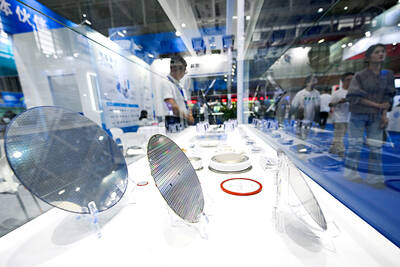
China’s top chipmaker has warned that breakaway spending on artificial intelligence (AI) chips is bringing forward years of future demand, raising the risk that some data centers could sit idle. “Companies would love to build 10 years’ worth of data center capacity within one or two years,” Semiconductor Manufacturing International Corp (SMIC, 中芯) cochief executive officer Zhao Haijun (趙海軍) said yesterday on a call with analysts. “As for what exactly these data centers will do, that hasn’t been fully thought through.” Moody’s Ratings projects that AI-related infrastructure investment would exceed US$3 trillion over the next five years, as developers pour eye-watering sums
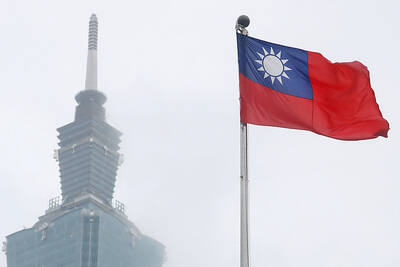
Bank of America Corp nearly doubled its forecast for the nation’s economic growth this year, adding to a slew of upgrades even after a rip-roaring last year propelled by demand for artificial intelligence (AI). The firm lifted its projection to 8 percent from 4.5 percent on “relentless global demand” for the hardware that Taiwanese companies make, according to a note dated yesterday by analysts including Xiaoqing Pi (皮曉青). Taiwan’s GDP expanded 8.63 percent last year, the fastest pace since 2010. The increase “reflects our sustained optimism over Taiwan’s technology driven expansion and is reinforced by several recent developments,” including a more stable currency,


 RSS
RSS