


Game developer XPEC Entertainment Inc (樂陞科技) yesterday said that it would take legal recourse against CTBC Bank Co (中國信託銀行) over alleged shortcomings in overseeing a deal that collapsed, sending its share price tumbling.
The announcement reverses XPEC’s earlier decision to not press charges against the bank in the face of a protracted legal battle as financial regulators and prosecutors investigate suspected wrongdoing in the failed tender offer from Bai Chi Gan Tou Digital Entertainment Co (百尺竿頭) of Japan.
“The company will press charges against CTBC Bank in the event that authorities deem the bank responsible for irregularities or oversight, in a bid to preserve the interests of our shareholders,” XPEC said in a statement.
Serving as the deal’s depository bank, CTBC Bank on Aug. 22 filed a request with local regulators to extend Bai Chi’s NT$4.86 billion (US$154 million) acquisition of a 25.71 percent stake in XPEC until Aug. 31, after the Japanese firm missed an Aug. 19 deadline to provide the required funds.
If the bank was untruthful, it would imply that it had helped mislead regulators, including the Financial Supervisory Commission and the Investment Bureau, as well as investors, XPEC said in its statement.
Investors who bought shares in XPEC have said that CTBC Bank, to protect its own reputation, must furnish obligations to those affected in lieu of Bai Chi and seek reparations on its own.
XPEC shares yesterday rallied for the second consecutive trading session, rising by the daily 10 percent limit to NT$44.65 as the firm began a share repurchasing program.
In related news, financial regulators, law firms, academics and local bourses yesterday hosted a seminar on the rules governing open tender offers.
Although participants agreed that funding sources should be the most vital aspect of tender offer applications, followed by adequate deposit requirements, they said that such measures are not in line with international norms and would be difficult to implement without hampering compliance of international standards and the nation’s economic development.
Experts said that buyers should seek certification by third-party financial institutions, such as banks, on their ability to meet obligations.
Regarding suggestions that the tender offer period be changed, experts said that no changes should be allowed, barring exceedingly compelling circumstances, and that investors should have the chance to pull out of the deal in the event of time extensions should they choose to do so.
Seminar participants also said that the responsibilities and jurisdiction of independent board of director members should be reassessed to improve corporate governance.
In addition, material information disclosures must be shored up to improve transparency, they said.
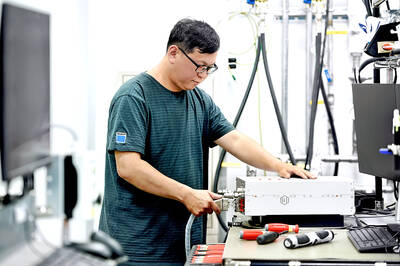
SEMICONDUCTORS: The German laser and plasma generator company will expand its local services as its specialized offerings support Taiwan’s semiconductor industries Trumpf SE + Co KG, a global leader in supplying laser technology and plasma generators used in chip production, is expanding its investments in Taiwan in an effort to deeply integrate into the global semiconductor supply chain in the pursuit of growth. The company, headquartered in Ditzingen, Germany, has invested significantly in a newly inaugurated regional technical center for plasma generators in Taoyuan, its latest expansion in Taiwan after being engaged in various industries for more than 25 years. The center, the first of its kind Trumpf built outside Germany, aims to serve customers from Taiwan, Japan, Southeast Asia and South Korea,

Gasoline and diesel prices at domestic fuel stations are to fall NT$0.2 per liter this week, down for a second consecutive week, CPC Corp, Taiwan (台灣中油) and Formosa Petrochemical Corp (台塑石化) announced yesterday. Effective today, gasoline prices at CPC and Formosa stations are to drop to NT$26.4, NT$27.9 and NT$29.9 per liter for 92, 95 and 98-octane unleaded gasoline respectively, the companies said in separate statements. The price of premium diesel is to fall to NT$24.8 per liter at CPC stations and NT$24.6 at Formosa pumps, they said. The price adjustments came even as international crude oil prices rose last week, as traders
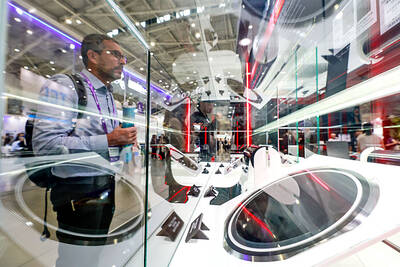
SIZE MATTERS: TSMC started phasing out 8-inch wafer production last year, while Samsung is more aggressively retiring 8-inch capacity, TrendForce said Chipmakers are expected to raise prices of 8-inch wafers by up to 20 percent this year on concern over supply constraints as major contract chipmakers Taiwan Semiconductor Manufacturing Co (TSMC, 台積電) and Samsung Electronics Co gradually retire less advanced wafer capacity, TrendForce Corp (集邦科技) said yesterday. It is the first significant across-the-board price hike since a global semiconductor correction in 2023, the Taipei-based market researcher said in a report. Global 8-inch wafer capacity slid 0.3 percent year-on-year last year, although 8-inch wafer prices still hovered at relatively stable levels throughout the year, TrendForce said. The downward trend is expected to continue this year,
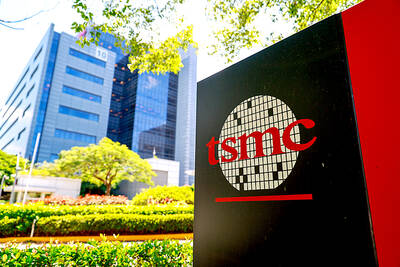
Taiwan Semiconductor Manufacturing Co (TSMC, 台積電), which supplies advanced chips to Nvidia Corp and Apple Inc, yesterday reported NT$1.046 trillion (US$33.1 billion) in revenue for last quarter, driven by constantly strong demand for artificial intelligence (AI) chips, falling in the upper end of its forecast. Based on TSMC’s financial guidance, revenue would expand about 22 percent sequentially to the range from US$32.2 billion to US$33.4 billion during the final quarter of 2024, it told investors in October last year. Last year in total, revenue jumped 31.61 percent to NT$3.81 trillion, compared with NT$2.89 trillion generated in the year before, according to


 RSS
RSS