


Newly appointed Mega Financial Holding Co (兆豐金控) chairman Michael Chang (張兆順) yesterday said that his first task would be to address the public criticism that has beset the state-run company since it ran into regulatory problems in the US.
Last month, Mega International Commercial Bank (兆豐銀行), the flagship bank of Mega Financial was fined US$180 million by the New York State Department of Financial Services (DFS) for breaching rules against money laundering.
The incident stemmed from a compliance failure, Chang said, adding that the bank was not involved in money laundering activities.
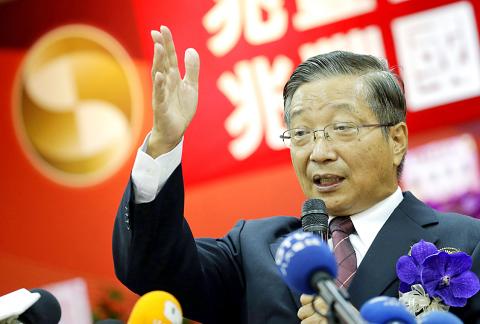
Photo: EPA
“There are stark discrepancies between the views of the public and the management team that must be addressed,” Chang said during a handover ceremony in Taipei.
The company would look into what happened and produce an explanation that the public would find satisfactory, and also remedy the firm’s shortcomings on internal oversight measures, Chang said.
He said that the heavy regulatory penalty resulted from the company’s inaction between March last year — when the DFS notified the bank it was looking into its activities — and Aug. 19, when it issued the fine against Mega Bank.
“US regulators do not have a zero-tolerance policy regarding compliance failures, and 95 percent of cases have not resulted in punitive fines,” Chang said.
Mega Financial would try to explain why the company had forgone the opportunity to communicate and appease US regulators, he said.
The company would release its findings to the public within the confines of Article 48 of the Banking Act (銀行法), which stipulates that banks must preserve confidentiality of client information, barring orders by judicial bodies or instances involving significant delinquent debt write-offs involving sums greater than NT$50 million (US$1.58 million).
Regarding allegations that Mega Bank laundered money on behalf of the Chinese Nationalist Party (KMT), Chang said that he has not yet familiarized himself with ongoing investigations.
He also said that he would look into allegations of questionable loans made by state-run Mega Bank to the KMT, a reference to Democratic Progressive Party (DPP) caucus whip Wu Ping-jui’s (吳秉叡) claim that the bank had lent US$50 million to KMT-run Central Investment Co (中央投資公司).
“I am here to solve problems so that the company can move past its current difficulties,” Chang said, adding that his appointment was not politically motivated, and that he would remain neutral even if fallout from the scandal extends to the KMT’s ill-gotten party assets.
“Without a solid foundation of regulatory compliance and internal controls, the bank would be building profits on quicksand,” Chang said.
On Thursday, Taiwan Ratings Corp (中華信評) said changes in the management of Mega Financial would not impact its operating capacity immediately, adding that the company has enjoyed stable operations for many years, and its business would not go astray simply because of a change in the board of directors.
Shares in Mega Financial gained 0.71 percent to close at NT$21.4 yesterday, rising for the first time following four consecutive sessions of declines.
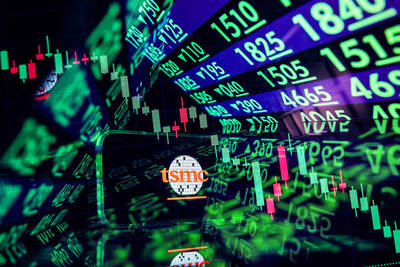
Taiwan Semiconductor Manufacturing Co (TSMC, 台積電) last week recorded an increase in the number of shareholders to the highest in almost eight months, despite its share price falling 3.38 percent from the previous week, Taiwan Stock Exchange data released on Saturday showed. As of Friday, TSMC had 1.88 million shareholders, the most since the week of April 25 and an increase of 31,870 from the previous week, the data showed. The number of shareholders jumped despite a drop of NT$50 (US$1.59), or 3.38 percent, in TSMC’s share price from a week earlier to NT$1,430, as investors took profits from their earlier gains
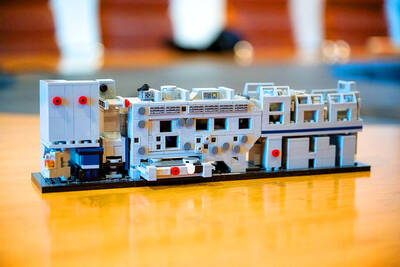
In a high-security Shenzhen laboratory, Chinese scientists have built what Washington has spent years trying to prevent: a prototype of a machine capable of producing the cutting-edge semiconductor chips that power artificial intelligence (AI), smartphones and weapons central to Western military dominance, Reuters has learned. Completed early this year and undergoing testing, the prototype fills nearly an entire factory floor. It was built by a team of former engineers from Dutch semiconductor giant ASML who reverse-engineered the company’s extreme ultraviolet lithography (EUV) machines, according to two people with knowledge of the project. EUV machines sit at the heart of a technological Cold
Taiwan’s long-term economic competitiveness will hinge not only on national champions like Taiwan Semiconductor Manufacturing Co. (TSMC, 台積電) but also on the widespread adoption of artificial intelligence (AI) and other emerging technologies, a US-based scholar has said. At a lecture in Taipei on Tuesday, Jeffrey Ding, assistant professor of political science at the George Washington University and author of "Technology and the Rise of Great Powers," argued that historical experience shows that general-purpose technologies (GPTs) — such as electricity, computers and now AI — shape long-term economic advantages through their diffusion across the broader economy. "What really matters is not who pioneers
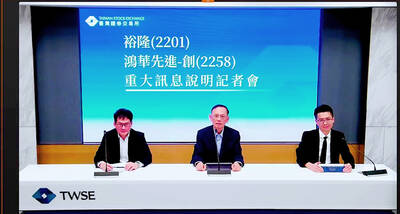
TAIWAN VALUE CHAIN: Foxtron is to fully own Luxgen following the transaction and it plans to launch a new electric model, the Foxtron Bria, in Taiwan next year Yulon Motor Co (裕隆汽車) yesterday said that its board of directors approved the disposal of its electric vehicle (EV) unit, Luxgen Motor Co (納智捷汽車), to Foxtron Vehicle Technologies Co (鴻華先進) for NT$787.6 million (US$24.98 million). Foxtron, a half-half joint venture between Yulon affiliate Hua-Chuang Automobile Information Technical Center Co (華創車電) and Hon Hai Precision Industry Co (鴻海精密), expects to wrap up the deal in the first quarter of next year. Foxtron would fully own Luxgen following the transaction, including five car distributing companies, outlets and all employees. The deal is subject to the approval of the Fair Trade Commission, Foxtron said. “Foxtron will be


 RSS
RSS