


The nation’s jobless rate rose to 4.02 percent last month, as fresh graduates and an economic slowdown raised the gauge to the highest level in about two years, the Directorate-General of Budget, Accounting and Statistics (DGBAS) said yesterday.
The figures represent a new high since August 2014 after gaining 0.1 percentage points from 3.92 percent in June and picked up 0.2 percentage points from a year earlier, the agency said.
“The soft economy has weighed on the job market since the second half of last year, but the situation did not deteriorate much last month,” DGBAS senior executive officer Pan Ning-hsin (潘寧馨) said, adding that the jobless rate after seasonal adjustments stood unchanged at 3.96 percent.
The unemployed population increased by 13,000 people to 472,000 people last month from a month earlier, with 12,000 first-time job seekers and 1,000 people who lost their seasonal or temporary jobs, the report said.
People who lost their jobs due to businesses downsizing and those who resigned both dropped by 1,000, it added.
For the first seven months of this year, the unemployment rate averaged at 3.91 percent, according to the report.
A lagging economic barometer, the job market has yet to benefit from the sluggish recovery, though exports, industrial output and other indicators have returned to positive territory.
Unemployment was highest among people who have university degrees or higher at 5 percent, followed by people with college diplomas at 4.35 percent, the report showed.
The jobless rate stood at 3.98 percent for people with high-school education and at 3.15 percent for people with junior-high school or lower education, it said.
By demographic breakdown, people in the 15-to-24 age bracket had the highest unemployment rate at 12.45 percent, followed by the 25-to-44 group at 4.1 percent, the report said.
People aged between 45 and 64 had the lowest unemployment rate at 2.3 percent.
Monthly take-home wages averaged NT$39,151 in June, an increase of 0.82 percent from the previous year, the DGBAS said in a separate report.
Average monthly wages, including bonuses and other compensations, was NT$44,998 in June, an increase of 0.94 percent from a year earlier, the report showed.
For the first six months of the year, take-home wages rose 1.45 percent to NT$39,106 per month, while average salaries fell 0.06 percent to NT$52,186, due to lower bonuses and performance compensations, the report said.
Inflation of 1.55 percent in the first six months of the year eroded real take-home and average wages by 0.1 percent and 1.58 percent respectively, the report said.

Taiwan Semiconductor Manufacturing Co (TSMC, 台積電) last week recorded an increase in the number of shareholders to the highest in almost eight months, despite its share price falling 3.38 percent from the previous week, Taiwan Stock Exchange data released on Saturday showed. As of Friday, TSMC had 1.88 million shareholders, the most since the week of April 25 and an increase of 31,870 from the previous week, the data showed. The number of shareholders jumped despite a drop of NT$50 (US$1.59), or 3.38 percent, in TSMC’s share price from a week earlier to NT$1,430, as investors took profits from their earlier gains

In a high-security Shenzhen laboratory, Chinese scientists have built what Washington has spent years trying to prevent: a prototype of a machine capable of producing the cutting-edge semiconductor chips that power artificial intelligence (AI), smartphones and weapons central to Western military dominance, Reuters has learned. Completed early this year and undergoing testing, the prototype fills nearly an entire factory floor. It was built by a team of former engineers from Dutch semiconductor giant ASML who reverse-engineered the company’s extreme ultraviolet lithography (EUV) machines, according to two people with knowledge of the project. EUV machines sit at the heart of a technological Cold
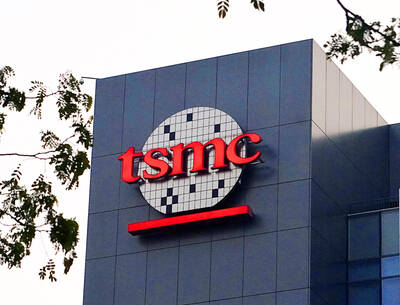
Taiwan’s long-term economic competitiveness will hinge not only on national champions like Taiwan Semiconductor Manufacturing Co. (TSMC, 台積電) but also on the widespread adoption of artificial intelligence (AI) and other emerging technologies, a US-based scholar has said. At a lecture in Taipei on Tuesday, Jeffrey Ding, assistant professor of political science at the George Washington University and author of "Technology and the Rise of Great Powers," argued that historical experience shows that general-purpose technologies (GPTs) — such as electricity, computers and now AI — shape long-term economic advantages through their diffusion across the broader economy. "What really matters is not who pioneers
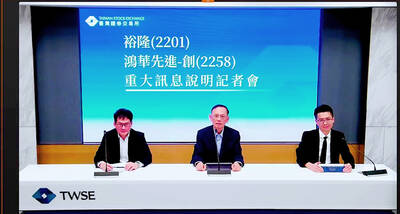
TAIWAN VALUE CHAIN: Foxtron is to fully own Luxgen following the transaction and it plans to launch a new electric model, the Foxtron Bria, in Taiwan next year Yulon Motor Co (裕隆汽車) yesterday said that its board of directors approved the disposal of its electric vehicle (EV) unit, Luxgen Motor Co (納智捷汽車), to Foxtron Vehicle Technologies Co (鴻華先進) for NT$787.6 million (US$24.98 million). Foxtron, a half-half joint venture between Yulon affiliate Hua-Chuang Automobile Information Technical Center Co (華創車電) and Hon Hai Precision Industry Co (鴻海精密), expects to wrap up the deal in the first quarter of next year. Foxtron would fully own Luxgen following the transaction, including five car distributing companies, outlets and all employees. The deal is subject to the approval of the Fair Trade Commission, Foxtron said. “Foxtron will be


 RSS
RSS