


HTC Corp (宏達電) yesterday said that it has teamed up with a number of companies in Japan to promote sales of its first virtual-reality (VR) headset, the Vive.
The company said it would work with distributors, as well as hardware and software developers in Akihabara, a well-known electronics shopping district in Tokyo, in its bid to enter the Japanese VR market.
They include VR developers Epic Games Japan and Unity Technologies Japan, game software supplier Namco Bandai, VR content investor Colopl Next, gaming Web site operator Gree, video game developer Square Enix, semiconductor developer AMD Japan and distributor Degica, HTC said.
Degica told reporters that it hopes its cooperation with HTC will provide consumers with opportunities to experience the Vive, particularly among families in Japan.
The Vive launched for sale in retail stores in Japan for ¥99,815 (US$987) and the headset has been bundled with certain PC models at ¥149,800, the company said.
The Vive is equipped with tracked controllers that allow wearers to inspect objects from every angle and interact with their surroundings.
HTC said the Vive has been well-received in Japan since online sales started in April.
Starting yesterday, Japanese consumers were able to make reservations at 36 authorized stores to test a VR headset, the company said.
So far, SteamVR, a content platform under Valve Corp, has provided more than 250 exclusive titles for the Vive.
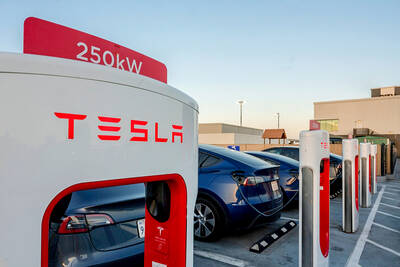
NEW IMPORTS: Car dealer PG Union Corp said it would consider introducing US-made models such as the Jeep Grand Cherokee and Stellantis’ RAM 1500 to Taiwan Tesla Taiwan yesterday said that it does not plan to cut its car prices in the wake of Washington and Taipei signing the Agreement on Reciprocal Trade on Thursday to eliminate tariffs on US-made cars. On the other hand, Mercedes-Benz Taiwan said it is planning to lower the price of its five models imported from the US after the zero tariff comes into effect. Tesla in a statement said it has no plan to adjust the prices of the US-made Model 3, Model S and Model X as tariffs are not the only factor the automaker uses to determine pricing policies. Tesla said

OpenAI has warned US lawmakers that its Chinese rival DeepSeek (深度求索) is using unfair and increasingly sophisticated methods to extract results from leading US artificial intelligence (AI) models to train the next generation of its breakthrough R1 chatbot, a memo reviewed by Bloomberg News showed. In the memo, sent on Thursday to the US House of Representatives Select Committee on China, OpenAI said that DeepSeek had used so-called distillation techniques as part of “ongoing efforts to free-ride on the capabilities developed by OpenAI and other US frontier labs.” The company said it had detected “new, obfuscated methods” designed to evade OpenAI’s defenses
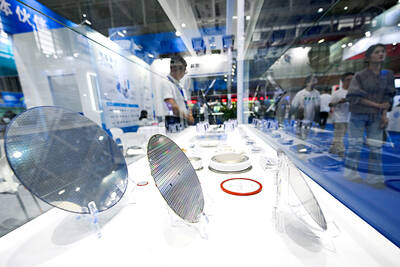
China’s top chipmaker has warned that breakaway spending on artificial intelligence (AI) chips is bringing forward years of future demand, raising the risk that some data centers could sit idle. “Companies would love to build 10 years’ worth of data center capacity within one or two years,” Semiconductor Manufacturing International Corp (SMIC, 中芯) cochief executive officer Zhao Haijun (趙海軍) said yesterday on a call with analysts. “As for what exactly these data centers will do, that hasn’t been fully thought through.” Moody’s Ratings projects that AI-related infrastructure investment would exceed US$3 trillion over the next five years, as developers pour eye-watering sums
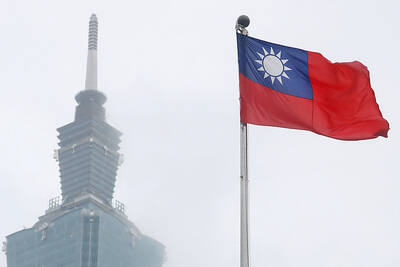
Bank of America Corp nearly doubled its forecast for the nation’s economic growth this year, adding to a slew of upgrades even after a rip-roaring last year propelled by demand for artificial intelligence (AI). The firm lifted its projection to 8 percent from 4.5 percent on “relentless global demand” for the hardware that Taiwanese companies make, according to a note dated yesterday by analysts including Xiaoqing Pi (皮曉青). Taiwan’s GDP expanded 8.63 percent last year, the fastest pace since 2010. The increase “reflects our sustained optimism over Taiwan’s technology driven expansion and is reinforced by several recent developments,” including a more stable currency,


 RSS
RSS