


A German billionaire family has been on a breakfast buying binge. The newest item on its plate: doughnuts.
The board of Krispy Kreme, best known for its warm glazed doughnuts, agreed to the company’s acquisition by JAB Holding Co and a minority investor, BDT Capital Partners, for US$1.35 billion, it announced on Monday.
JAB is the investment arm of the Reimann family, the heirs to the German consumer goods conglomerate Joh. A. Benckiser.
Its subsidiary, JAB Beech, plans to add the company’s doughnuts to its other quick-serve US breakfast staples, including several coffee chains and a bagel company.
In recent years, JAB has acquired brand names such as the parent company of Einstein Brothers Bagels, Peet’s Coffee & Tea, Stumptown Coffee Roasters and Caribou Coffee. In December last year, JAB acquired Keurig Green Mountain for US$13.9 billion, its biggest bet yet in building its coffee empire.
Krispy Kreme, founded almost 80 years ago, is most famous for its glazed doughnut, but it also sells a wide assortment of other flavors, such as lemon-filled and sour cream. More recently, the company has made coffee a priority with new offerings and promotions.
Coffee also happens to be the key ingredient in JAB’s other recent acquisitions.
JAB’s portfolio makes it the “near-ideal candidate” to control Krispy Kreme, Stephens analyst Will Slabaugh said in a research note on Monday.
JAB would be able to improve Krispy Kreme’s operations, add food and beverage options, and help it expand nationally and internationally, Slabaugh said.
“We are thrilled to have such an iconic brand as Krispy Kreme joining the JAB portfolio,” Peter Harf, senior partner at JAB, said in the statement.
“This is yet another example of our commitment to investing in extraordinary brands with significant growth prospects,” Harf said.
Breakfast has become more lucrative for fast-food restaurants in recent years. All-day breakfast at McDonald’s contributed to a 35 percent increase in its first quarter profit. Other chains, such as Wendy’s and Taco Bell, have also focused more intently on the first meal of the day.
The attention created more competition for customers in the morning hours, a time when Krispy Kreme already had fierce competition from Starbucks, Dunkin’ Donuts and Tim Horton’s.
JAB plans to acquire Krispy Kreme for US$21 a share in cash, a premium of more than 25 percent from the closing price on Friday last week.
Krispy Kreme has almost no debt. Its shares jumped in Monday trading to just shy of the buyout offer price.
BDT Capital Partners, the private equity firm led by Byron Trott, former vice chairman of investment banking at Goldman Sachs, is investing alongside JAB and is to hold a minority stake.
As part of the agreement, Krispy Kreme is to remain independently operated from its headquarters in Winston-Salem, North Carolina, and will no longer trade on the public markets. The transaction, which needs shareholder approval, is expected to close in the third quarter.
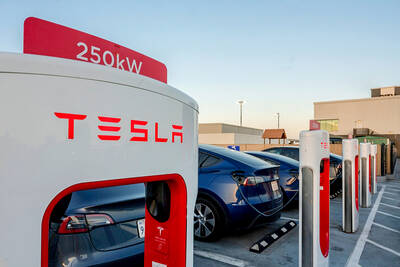
NEW IMPORTS: Car dealer PG Union Corp said it would consider introducing US-made models such as the Jeep Grand Cherokee and Stellantis’ RAM 1500 to Taiwan Tesla Taiwan yesterday said that it does not plan to cut its car prices in the wake of Washington and Taipei signing the Agreement on Reciprocal Trade on Thursday to eliminate tariffs on US-made cars. On the other hand, Mercedes-Benz Taiwan said it is planning to lower the price of its five models imported from the US after the zero tariff comes into effect. Tesla in a statement said it has no plan to adjust the prices of the US-made Model 3, Model S and Model X as tariffs are not the only factor the automaker uses to determine pricing policies. Tesla said
OpenAI has warned US lawmakers that its Chinese rival DeepSeek (深度求索) is using unfair and increasingly sophisticated methods to extract results from leading US artificial intelligence (AI) models to train the next generation of its breakthrough R1 chatbot, a memo reviewed by Bloomberg News showed. In the memo, sent on Thursday to the US House of Representatives Select Committee on China, OpenAI said that DeepSeek had used so-called distillation techniques as part of “ongoing efforts to free-ride on the capabilities developed by OpenAI and other US frontier labs.” The company said it had detected “new, obfuscated methods” designed to evade OpenAI’s defenses
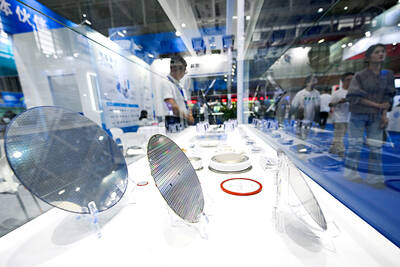
China’s top chipmaker has warned that breakaway spending on artificial intelligence (AI) chips is bringing forward years of future demand, raising the risk that some data centers could sit idle. “Companies would love to build 10 years’ worth of data center capacity within one or two years,” Semiconductor Manufacturing International Corp (SMIC, 中芯) cochief executive officer Zhao Haijun (趙海軍) said yesterday on a call with analysts. “As for what exactly these data centers will do, that hasn’t been fully thought through.” Moody’s Ratings projects that AI-related infrastructure investment would exceed US$3 trillion over the next five years, as developers pour eye-watering sums
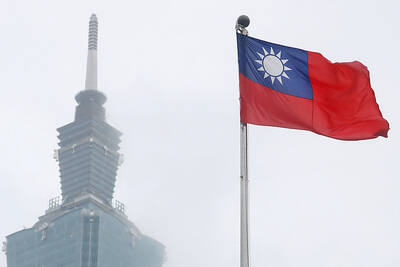
Bank of America Corp nearly doubled its forecast for the nation’s economic growth this year, adding to a slew of upgrades even after a rip-roaring last year propelled by demand for artificial intelligence (AI). The firm lifted its projection to 8 percent from 4.5 percent on “relentless global demand” for the hardware that Taiwanese companies make, according to a note dated yesterday by analysts including Xiaoqing Pi (皮曉青). Taiwan’s GDP expanded 8.63 percent last year, the fastest pace since 2010. The increase “reflects our sustained optimism over Taiwan’s technology driven expansion and is reinforced by several recent developments,” including a more stable currency,


 RSS
RSS