


Australia’s central bank yesterday cut its benchmark interest rate to a record low 1.75 percent as it responded to a low outlook for inflation.
The Reserve Bank of Australia board decided to cut the cash rate by 0.25 percentage points from its previous low of 2 percent. The board last cut rates about one year ago.
The move came less than one week after the Australian Bureau of Statistics released figures showing inflation had turned negative in the first quarter, with prices contracting 0.2 percent when compared with the fourth quarter of last year. Annual inflation remained positive, at 1.3 percent.
“Inflation has been quite low for some time and recent data were unexpectedly low,” Bank of Australia Governor Glenn Stevens said in a statement. “While the quarterly data contain some temporary factors, these results, together with ongoing very subdued growth in labor costs and very low cost pressures elsewhere in the world, point to a lower outlook for inflation than previously forecast.”
Economists had been divided on whether the central bank would hold rates or cut them. The bank’s move prompted a fall in the Australian dollar of more than 1 percent against the US dollar.
Stevens said the nation’s terms-of-trade remained much lower than in recent years. He said that while commodity prices had firmed from recent lows, the improvement followed substantial declines over the past couple of years.
The bank’s announcement came just hours before Australian Treasurer Scott Morrison was due to release his first budget. Morrison indicated the budget would contain tax cuts for small and medium-sized businesses, designed to increase economic growth.
The center-right coalition government is hoping for a positive public response to the budget, with general elections expected to be held on July 2.
Australia managed to avoid a recession during the global financial crisis of 2008 thanks to a decade-long mining boom. However, with economic growth slowing in China, Australia’s largest export market, the prices for key commodities such as iron ore and coal have dropped.
Stevens said in his statement the economy is continuing to rebalance following the mining boom, adding that economic growth picked up in the second half of last year and the labor market had improved.
Economic growth is continuing this year, although probably at a more moderate pace, while recent labor market indicators have been mixed, he added.
Australia’s unemployment rate is 5.8 percent.
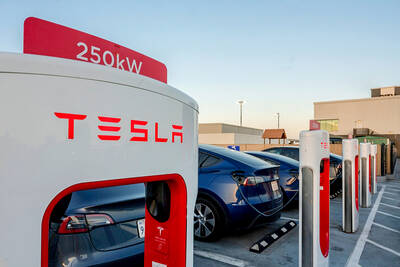
NEW IMPORTS: Car dealer PG Union Corp said it would consider introducing US-made models such as the Jeep Grand Cherokee and Stellantis’ RAM 1500 to Taiwan Tesla Taiwan yesterday said that it does not plan to cut its car prices in the wake of Washington and Taipei signing the Agreement on Reciprocal Trade on Thursday to eliminate tariffs on US-made cars. On the other hand, Mercedes-Benz Taiwan said it is planning to lower the price of its five models imported from the US after the zero tariff comes into effect. Tesla in a statement said it has no plan to adjust the prices of the US-made Model 3, Model S and Model X as tariffs are not the only factor the automaker uses to determine pricing policies. Tesla said

OpenAI has warned US lawmakers that its Chinese rival DeepSeek (深度求索) is using unfair and increasingly sophisticated methods to extract results from leading US artificial intelligence (AI) models to train the next generation of its breakthrough R1 chatbot, a memo reviewed by Bloomberg News showed. In the memo, sent on Thursday to the US House of Representatives Select Committee on China, OpenAI said that DeepSeek had used so-called distillation techniques as part of “ongoing efforts to free-ride on the capabilities developed by OpenAI and other US frontier labs.” The company said it had detected “new, obfuscated methods” designed to evade OpenAI’s defenses
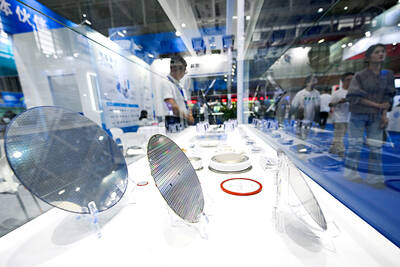
China’s top chipmaker has warned that breakaway spending on artificial intelligence (AI) chips is bringing forward years of future demand, raising the risk that some data centers could sit idle. “Companies would love to build 10 years’ worth of data center capacity within one or two years,” Semiconductor Manufacturing International Corp (SMIC, 中芯) cochief executive officer Zhao Haijun (趙海軍) said yesterday on a call with analysts. “As for what exactly these data centers will do, that hasn’t been fully thought through.” Moody’s Ratings projects that AI-related infrastructure investment would exceed US$3 trillion over the next five years, as developers pour eye-watering sums
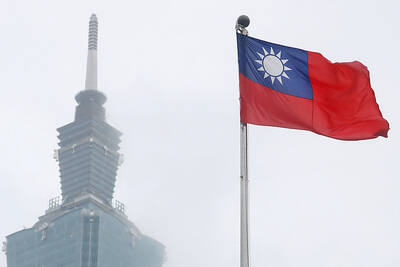
Bank of America Corp nearly doubled its forecast for the nation’s economic growth this year, adding to a slew of upgrades even after a rip-roaring last year propelled by demand for artificial intelligence (AI). The firm lifted its projection to 8 percent from 4.5 percent on “relentless global demand” for the hardware that Taiwanese companies make, according to a note dated yesterday by analysts including Xiaoqing Pi (皮曉青). Taiwan’s GDP expanded 8.63 percent last year, the fastest pace since 2010. The increase “reflects our sustained optimism over Taiwan’s technology driven expansion and is reinforced by several recent developments,” including a more stable currency,


 RSS
RSS