


Taiwan Semiconductor Manufacturing Co (TSMC, 台積電) chairman Morris Chang (張忠謀) yesterday said electricity supply constraints and protests from environmental protection groups are its main concerns over its Taiwanese investments.
Chang made the remarks during President Ma Ying-jeou’s (馬英九) visit to a TSMC factory in Taichung. The factory is undergoing second-phase expansion and is scheduled to begin producing advanced 10-nanometer chips next year.
The world’s largest contract chipmaker said its Taichung project had been hampered by constant objections from environmental protection groups, who say that industrial waste from the factory could threaten the surrounding environment and local communities.
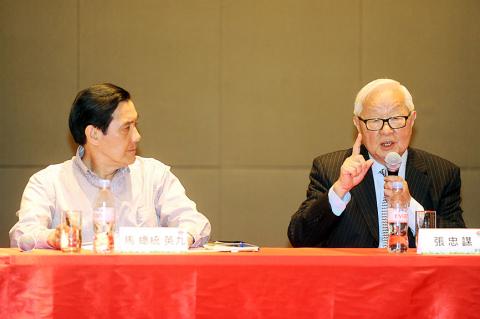
Photo: CNA
“We have passed an environmental review, but environmental protection groups continue to protest,” Chang said at news conference, adding that environmental protection and economic growth are not mutually exclusive thanks to the advent of advanced green technologies.
The possibility of a shortage in electricity is also a real concern, Chang said.
Based on a Taiwan Power Co (Taipower, 台電) assessment, Taiwan could face power shortages next year as Taipower estimates its reserve energy capacity could fall to less than 10 percent of the nation’s needs at peak times, from an estimate of 10.4 percent this year.
Long-term electricity rationing “would have a significant impact on us,” local cable TV network UBN quoted Chang as saying yesterday.
TSMC has installed emergency power generators at each factory, but energy made this way is three times more expensive than regular supplies from Taipower, he said.
Taipower expects pressure to remain in place on power supplies.
In a recent rule change, industrial users such as chipmakers and flat-panel makers are required to submit a power usage assessment to the Bureau of Energy if they are seeking approval to build new factories.
Despite those concerns, TSMC plans to continue investing heavily in Taiwan, Chang said.
About 90 percent of TSMC’s 44,000 employees are based in Taiwan, he said.
TSMC has been considering building a new plant in China, Chang said, adding that last month TSMC was “actively” assessing the possibility of investing in China, but had not yet come to a conclusion.
Commenting on growing competition from Chinese rivals, Chang said that TSMC holds technological advantages, and Chinese firms would take at least 10 years to come up with competitive alternatives, barring any unexpected breakthroughs.
However, TSMC plans to continue to push ahead with technology migration — with Moore’s Law as a guide — in order to secure its leading position, Chang said.
Moore’s Law is an observation that over the history of computer development, the number of transistors in an IC has doubled every two years, while the cost has decreased proportionately.
TSMC is the world’s No. 3 chipmaker, and has the nation’s largest market value of NT$3.66 trillion (US$112.11 billion).
TSMC shares rose 1.08 percent to NT$141 in Taipei trading yesterday, out-performing the TAIEX, which fell 0.17 percent.
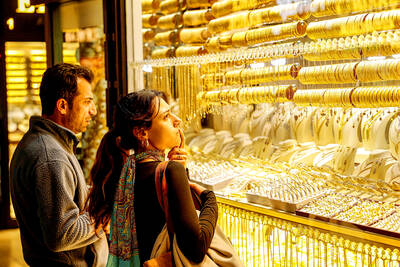
In Italy’s storied gold-making hubs, jewelers are reworking their designs to trim gold content as they race to blunt the effect of record prices and appeal to shoppers watching their budgets. Gold prices hit a record high on Thursday, surging near US$5,600 an ounce, more than double a year ago as geopolitical concerns and jitters over trade pushed investors toward the safe-haven asset. The rally is putting undue pressure on small artisans as they face mounting demands from customers, including international brands, to produce cheaper items, from signature pieces to wedding rings, according to interviews with four independent jewelers in Italy’s main

Japanese Prime Minister Sanae Takaichi has talked up the benefits of a weaker yen in a campaign speech, adopting a tone at odds with her finance ministry, which has refused to rule out any options to counter excessive foreign exchange volatility. Takaichi later softened her stance, saying she did not have a preference for the yen’s direction. “People say the weak yen is bad right now, but for export industries, it’s a major opportunity,” Takaichi said on Saturday at a rally for Liberal Democratic Party candidate Daishiro Yamagiwa in Kanagawa Prefecture ahead of a snap election on Sunday. “Whether it’s selling food or

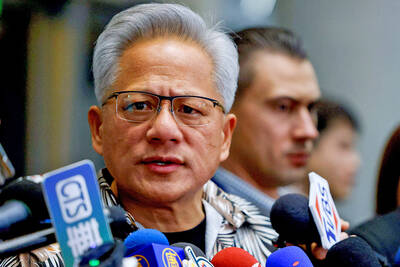
CONCERNS: Tech companies investing in AI businesses that purchase their products have raised questions among investors that they are artificially propping up demand Nvidia Corp chief executive officer Jensen Huang (黃仁勳) on Saturday said that the company would be participating in OpenAI’s latest funding round, describing it as potentially “the largest investment we’ve ever made.” “We will invest a great deal of money,” Huang told reporters while visiting Taipei. “I believe in OpenAI. The work that they do is incredible. They’re one of the most consequential companies of our time.” Huang did not say exactly how much Nvidia might contribute, but described the investment as “huge.” “Let Sam announce how much he’s going to raise — it’s for him to decide,” Huang said, referring to OpenAI
Nvidia Corp’s negotiations to invest as much as US$100 billion in OpenAI have broken down, the Wall Street Journal (WSJ) reported, exposing a potential rift between two of the most powerful companies in the artificial intelligence (AI) industry. The discussions stalled after some inside Nvidia expressed concerns about the transaction, the WSJ reported, citing unidentified people familiar with the deliberations. OpenAI makes the popular chatbot ChatGPT, while Nvidia dominates the market for AI processors that help develop such software. The companies announced the agreement in September last year, saying at the time that they had signed a letter of intent for a strategic


 RSS
RSS