


Less than a year ago investors were scrambling to pick up shares in Alibaba Group Holding Ltd (阿里巴巴) when Asia’s largest e-commerce company made its record debut on the New York Stock Exchange. Now sentiment is changing as JD.com Inc (京東), its smaller competitor, is becoming a hedge fund favorite.
Hedge funds have boosted their ownership in JD.com to 18 percent as of the end of June from 1.2 percent in the third quarter of last year, according to data in public filings compiled by Bloomberg. They cut holdings in Alibaba by more than a third to about 3.1 percent during the period.
US depositary receipts of JD.com have advanced 41 percent since their listing in New York in May last year, while Alibaba has gained 3 percent from its September initial public offering level, after soaring as much as 75 percent to a record in November.
Investors seeking exposure to the world’s largest pool of Internet users are betting that JD.com’s ability to offer higher quality products through its direct delivery model can help it maintain a faster growth rate. While Alibaba still dominates with the largest total transaction value across its platforms, JD.com has been boosting its sales at a pace that was more than double its rival this year, narrowing the gap in market shares.
“They have different business models and JD.com is growing much faster,” said Gabriel Wallach, founder of North Grove Capital in Boston which invests in Chinese stocks, by phone on Friday.
His company owns both shares in both Alibaba and JD.com. Hedge funds prefer JD.com because of its expansion rate, ability to deliver on quarterly earning and its “cleaner e-commerce model,” he said.
Filings show funds run by proteges of Julian Robertson, the so-called Tiger cubs, were among sellers of Alibaba shares last quarter. Chase Coleman’s Tiger Global Management cut its holdings to US$7.7 million while more than doubling the stake in JD.com to US$2.4 billion to become the online retailer’s biggest hedge-fund investor last quarter.
Lone Pine Capital added to its holdings of JD.com share for a second straight quarter, increasing it to about US$1.4 billion at the end of June, while Coatue Management also bought more shares in the Beijing-based company, boosting the fund’s ownership to more than US$500 million in market value. The family office of billionaire investor George Soros started purchasing JD.com shares last quarter while selling most of its Alibaba stock, the filings show.
Alibaba’s US-based spokesman Robert Christie and JD.com spokesperson Josh Gartner declined to comment on the trading in the shares.
JD.com operates a business model similar to Amazon.com Inc in the US, selling and delivering goods directly to customers, enabling the company to control quality and shipping. Alibaba gets most of its earnings from merchants who pay to use its market platforms to reach buyers, mimicking how San Jose, California-based eBay Inc operates.
JD.com’s gross merchandise volume, a measure online retailers use to calculate the total value of sales made on their platforms, jumped 89 percent in the first half of this year from a year earlier to 202 billion yuan (US$31.6 billion). Alibaba’s grew 37 percent to 1.3 trillion yuan, according to earnings statements. Full-year revenue for JD.com rose 66 percent last year, while Alibaba’s expanded by 46 percent in its last fiscal year.
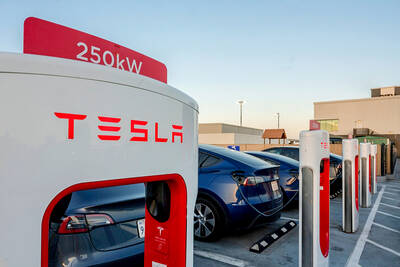
NEW IMPORTS: Car dealer PG Union Corp said it would consider introducing US-made models such as the Jeep Grand Cherokee and Stellantis’ RAM 1500 to Taiwan Tesla Taiwan yesterday said that it does not plan to cut its car prices in the wake of Washington and Taipei signing the Agreement on Reciprocal Trade on Thursday to eliminate tariffs on US-made cars. On the other hand, Mercedes-Benz Taiwan said it is planning to lower the price of its five models imported from the US after the zero tariff comes into effect. Tesla in a statement said it has no plan to adjust the prices of the US-made Model 3, Model S and Model X as tariffs are not the only factor the automaker uses to determine pricing policies. Tesla said
OpenAI has warned US lawmakers that its Chinese rival DeepSeek (深度求索) is using unfair and increasingly sophisticated methods to extract results from leading US artificial intelligence (AI) models to train the next generation of its breakthrough R1 chatbot, a memo reviewed by Bloomberg News showed. In the memo, sent on Thursday to the US House of Representatives Select Committee on China, OpenAI said that DeepSeek had used so-called distillation techniques as part of “ongoing efforts to free-ride on the capabilities developed by OpenAI and other US frontier labs.” The company said it had detected “new, obfuscated methods” designed to evade OpenAI’s defenses
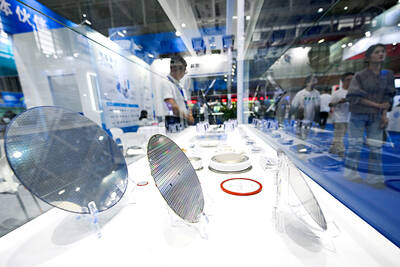
China’s top chipmaker has warned that breakaway spending on artificial intelligence (AI) chips is bringing forward years of future demand, raising the risk that some data centers could sit idle. “Companies would love to build 10 years’ worth of data center capacity within one or two years,” Semiconductor Manufacturing International Corp (SMIC, 中芯) cochief executive officer Zhao Haijun (趙海軍) said yesterday on a call with analysts. “As for what exactly these data centers will do, that hasn’t been fully thought through.” Moody’s Ratings projects that AI-related infrastructure investment would exceed US$3 trillion over the next five years, as developers pour eye-watering sums
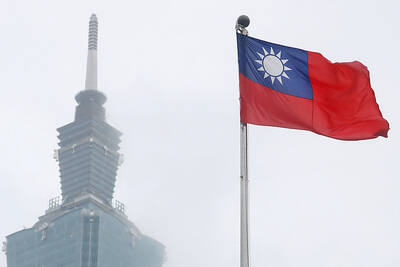
Bank of America Corp nearly doubled its forecast for the nation’s economic growth this year, adding to a slew of upgrades even after a rip-roaring last year propelled by demand for artificial intelligence (AI). The firm lifted its projection to 8 percent from 4.5 percent on “relentless global demand” for the hardware that Taiwanese companies make, according to a note dated yesterday by analysts including Xiaoqing Pi (皮曉青). Taiwan’s GDP expanded 8.63 percent last year, the fastest pace since 2010. The increase “reflects our sustained optimism over Taiwan’s technology driven expansion and is reinforced by several recent developments,” including a more stable currency,


 RSS
RSS