


Uni-President Enterprises Co (UPE, 統一企業) last week reported stellar profit for the first quarter of the year as the company’s strategy of focusing on product innovation in China bore fruit.
The company posted a net income of NT$4.6 billion (US$140.47 million), or earnings per share of NT$0.79, up 3.32 percent from a year earlier and nearly 123 percent from the previous quarter, according to the company’s Taiwan Stock Exchange filing.
Uni-President attributed the increase to its principal unit in China, Uni-President China Holdings Ltd (統一企業中國), which reported the highest earnings in four years last quarter at 368 million yuan (US$59.20 million), up 55.9 percent from the same period last year.
Credit Suisse Group AG said Uni-President China’s earnings momentum could grow further in upcoming quarters, as the firm’s focus on product innovations has led to market share gains there.
“We believe more product diversity could help it [Uni-President China] to reverse sluggish market growth [in China],” Credit Suisse’s Taipei-based equity strategist Jeremy Chen (陳建名) said in a report last week.
In addition, lower raw material costs and fading competition with Ting Hsin International Group (頂新集團) — known for its popular Master Kong (康師傅) brand in China — would be important drivers to maintain Uni-President China’s business momentum further, Chen added.
As Uni-President’s Taiwan operations also gained market share in the dairy and beverage segments amid a widespread consumer boycott of rival Wei Chuan Foods Corp’s (味全食品) products due to food scandals, the company’s gross margin improved to 32.9 percent in the first quarter. up 2.1 percentage points year-on-year and 4.2 percentage points quarter-on-quarter.
Daiwa Capital Markets Inc said that Uni-President would see a continuing recovery in gross margin in the rest of the year.
The company reported gross margin of around 31 percent last year.
Greater Tainan-based Uni-President also counts on several Taiwanese subsidiaries, including President Chain Store Corp (PCSC, 統一超商), Ton Yi Industrial Corp (統一實業) and ScinoPharm Taiwan Ltd (台灣神隆), as its major earnings sources.
During the first quarter, PCSC, which operates the 7-Eleven convenience store chain, posted a net income of NT$2.11 billion, down 29 percent from a year ago, because of a higher base last year.
Earnings per share were NT$2.03 last quarter, compared with NT$2.86 registered in the same period of last year, when the company booked one-time gains of NT$1.02 billion by disposing of its stake in Muji (Taiwan) Co Ltd (台灣無印良品).
Separately, Taiwan FamilyMart Co (全家便利商店), the nation’s second-largest convenience store operator, last week said net income dropped 15.6 percent from a year earlier to NT$173.8 million in the first quarter.
The company said the decline in profit came after its recognition of several loss-making re-investments, as well as a change in accounting methods in its chain-store business investments in China.
Earnings per share for the first quarter stood at NT$0.78, down from the NT$0.92 recorded a year earlier, FamilyMart said.
Taiwan Semiconductor Manufacturing Co (TSMC, 台積電) yesterday reported record revenue of NT$416.975 billion (US$13.17 billion) for last month, putting the world’s largest contract chipmaker on track to set a record for quarterly revenue. Last month’s figure surpassed March’s record NT$415.19 billion and represented increases of 1.5 percent from April and 30.1 percent from a year earlier. For the first five months of the year, TSMC generated NT$1.96 trillion in revenue, up 30 percent year-on-year, it said in a statement. TSMC has forecast second-quarter revenue of between US$39 billion and US$40.2 billion, representing sequential growth of about 10 percent and year-on-year growth of about
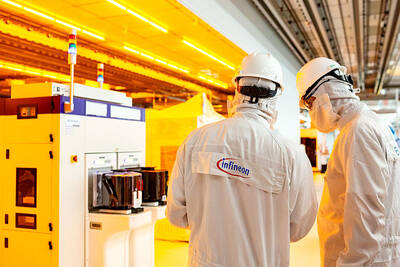
Infineon Technologies AG is preparing to open its largest single investment, a 5 billion euro (US$5.8 billion) semiconductor factory built with the help of EU subsidies, as the bloc seeks to boost chip production. The power chip fab, which is an extension of the German company’s Dresden campus, is scheduled to open on July 2, Infineon chief operating officer Alexander Gorski said this week at the site. The project is a major recipient of EU Chips Act funds, receiving about 1 billion euros in subsidies. The new plant represents a rare success for the bloc’s flagship semiconductor law, which was drawn up during
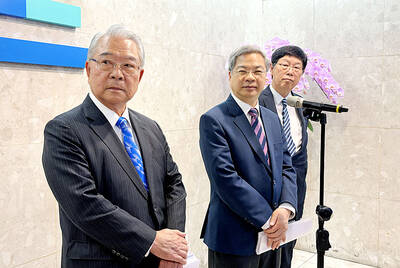
PATENT PROBE: US lawmakers called for a ban on imports of chips made by TSMC if they are found to infringe on US patents, with a preliminary ruling expected soon Minister of Economic Affairs Kung Ming-hsin (龔明鑫) yesterday expressed confidence in Taiwan Semiconductor Manufacturing Co’s (TSMC, 台積電) compliance with patent regulations after reports linked the company to a patent infringement lawsuit in the US. US Representative Ryan Zinke, and US senators Tim Sheehy, Roger Marshall and Bernie Moreno urged the US International Trade Commission in a May 22 letter to ban imports of chips made by TSMC if they are found to infringe on US patents, Axios reported on Wednesday. An administrative law judge is expected to issue a preliminary ruling this month, with the commission potentially making a final decision in
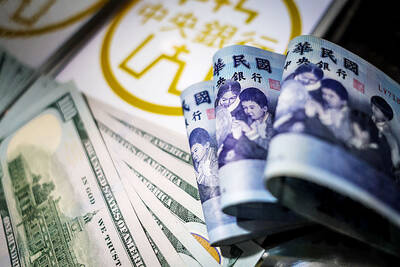
Taiwan remained the sixth-largest net creditor nation in the world last year, despite a fall of more than 10 percent in its net international investment position (NIIP) over the year, the central bank said yesterday. The NIIP is the difference between a country’s external financial assets and its external financial liabilities. Taiwan’s external financial assets hit US$3.27 trillion at the end of last year, up US$275.75 billion or 9.2 percent from a year earlier, the central bank said in its annual NIIP report. The growth largely reflected an increase in holdings of overseas marketable securities by residents in Taiwan, as well as a


 RSS
RSS