


Netflix Inc is in talks with a Chinese media company backed by Jack Ma (馬雲) and other possible partners as it seeks entry into the country’s US$5.9 billion online video market, according to people familiar with the matter.
Netflix has held discussions with companies including Wasu Media Holding Co (華數傳媒) about forming a partnership, said the people, who asked not to be identified because the talks are private.
Netflix plans “to be nearly global by the end of 2016,” a spokeswoman, Anne Marie Squeo, said in response to questions about a possible China partnership.
Entering China would allow the broadcaster of House of Cards and Orange is the New Black to take advantage of what is forecast to be explosive growth in online television in the nation of 1.4 billion people. The market is expected to almost triple to 90 billion yuan by 2018, according to Shanghai-based Internet consultant IResearch.
Wasu’s Shenzhen-traded shares, which had been down as much as 10 percent in the morning, reversed declines and briefly rose to a record after the news came out, and closed little changed.
A local partnership would be essential given the Chinese government’s strict controls over licensing for online content. Netflix wants a partner that has licenses for content on all devices — including mobile phones, computers and set-top boxes, according to the people. China’s State Administration of Press, Publication, Radio, Film and Television has given Internet TV licenses to seven companies, including Wasu.
Netflix, based in Los Gatos, California, is investing heavily in original programming to keep the US business growing and support international expansion. Chief content officer Ted Sarandos told an investor conference on Wednesday that Netflix intends to “try to figure out China and how to get there.” The company does not intend to go to China without a partner, he said.
“We’re open to all different models to get there eventually, because we want to be fully global,” he said. “And it’s a pretty big chunk of the world to have an asterisk.”
Netflix would need to sort out content censorship regulations with Chinese authorities. Starting last month, new episodes of foreign programs — including Mad Men and The Simpsons — cannot be shown until after the shows’ seasons have ended, according to a government notice.
Episodes need to be handed in to censors for approval, and content deemed violent, sexual or offensive to the ruling party can be cut, according to notices.
Wasu, one of the first in China to receive an Internet TV license from the government, has been working with Ma’s Alibaba Group Holding Ltd (阿里巴巴) to produce set-top boxes since 2013. Wasu operates cable TV and broadband networks in Hangzhou, where Alibaba is based.
Wasu said in April last year it would sell a 20 percent stake to Alibaba chairman Ma and fellow billionaire Shi Yuzhu (史玉柱).

NEW IMPORTS: Car dealer PG Union Corp said it would consider introducing US-made models such as the Jeep Grand Cherokee and Stellantis’ RAM 1500 to Taiwan Tesla Taiwan yesterday said that it does not plan to cut its car prices in the wake of Washington and Taipei signing the Agreement on Reciprocal Trade on Thursday to eliminate tariffs on US-made cars. On the other hand, Mercedes-Benz Taiwan said it is planning to lower the price of its five models imported from the US after the zero tariff comes into effect. Tesla in a statement said it has no plan to adjust the prices of the US-made Model 3, Model S and Model X as tariffs are not the only factor the automaker uses to determine pricing policies. Tesla said
OpenAI has warned US lawmakers that its Chinese rival DeepSeek (深度求索) is using unfair and increasingly sophisticated methods to extract results from leading US artificial intelligence (AI) models to train the next generation of its breakthrough R1 chatbot, a memo reviewed by Bloomberg News showed. In the memo, sent on Thursday to the US House of Representatives Select Committee on China, OpenAI said that DeepSeek had used so-called distillation techniques as part of “ongoing efforts to free-ride on the capabilities developed by OpenAI and other US frontier labs.” The company said it had detected “new, obfuscated methods” designed to evade OpenAI’s defenses
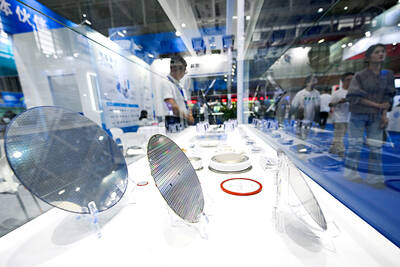
China’s top chipmaker has warned that breakaway spending on artificial intelligence (AI) chips is bringing forward years of future demand, raising the risk that some data centers could sit idle. “Companies would love to build 10 years’ worth of data center capacity within one or two years,” Semiconductor Manufacturing International Corp (SMIC, 中芯) cochief executive officer Zhao Haijun (趙海軍) said yesterday on a call with analysts. “As for what exactly these data centers will do, that hasn’t been fully thought through.” Moody’s Ratings projects that AI-related infrastructure investment would exceed US$3 trillion over the next five years, as developers pour eye-watering sums
Bank of America Corp nearly doubled its forecast for the nation’s economic growth this year, adding to a slew of upgrades even after a rip-roaring last year propelled by demand for artificial intelligence (AI). The firm lifted its projection to 8 percent from 4.5 percent on “relentless global demand” for the hardware that Taiwanese companies make, according to a note dated yesterday by analysts including Xiaoqing Pi (皮曉青). Taiwan’s GDP expanded 8.63 percent last year, the fastest pace since 2010. The increase “reflects our sustained optimism over Taiwan’s technology driven expansion and is reinforced by several recent developments,” including a more stable currency,


 RSS
RSS