


The official purchasing managers’ index (PMI) rose to 53.5 last month while a new non-manufacturing index (NMI) printed 53.9, as firms in most sectors saw business improvement from the previous month, the Chung-Hua Institution for Economic Research (CIER, 中華經濟研究院) said yesterday.
The reading represented an increase from a marginal 50.1 in December last year, as local manufacturers gained new orders and are more upbeat about their business outlook, the CIER report found.
Manufacturing sectors underpinned the economy last quarter, raising GDP growth by 2.12 percentage points, or 66.88 percent of the 3.17 percent increase, the Directorate-General of Budget, Accounting and Statistics (DGBAS) said last week.
That means non-manufacturing sectors contributed the remaining 33.12 percent, the DGBAS said.
“Taiwanese manufacturers are no longer pessimistic about their business prospects,” CIER president Wu Chung-shu (吳中書) told a news conference, with the business outlook subindex rising the fastest — to 58.5 last month, from 49.8 in December.
PMI surveys aim to gauge the health of the manufacturing industry. Values above 50 indicate business expansion and scores below the threshold suggest contraction.
NEW ORDERS
Taiwan, home to the world’s top contract chipmakers, chip designers and laptop and smartphone vendors, resumed the course of stable recovery last month, as global technology giants are soon launching new devices, Wu said.
The new orders subindex bounced to 56.5 last month — the highest in 10 months — from 50.2 in December, reflecting greater demand from clients at home and abroad, the report said.
The Lunar New Year holiday might boost demand for electronic devices as regional companies tend to distribute year-end bonuses, while the upcoming Apple Watch from Apple Inc is also likely to stimulate sales, analysts have said.
The production subindex accelerated from 50.3 in December to 58.5 last month, while the reading on inventories increased from 49.6 to 51.8 in the same time period, the report said.
However, employment slowed from 52.2 in December to 49.9 last month, as some manufacturers in traditional industries conducted annual maintenance, Supply Management Institute Taiwan (中華採購與供應管理協會) executive director Steve Lai (賴樹鑫) said.
HSBC PLC reached similar findings, with its HSBC Taiwan PMI posting 51.7 last month, up from 50 in December.
“Growth of new work contributed to an increased amount of purchasing activity” and growth momentum might sustain given the sharp reduction in inventories and rise in backlogs of work, HSBC Hong Kong-based economist John Zhu (朱日平) said in a statement.
NON-MANUFACTURING
Meanwhile, the institute disclosed for the first time its survey of non-manufacturing sectors, which draws its funding from the National Development Council, as does the PMI.
The NMI reading showed that companies focused on domestic demand are less prone to volatility, given that the NMI score of 53.9 is virtually flat from one month earlier at 53.6, the report indicated.
Hotels and restaurants, which saw business decline in last month, might report a pickup over the Lunar New Year holiday, CIER researcher Chen Shin-hui (陳馨蕙) said.
The business outlook for builders and developers remains bleak, with a value of 38.3 last month, worse than 40 in December, the NMI report said, as unfavorable tax plans continue to weigh.
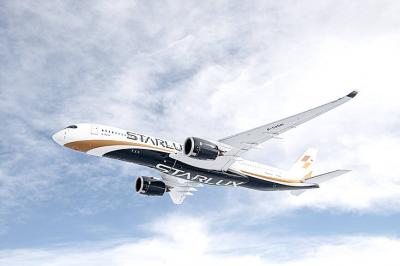
Starlux Airlines Co (星宇航空) today unveiled a long-haul network expansion plan at a shareholders’ meeting in Taipei, including direct flights to Barcelona, Spain, and Zurich, Switzerland, as well as a service connecting Taipei, Sydney and New Zealand. Starlux is to become the first Taiwanese carrier to offer non-stop services to the two European cities, while the inaugural oceanic route is expected to expand transit opportunities within the Australia-New Zealand market, Starlux said. Flight services to Chicago, Dallas, Washington and New York are under evaluation, the airline added. Prior to the shareholders’ meeting, the airline earlier this year announced that it would be
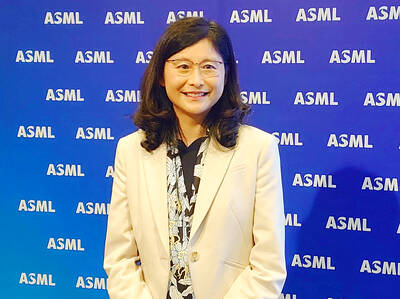
Netherlands-based semiconductor equipment supplier ASML Holding NV yesterday said that it is planning to hire an additional 1,000 people in Taiwan this year in response to growing demand from clients. ASML had previously planned to recruit 600 people this year, but that the plan has been adjusted upward, ASML vice president and ASML Taiwan general manager Grace Wang (汪佳慧) told reporters. ASML has a workforce of more than 4,500 in Taiwan, accounting for about 10 percent of its global total, Wang said. This year’s recruitment campaign would focus on adding people in the customer support, manufacturing and supply chain domains to assist ASML
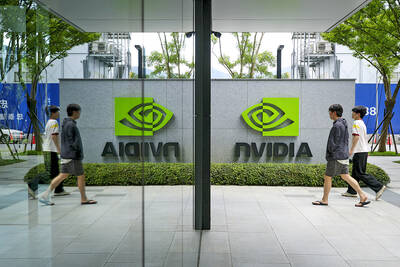
UNDER MICROSCOPE: Taiwan detained three people who allegedly conspired to buy servers in Taiwan and export them using fraudulent documentation, prosecutors said Nvidia Corp chief executive officer Jensen Huang (黃仁勳) on Saturday urged Super Micro Computer Inc to tighten up on compliance after Taiwan detained three people this week for allegedly making fraudulent declarations about artificial intelligence (AI) servers made by its US partner. The development marked the nation’s first crackdown on semiconductor smuggling, which grew after the US slapped restrictions on exports of high-end chips such as Nvidia AI accelerators to China. Nvidia is “rigorous” in explaining regulations to all of its partners, Huang told reporters after arriving in Taipei. “Ultimately Super Micro has to run their own company,” he said in response to

Nvidia Corp yesterday announced that CEO Jensen Huang (黃仁勳) would attend an employee meeting in Taipei tomorrow to celebrate the launch of the company’s Taiwan headquarters project. Huang would attend a gathering at the site of Nvidia’s planned headquarters in Beitou Shilin Technology Park (北投士林科技園區), the company said in a statement. After arriving in Taiwan on Saturday last week, Huang told reporters that he plans to meet with Quanta Computer Inc (廣達) chairman Barry Lam (林百里) and Taiwan Semiconductor Manufacturing Co (TSMC, 台積電) chairman C.C. Wei (魏哲家), and would attend the groundbreaking ceremony for Nvidia’s Taiwan headquarters tomorrow. Nvidia has not yet applied


 RSS
RSS