


More than half of Taiwanese workers whose main source of income is their salary are trying to beat wage stagnation by working harder to show their bosses that they deserve higher pay, according to a survey by 1111 Job Bank (1111人力銀行).
In a survey of salaried men and women across the nation conducted between Sept. 29 and Monday last week, 54.92 percent of the respondents said they were working harder in a bid to seek promotion and pay raises.
Among the well-known business leaders, respondents deemed Terry Gou (郭台銘) of Hon Hai Technology Group (鴻海科技集團) and Morris Chang (張忠謀) of Taiwan Semiconductor Manufacturing Co (台積電) the bosses most willing to give pay raises to their employees.
The survey found that a majority of Taiwanese workers are relying on themselves to increase their income, with 33.35 percent making financial investments and 31.8 percent moonlighting.
Job Bank vice president Ho Chi-sheng (何啟聖) said young people should study the prospects of each industry and line of jobs before accepting their first job offer.
If a certain job is promising in the future, but offers low entry-level pay, “you can accept the offer and then use the opportunity to prepare for the future,” Ho said.
He suggested that such people can take side jobs, work on special projects or use family resources to weather the low-pay period of their lives while training themselves to be experts in their fields.
“Investing in yourself and boosting your skill sets to increase your contribution are the best way to get through the low-pay period,” Ho added.
His company received 1,084 valid samples for the survey, which had a confidence level of 95 percent with a margin of error of plus or minus 2.97 percentage points.
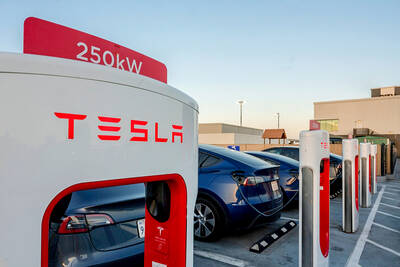
NEW IMPORTS: Car dealer PG Union Corp said it would consider introducing US-made models such as the Jeep Grand Cherokee and Stellantis’ RAM 1500 to Taiwan Tesla Taiwan yesterday said that it does not plan to cut its car prices in the wake of Washington and Taipei signing the Agreement on Reciprocal Trade on Thursday to eliminate tariffs on US-made cars. On the other hand, Mercedes-Benz Taiwan said it is planning to lower the price of its five models imported from the US after the zero tariff comes into effect. Tesla in a statement said it has no plan to adjust the prices of the US-made Model 3, Model S and Model X as tariffs are not the only factor the automaker uses to determine pricing policies. Tesla said
OpenAI has warned US lawmakers that its Chinese rival DeepSeek (深度求索) is using unfair and increasingly sophisticated methods to extract results from leading US artificial intelligence (AI) models to train the next generation of its breakthrough R1 chatbot, a memo reviewed by Bloomberg News showed. In the memo, sent on Thursday to the US House of Representatives Select Committee on China, OpenAI said that DeepSeek had used so-called distillation techniques as part of “ongoing efforts to free-ride on the capabilities developed by OpenAI and other US frontier labs.” The company said it had detected “new, obfuscated methods” designed to evade OpenAI’s defenses
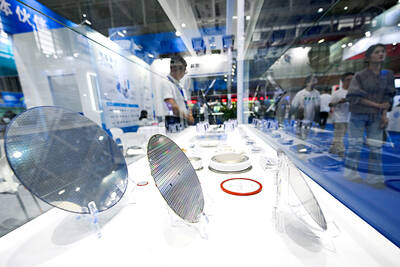
China’s top chipmaker has warned that breakaway spending on artificial intelligence (AI) chips is bringing forward years of future demand, raising the risk that some data centers could sit idle. “Companies would love to build 10 years’ worth of data center capacity within one or two years,” Semiconductor Manufacturing International Corp (SMIC, 中芯) cochief executive officer Zhao Haijun (趙海軍) said yesterday on a call with analysts. “As for what exactly these data centers will do, that hasn’t been fully thought through.” Moody’s Ratings projects that AI-related infrastructure investment would exceed US$3 trillion over the next five years, as developers pour eye-watering sums
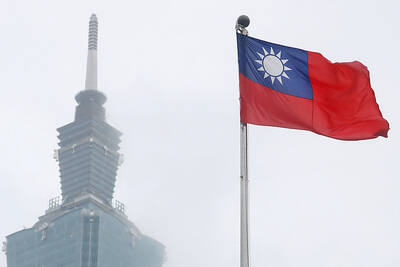
Bank of America Corp nearly doubled its forecast for the nation’s economic growth this year, adding to a slew of upgrades even after a rip-roaring last year propelled by demand for artificial intelligence (AI). The firm lifted its projection to 8 percent from 4.5 percent on “relentless global demand” for the hardware that Taiwanese companies make, according to a note dated yesterday by analysts including Xiaoqing Pi (皮曉青). Taiwan’s GDP expanded 8.63 percent last year, the fastest pace since 2010. The increase “reflects our sustained optimism over Taiwan’s technology driven expansion and is reinforced by several recent developments,” including a more stable currency,


 RSS
RSS