


Google Inc is set to restrict search terms to a link to a Wikipedia article, in the first request under Europe’s controversial new “right to be forgotten” legislation to affect the 110 million-page online encyclopedia.
The identity of the individual requesting a change to Google’s search results has not been disclosed and may never be known, but it is understood the request will be put into effect within days. Google and other search engines can only remove the link — as with other “right to be forgotten” requests, the Web page itself will remain on Wikipedia.
In May, the European Court of Justice ruled that citizens could ask search engines to remove particular links from results for a search made under their name if the material was deemed to be out of date, no longer relevant or excessive.
Google has already begun to implement the ruling, with tens of thousands of links removed from its European search results to sites ranging from the BBC to the London-based Daily Express. Among the data now “hidden” from Google is an article about the 2009 conversion to Islam of Adam Osborne, brother of British Chancellor of the Exchequer George Osborne.
Jimmy Wales, who cofounded Wikipedia in 2001 and has overseen its transformation into the sixth most-visited site on the Internet, said: “It’s completely insane and it needs to be fixed.”
Wales is one of 10 members of an advisory council formed by Google to decide how to handle take-down requests. The council will travel around Europe, with a first hearing scheduled in Madrid on Sept. 9, before writing guidance for Google and other search engines, such as Microsoft Corp’s Bing, on implementing the new law.
A test case brought by Spaniard Mario Costeja Gonzalez, who wanted a 1998 article about his home being repossessed removed from search results, was what triggered the change in legislation.
“In the case of truthful, non-defamatory information obtained legally, I think there is no possibility of any defensible ‘right’ to censor what other people are saying,” Wales has said.
On Thursday last week, Google revealed that France, with 17,500 requests, had made more demands for changes to search results than any other European nation. Germany had made 16,500 requests, while 12,000 requests originated in the UK.
The company’s privacy counsel, Peter Fleischer, revealed that it had refused about 32 percent of the request, asked for more information on 15 percent and removed 53 percent.

Taiwan Semiconductor Manufacturing Co (TSMC, 台積電) last week recorded an increase in the number of shareholders to the highest in almost eight months, despite its share price falling 3.38 percent from the previous week, Taiwan Stock Exchange data released on Saturday showed. As of Friday, TSMC had 1.88 million shareholders, the most since the week of April 25 and an increase of 31,870 from the previous week, the data showed. The number of shareholders jumped despite a drop of NT$50 (US$1.59), or 3.38 percent, in TSMC’s share price from a week earlier to NT$1,430, as investors took profits from their earlier gains

In a high-security Shenzhen laboratory, Chinese scientists have built what Washington has spent years trying to prevent: a prototype of a machine capable of producing the cutting-edge semiconductor chips that power artificial intelligence (AI), smartphones and weapons central to Western military dominance, Reuters has learned. Completed early this year and undergoing testing, the prototype fills nearly an entire factory floor. It was built by a team of former engineers from Dutch semiconductor giant ASML who reverse-engineered the company’s extreme ultraviolet lithography (EUV) machines, according to two people with knowledge of the project. EUV machines sit at the heart of a technological Cold
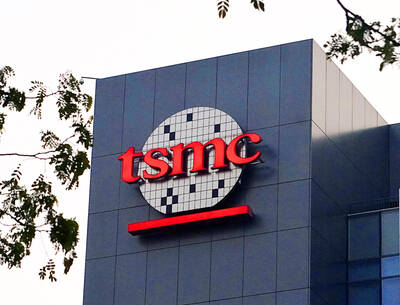
Taiwan’s long-term economic competitiveness will hinge not only on national champions like Taiwan Semiconductor Manufacturing Co. (TSMC, 台積電) but also on the widespread adoption of artificial intelligence (AI) and other emerging technologies, a US-based scholar has said. At a lecture in Taipei on Tuesday, Jeffrey Ding, assistant professor of political science at the George Washington University and author of "Technology and the Rise of Great Powers," argued that historical experience shows that general-purpose technologies (GPTs) — such as electricity, computers and now AI — shape long-term economic advantages through their diffusion across the broader economy. "What really matters is not who pioneers
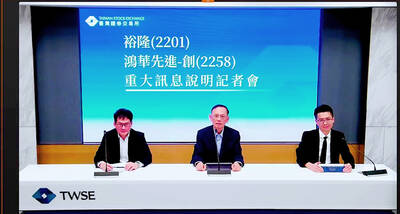
TAIWAN VALUE CHAIN: Foxtron is to fully own Luxgen following the transaction and it plans to launch a new electric model, the Foxtron Bria, in Taiwan next year Yulon Motor Co (裕隆汽車) yesterday said that its board of directors approved the disposal of its electric vehicle (EV) unit, Luxgen Motor Co (納智捷汽車), to Foxtron Vehicle Technologies Co (鴻華先進) for NT$787.6 million (US$24.98 million). Foxtron, a half-half joint venture between Yulon affiliate Hua-Chuang Automobile Information Technical Center Co (華創車電) and Hon Hai Precision Industry Co (鴻海精密), expects to wrap up the deal in the first quarter of next year. Foxtron would fully own Luxgen following the transaction, including five car distributing companies, outlets and all employees. The deal is subject to the approval of the Fair Trade Commission, Foxtron said. “Foxtron will be


 RSS
RSS