


Elan Corp shareholders who sued SAC Capital Advisors LP and founder Steven Cohen for insider trading asked the judge presiding over the hedge fund’s criminal case to reject any accord SAC has reached with prosecutors unless it pleads guilty to the conduct alleged in their case.
Investors in Elan and Wyeth told US District Judge Laura Taylor Swain on Friday that they are “crime victims” of the alleged fraud perpetrated by Stamford, Connecticut-based SAC. If a plea bargain is reached that does not include the fund’s admitting wrongdoing for insider trading in Elan and Wyeth, it should be rejected, they argued in a letter to the court.
SAC and Cohen have been told that US$1.8 billion and admission of wrongdoing by the fund would be the price of resolving the insider-trading charges, people familiar with the matter said.
The amount would be about US$1.2 billion paid as a result of a criminal probe by Manhattan US Attorney Preet Bharara and includes the more than US$600 million that Cohen has already agreed to pay the US Securities and Exchange Commission to settle a related suit.
“According to published news reports, a plea agreement could be executed by defendants and the government and submitted to the court as soon as today,” Ethan Wohl, a lawyer for the plaintiffs, said in the letter. “The plea being negotiated will allow defendants to plead guilty and pay a fine in excess of US$1 billion without admitting liability for insider trading in Elan or Wyeth. A plea agreement on those terms, if tendered to the court, should be rejected.”
Prosecutors have charged Mathew Martoma, a former SAC money manager, with using illegal tips about an Alzheimer’s drug trial to help the firm make profits or avoid losses totaling US$276 million by trading in Elan and Wyeth, in a case the US called the largest insider-trading scheme in history. Martoma pleaded not guilty and is scheduled to go to trial in January.
SAC was indicted in July, accused of operating a conspiracy that stretched as far back as 1999, including trades by Martoma, and reaped hundreds of millions of dollars in illicit profit.
The lawyer said a federal court can reject a plea agreement if it determines that, if any charges are to be dismissed as part of an agreement, the ones remaining reflect “the seriousness of the actual offense behavior.”
While Cohen was not charged in either case, Wohl noted that the SEC has said that he “personally received and benefited” from inside information on trades with Martoma.
Shares of contract chipmaker Taiwan Semiconductor Manufacturing Co (TSMC, 台積電) came under pressure yesterday after a report that Apple Inc is looking to shift some orders from the Taiwanese company to Intel Corp. TSMC shares fell NT$55, or 2.4 percent, to close at NT$2,235 on the local main board, Taiwan Stock Exchange data showed. Despite the losses, TSMC is expected to continue to benefit from sound fundamentals, as it maintains a lead over its peers in high-end process development, analysts said. “The selling was a knee-jerk reaction to an Intel-Apple report over the weekend,” Mega International Investment Services Corp (兆豐國際投顧) analyst Alex Huang
Taiwan Semiconductor Manufacturing Co (TSMC, 台積電) is expected to remain Apple Inc’s primary chip manufacturing partner despite reports that Apple could shift some orders to Intel Corp, industry experts said yesterday. The comments came after The Wall Street Journal reported on Friday that Apple and Intel had reached a preliminary agreement following more than a year of negotiations for Intel to manufacture some chips for Apple devices. Taiwan Institute of Economic Research (台灣經濟研究院) economist Arisa Liu (劉佩真) said TSMC’s advanced packaging technologies, including integrated fan-out and chip-on-wafer-on-substrate, remain critical to the performance of Apple’s A-series and M-series chips. She said Intel and Samsung
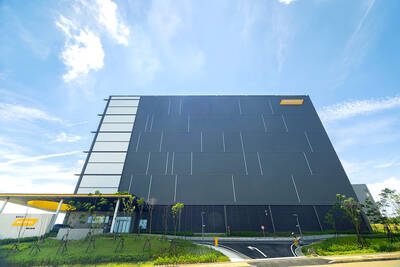
POWER BUILDUP: Powered by Nvidia’s B200 Blackwell chips, the data center would support MediaTek’s computing power demand and business growth, the company said Smartphone chip designer MediaTek Inc (聯發科) yesterday launched a new artificial intelligence (AI) data center with a maximum capacity of 45 megawatts to meet its rising demand for computing power required to develop new advanced chips for AI applications. The company has completed the first-phase computing power buildup at the data center in Miaoli County’s Tongluo Township (銅鑼), providing 15 megawatts of capacity to support its research and development (R&D) capabilities, despite an industrywide shortage of key components, MediaTek said. Supply constraints have plagued a wide range of key components, including memory chips, solid-state drives, power supply units and central
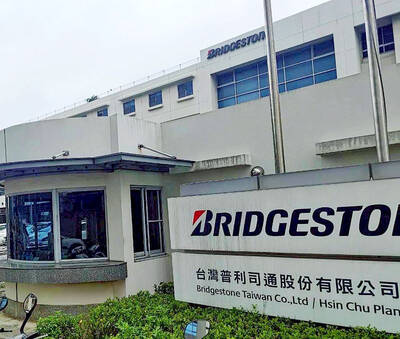
TRANSITION: With the closure, the company would reorganize its Taiwanese unit to a sales and service-focused model, Bridgestone said Bridgestone Corp yesterday announced it would cease manufacturing operations at its tire plant in Hsinchu County’s Hukou Township (湖口), affecting more than 500 workers. Bridgestone Taiwan Co (台灣普利司通) said in a statement that the decision was based on the Tokyo-based tire maker’s adjustments to its global operational strategy and long-term market development considerations. The Taiwanese unit would be reorganized as part of the closure, effective yesterday, and all related production activities would be concluded, the statement said. Under the plan, Bridgestone would continue to deepen its presence in the Taiwanese market, while transitioning to a sales and service-focused business model, it added. The Hsinchu


 RSS
RSS