


Innolux Corp (群創光電) aims to increase the penetration rate of its touch panels used in notebooks and all-in-one PCs to 50 percent next year, a company executive said yesterday.
Only a very small portion of PCs worldwide are currently equipped with touch panels because of their high price and unattractive Windows 8 operating system, Innolux said.
It believes about 10 percent to 15 percent of notebook computers around the world will have touch screens at the end of this year, Innolux said.
To boost the penetration rate, the world’s No.4 LCD panel maker has developed low-cost touch screens by integrating touch sensors and LCD glasses, Jeffrey Yang (楊宏文), an associate vice president, told reporters during a touch screen trade show in Taipei.
Innolux plans to begin shipping the new low-cost touch screens later this quarter and expand its monthly output to around 200,000 units next quarter, Yang said. The low-cost screens are made on one-glass-solution technology, he said.
Innolux installed a new production line in a Chinese factory to produce the screens and is working to overcome a labor shortage problem to increase the factory’s output, Yang said. The company plans to recruit 3,000 workers, he said.
However, Harris Po (柏德葳), an analyst with local research firm Topology Research Institute (TRI, 拓墣產業研究所), is less optimistic, saying Innolux’s target was “too aggressive.”
“It could only be reached after touch screens become standard products, which can help drive the cost of touch screens to an affordable level,” Po said.
Local rival AU Optronics Corp (AUO, 友達光電), which is showcasing 19.5 inch and 21.5 inch touch screens at the touch screen show, has predicted that about 20 percent of its notebook computer panels will be touch screens at the end of this year.
Yang said the company is also set to ship new energy-saving touch screens using Indium Gallium Zinc Oxide (IGZO) technology by the end of this year.
As an IGZO screen only consumes one-third the power that average LCD screens consume, an “IGZO [panel] is important for tablets,” he said.
IGZO panels have been under the spotlight amid growing speculation that Apple Inc will have its new-generation iPhone, iPad and Macbook laptops equipped with the screens.
Japan’s Sharp Corp is the major IGZO panel manufacturer.
Innolux, which holds a 70 percent global share of the 4K2K TV panel market, expected 50 percent of its TV panels would be such ultra-high-definition panels next year, up from 10 percent estimated for this quarter, Yang said.
The company plans to more than double its output of 4K2K TV panels to 500,000 units a month by the end of this year, from 200,000 units currently.
Separately, Innolux and AUO yesterday said they did not plan to lower factory utilization because they expected demand to return soon, driven by the holiday shopping season in October in China, shopping for Christmas shopping in the US and Europe and then the Lunar New Year demand from Asia.
Innolux has seen demand recover this month and expects customers’ inventories to return to normal next month.
“We hope to keep our equipment loading rate at a stable and reasonable level,” Innolux spokesman Lin Chen-hui (林振輝) said. “The fourth quarter will be a better period than the third quarter.”
The company plans to maintain a factory utilization rate of more than 90 percent this quarter and next quarter, Lin said.

NEW IMPORTS: Car dealer PG Union Corp said it would consider introducing US-made models such as the Jeep Grand Cherokee and Stellantis’ RAM 1500 to Taiwan Tesla Taiwan yesterday said that it does not plan to cut its car prices in the wake of Washington and Taipei signing the Agreement on Reciprocal Trade on Thursday to eliminate tariffs on US-made cars. On the other hand, Mercedes-Benz Taiwan said it is planning to lower the price of its five models imported from the US after the zero tariff comes into effect. Tesla in a statement said it has no plan to adjust the prices of the US-made Model 3, Model S and Model X as tariffs are not the only factor the automaker uses to determine pricing policies. Tesla said

OpenAI has warned US lawmakers that its Chinese rival DeepSeek (深度求索) is using unfair and increasingly sophisticated methods to extract results from leading US artificial intelligence (AI) models to train the next generation of its breakthrough R1 chatbot, a memo reviewed by Bloomberg News showed. In the memo, sent on Thursday to the US House of Representatives Select Committee on China, OpenAI said that DeepSeek had used so-called distillation techniques as part of “ongoing efforts to free-ride on the capabilities developed by OpenAI and other US frontier labs.” The company said it had detected “new, obfuscated methods” designed to evade OpenAI’s defenses
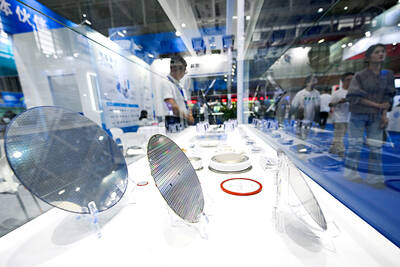
China’s top chipmaker has warned that breakaway spending on artificial intelligence (AI) chips is bringing forward years of future demand, raising the risk that some data centers could sit idle. “Companies would love to build 10 years’ worth of data center capacity within one or two years,” Semiconductor Manufacturing International Corp (SMIC, 中芯) cochief executive officer Zhao Haijun (趙海軍) said yesterday on a call with analysts. “As for what exactly these data centers will do, that hasn’t been fully thought through.” Moody’s Ratings projects that AI-related infrastructure investment would exceed US$3 trillion over the next five years, as developers pour eye-watering sums
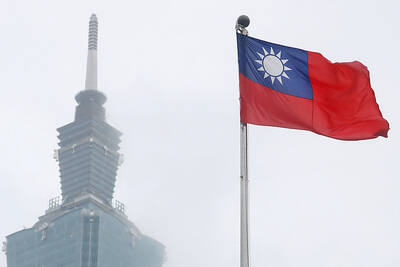
Bank of America Corp nearly doubled its forecast for the nation’s economic growth this year, adding to a slew of upgrades even after a rip-roaring last year propelled by demand for artificial intelligence (AI). The firm lifted its projection to 8 percent from 4.5 percent on “relentless global demand” for the hardware that Taiwanese companies make, according to a note dated yesterday by analysts including Xiaoqing Pi (皮曉青). Taiwan’s GDP expanded 8.63 percent last year, the fastest pace since 2010. The increase “reflects our sustained optimism over Taiwan’s technology driven expansion and is reinforced by several recent developments,” including a more stable currency,


 RSS
RSS