


Taiwan’s key economic indicators moved sideways along the bottom of an L-shaped line in the first half of the year and may fail to pick up significantly if exports to China continue to fall in the second half, UBS Securities Asia said in a recent report.
The nation’s growth momentum neither picked up nor deteriorated in the second quarter as a result of two opposing forces — a resilient US and a surprisingly weak China — driving external demand for Taiwan’s exports, the Swiss financial services provider said.
“We see a downside to our prediction of 3 percent growth for Taiwan this year if Chinese growth fails to stabilize in the second half,” USB economist Silvia Liu said.
China accounts for 40 percent of Taiwanese exports, which have a value equivalent to 70 percent of nominal GDP.
Headline exports remained lackluster in May at US$26.34 billion, expanding by a mere 0.9 percent compared with the same period last year, the Ministry of Finance said in a report. The ministry is slated to release last month’s data today.
Taiwan’s exports to the US are stabilizing, driven by a stronger US economy and increased US demand for communication products after the release of a new smartphone by HTC Corp (宏達電), the world’s No. 5 smartphone brand.
For the first five months of the year, the US was the destination for 10.6 percent of Taiwanese exports, while Europe accounted for 9 percent, according to ministry data.
A recovering US and — to a lesser degree — continued stabilization in Europe in the form of no renewed deterioration should put a floor under external demand, UBS said.
While the cyclical nature of the figures is unexciting, UBS said it spotted a positive development in Taiwan’s macroeconomic situation this year after the country made more concerted efforts to diversify its industrial base, particularly by growing its service exports and negotiating agreements with its trading partners.
The number of newly registered manufacturing factories has been on the rise since 2010, reversing a downward trend seen since 2004, Liu said, adding that the increase seen over the past few months has been particularly eye-catching.
This echoes news reports on the return of Taiwanese manufacturers from China to open up factories and the peaking of Taiwan’s overseas production ratio since 2010, the economist said.
“The drag on Taiwan’s economy caused by the hollowing out of the manufacturing sector should fade soon,” Liu wrote.
Furthermore, the contribution of services exports to GDP has kept growing, from 7 percent in 2005 to more than 10 percent this year, Liu said.
The nation started to run a surplus on its services trade in 2008, but there is ample room for the country to expand and catch up with the key services providers in the region, namely Hong Kong and Singapore, Liu said.
UBS painted the recent signing of the service trade agreement between China and Taiwan as a major, positive step toward liberalization and said it expects the conclusion of a free-trade agreement (FTA) with Singapore to be Taipei’s next major economic achievement.
While an FTA with Singapore may not produce material benefits, it would serve as a template for more efficient FTA negotiations between Taiwan and other ASEAN countries in the future, Liu said.

Taiwanese firms have increased investment in the Philippines in recent years as Manila’s ties with Washington deepen and global supply chains continue to shift away from China, an expert at the Chung-Hua Institution for Economic Research (CIER, 中華經濟研究院) said yesterday. The Philippines had not been among Taiwanese investors’ top choices in Southeast Asia, CIER Taiwan ASEAN Studies Center director Kristy Hsu (徐遵慈) said at a seminar in Taipei. However, Taiwan’s investment in the country has grown significantly since the COVID-19 pandemic, reaching US $257 million last year, a high in recent years, she said. Although Taiwan’s total investment in the Philippines still lags
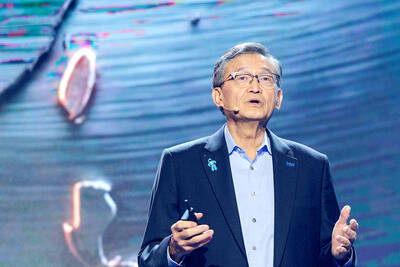
Intel Corp regards Taiwan Semiconductor Manufacturing Co (TSMC, 台積電) as a longstanding partner, as the US chipmaker would continue outsourcing production of advanced chips to TSMC, Intel chief executive officer Lip-Bu Tan (陳立武) said yesterday. “I don’t look at people as competitors. I look at the collaboration... Nvidia is also, you know, a good friend,” Tan told a news conference following his keynote speech at the Computex trade show in Taipei. “It’s a very trusted partnership for us... We are a big, top customer for them, and we’re going to continue doing that,” he said, referring to TSMC, the world’s largest foundry

Artificial intelligence (AI) agents would supplant smartphones as the center of people’s digital lives, fundamentally reshaping personal devices and driving a major computing upgrade cycle, Qualcomm Inc CEO Cristiano Amon said yesterday. In his keynote speech for this year’s Computex trade show in Taipei, Amon said that the rise of "agentic AI" — AI systems capable of reasoning, planning and carrying out tasks autonomously — would transform how people interact with technology across phones, PCs, vehicles and wearable devices. Describing the technology as the next major evolution in computing, Amon said that "2026 is the year of agents.” For decades, smartphones have sat
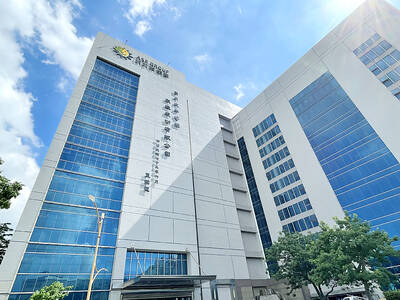
The average pay to employees by ASE Technology Holding Co (日月光投控) was the highest among the companies listed on the local main board last year, while contract chipmaker Taiwan Semiconductor Manufacturing Co (TSMC, 台積電) ranked seventh, the Taiwan Stock Exchange (TWSE) said on Monday. Data compiled by the exchange showed ASE Technology, the world’s largest chip packaging and testing services provider, paid its employees an average of NT$6.28 million (US$199,746) last year, up 40 percent from a year earlier. TSMC, the world’s largest contract chipmaker and the most profitable company in Taiwan, paid its employees NT$4.09 million on average, up


 RSS
RSS