


The TAIEX rose 1.59 percent yesterday boosted by gains on Wall Street overnight and a positive reaction to the legislature on Tuesday approving an amendment to the capital gains tax on securities investments. However, equity strategists said the market needs more good news to sustain the upward momentum.
Fubon Securities Investment Services Co (富邦投顧) analyst Kevin Chang (張宜立) said the timing of the revision to the tax could not be better and the move would lure retail investors back to the market to stem recent equity sell-offs due to external uncertainties and lackluster sentiment at home.
“The passage of the capital gains tax amendment is positive for local sentiment and market liquidity,” Chang said in a note yesterday.
Retail investors account for 70 percent of the total market turnover in Taiwan. However, many Taiwanese high-net-worth retail investors withdrew from the market after the Ministry of Finance initiated talks about revisions to the capital gains tax early last year, he said.
Under the amendment to the Income Tax Act (所得稅法), the 8,500 point index threshold that automatically triggers the imposition of the capital gains tax on individual investors has been removed.
Instead, individual investors who sell more than NT$1 billion (US$33.3 million) in shares each year will be subject to either a 15 percent tax on their capital gains, or a 0.1 percent tax rate on any stock trades that exceed NT$1 billion, effective 2015.
“High-net-worth retail investors are now more likely to return [to the market] after the removal of the capital gains tax overhang and the TAIEX’s recent corrections,” Chang said.
The TAIEX gained 121.57 points to close at 7,784.80 yesterday, with a total of 2.49 billion shares changing hands on turnover of NT$90.43 billion, down 2.64 percent from NT$92.88 billion the previous day, Taiwan Stock Exchange data showed.
Foreign investors and Chinese qualified domestic institutional investors were the biggest net sellers of stock with NT$2.19 billion, followed by domestic proprietary traders’ net selling NT$1.08 billion and domestic investment trust firms off-loading NT$167 million in shares, stock exchange data showed.
Strategists said a daily turnover of less than NT$100 billion and continued selling by major institutional investors indicated that the tax revision factor alone would be insufficient to lift the TAIEX further.
While the recently signed cross-strait service trade pact could be viewed as a long-term positive factor and the revision to the capital gains tax a short-term boost, the current market focus is on liquidity, William Dong (董成康), equities and research head of UBS Securities Taipei branch, said in a separate note.
Dong’s remarks underline a concern in emerging Asian economies about the pressure of capital outflows due to the US Federal Reserve’s plan to gradually scale down its quantitative easing program later this year.
“The question for investors at this point is what to do in a rising yield environment,” he said.
With rising yield and liquidity uncertainty, the local market is likely to continue consolidation in the near term, UBS Securities said, while lowering its TAIEX target to 8,000 points from 8,650, which it set on May 20.
Among local shares, strategists said they favored financial stocks amid expectations of recovering earnings and increased cross-strait collaboration ahead.
Securities brokers should be the most direct beneficiaries of the tax revision because of the lift in retail market turnover and participation, Credit Suisse analysts Chung Hsu (許忠維) and Michelle Chou (周盈秀) said in a note.

NEW IMPORTS: Car dealer PG Union Corp said it would consider introducing US-made models such as the Jeep Grand Cherokee and Stellantis’ RAM 1500 to Taiwan Tesla Taiwan yesterday said that it does not plan to cut its car prices in the wake of Washington and Taipei signing the Agreement on Reciprocal Trade on Thursday to eliminate tariffs on US-made cars. On the other hand, Mercedes-Benz Taiwan said it is planning to lower the price of its five models imported from the US after the zero tariff comes into effect. Tesla in a statement said it has no plan to adjust the prices of the US-made Model 3, Model S and Model X as tariffs are not the only factor the automaker uses to determine pricing policies. Tesla said

OpenAI has warned US lawmakers that its Chinese rival DeepSeek (深度求索) is using unfair and increasingly sophisticated methods to extract results from leading US artificial intelligence (AI) models to train the next generation of its breakthrough R1 chatbot, a memo reviewed by Bloomberg News showed. In the memo, sent on Thursday to the US House of Representatives Select Committee on China, OpenAI said that DeepSeek had used so-called distillation techniques as part of “ongoing efforts to free-ride on the capabilities developed by OpenAI and other US frontier labs.” The company said it had detected “new, obfuscated methods” designed to evade OpenAI’s defenses
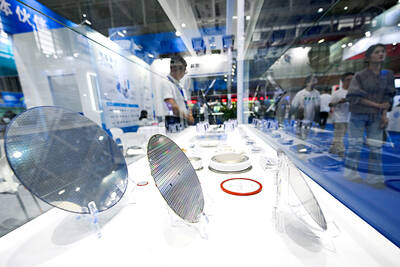
China’s top chipmaker has warned that breakaway spending on artificial intelligence (AI) chips is bringing forward years of future demand, raising the risk that some data centers could sit idle. “Companies would love to build 10 years’ worth of data center capacity within one or two years,” Semiconductor Manufacturing International Corp (SMIC, 中芯) cochief executive officer Zhao Haijun (趙海軍) said yesterday on a call with analysts. “As for what exactly these data centers will do, that hasn’t been fully thought through.” Moody’s Ratings projects that AI-related infrastructure investment would exceed US$3 trillion over the next five years, as developers pour eye-watering sums
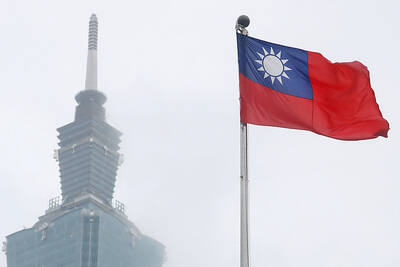
Bank of America Corp nearly doubled its forecast for the nation’s economic growth this year, adding to a slew of upgrades even after a rip-roaring last year propelled by demand for artificial intelligence (AI). The firm lifted its projection to 8 percent from 4.5 percent on “relentless global demand” for the hardware that Taiwanese companies make, according to a note dated yesterday by analysts including Xiaoqing Pi (皮曉青). Taiwan’s GDP expanded 8.63 percent last year, the fastest pace since 2010. The increase “reflects our sustained optimism over Taiwan’s technology driven expansion and is reinforced by several recent developments,” including a more stable currency,


 RSS
RSS