


Canada approved China’s biggest overseas energy acquisition, a US$15.1 billion takeover by state-owned CNOOC (中國海洋石油) of Canadian oil and gas producer Nexen, but vowed to reject any future foreign takeovers in the oil sands sector by state-owned companies.
Canadian Prime Minister Stephen Harper said on Friday the government would only consider future takeover deals in the oil sands by state-owned companies in exceptional circumstances.
“To be blunt, Canadians have not spent years reducing ownership of sectors of the economy by our own governments only to see them bought and controlled by foreign governments instead,” Harper said.
Harper’s government has been studying whether CNOOC’s deal and a smaller foreign takeover, Malaysian state-owned oil firm Petronas’ US$5.2 billion bid for Progress Energy, represent a “net benefit.”
The government also approved the Petronas deal on Friday.
Concerns had been raised that approvals could lead to a flood of deals that put control of Canada’s vast energy resources in Chinese hands, but Harper said the approvals should be seen as the end of a trend and not the beginning.
He said no other industrialized country would allow a major sector of its economy to be taken over by state-owned companies from another country.
The prime minister noted that 15 companies dominate production in the Alberta oil sands and said the sector represents 60 percent of all the oil production around the world that is not already in state hands.
He feared a few larger purchases by foreign state-owned companies could rapidly transform the industry from one that is essentially a free market industry to one that is effectively under the control of a foreign government.
Canada’s new position may not go over well in China where they are eager for an even greater share of Canada’s oil. Alberta has the world’s third-largest oil reserves after Saudi Arabia and Venezuela: More than 170 billion barrels.
Daily production of 1.5 million barrels from the oil sands is expected to increase to 3.7 million in 2025.
CNOOC and other big state-owned Asian energy companies have increased purchases of oil and gas assets in the Americas as part of a global strategy to gain access to resources needed to fuel their economies. Chinese companies have moved more carefully since CNOOC tried seven years ago to buy Unocal, but was rejected by US lawmakers, who cited national security fears.
Harper’s government originally turned down Petronas’ bid for Progress Energy in October.
The government did not publicly explain the decision to block the deal, but said a new policy framework for foreign takeovers would be released soon. Petronas was allowed to re-apply.
The decision to turn it down in October raised doubts about whether Canada is open to foreign investment.
The government also rejected Anglo-Australian BHP Billiton’s hostile takeover bid for Potash Corp in 2010 and the sale of Vancouver-based MacDonald, Dettwiler and Associates’ space-technology division to a US company in 2008.
However, Harper has lobbied the Chinese to invest in Canada’s energy sector and has said billions in foreign investment is needed to develop Canada’s vast oil and gas deposits.
Harper said the Nexen transaction by itself did not raise fears.
Most analysts believed the deal would be approved because more than 70 percent of Nexen’s assets are outside Canada. Analysts say a company like Suncor, Canada’s largest oil company, would have been off limits.
Nexen, a mid-tier energy company in Canada, operates in western Canada, the Gulf of Mexico, the North Sea, Africa and the Middle East, with its biggest reserves in the Canadian oil sands.
Shares of contract chipmaker Taiwan Semiconductor Manufacturing Co (TSMC, 台積電) came under pressure yesterday after a report that Apple Inc is looking to shift some orders from the Taiwanese company to Intel Corp. TSMC shares fell NT$55, or 2.4 percent, to close at NT$2,235 on the local main board, Taiwan Stock Exchange data showed. Despite the losses, TSMC is expected to continue to benefit from sound fundamentals, as it maintains a lead over its peers in high-end process development, analysts said. “The selling was a knee-jerk reaction to an Intel-Apple report over the weekend,” Mega International Investment Services Corp (兆豐國際投顧) analyst Alex Huang
Taiwan Semiconductor Manufacturing Co (TSMC, 台積電) is expected to remain Apple Inc’s primary chip manufacturing partner despite reports that Apple could shift some orders to Intel Corp, industry experts said yesterday. The comments came after The Wall Street Journal reported on Friday that Apple and Intel had reached a preliminary agreement following more than a year of negotiations for Intel to manufacture some chips for Apple devices. Taiwan Institute of Economic Research (台灣經濟研究院) economist Arisa Liu (劉佩真) said TSMC’s advanced packaging technologies, including integrated fan-out and chip-on-wafer-on-substrate, remain critical to the performance of Apple’s A-series and M-series chips. She said Intel and Samsung
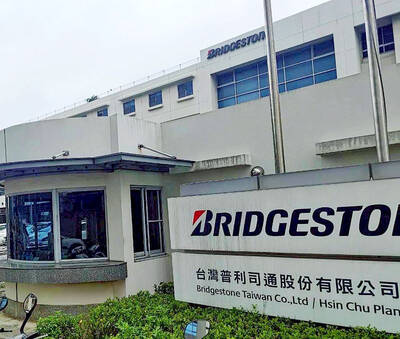
TRANSITION: With the closure, the company would reorganize its Taiwanese unit to a sales and service-focused model, Bridgestone said Bridgestone Corp yesterday announced it would cease manufacturing operations at its tire plant in Hsinchu County’s Hukou Township (湖口), affecting more than 500 workers. Bridgestone Taiwan Co (台灣普利司通) said in a statement that the decision was based on the Tokyo-based tire maker’s adjustments to its global operational strategy and long-term market development considerations. The Taiwanese unit would be reorganized as part of the closure, effective yesterday, and all related production activities would be concluded, the statement said. Under the plan, Bridgestone would continue to deepen its presence in the Taiwanese market, while transitioning to a sales and service-focused business model, it added. The Hsinchu
Taiwan Semiconductor Manufacturing Co (TSMC, 台積電) has approved a capital budget of US$31.28 billion for production expansion to meet long-term development needs during the artificial intelligence (AI) boom. The company’s board meeting yesterday approved the capital appropriation plan for purposes such as the installation of advanced technology capacity and fab construction, the world’s largest contract chipmaker said in a statement. At an earnings conference last month, TSMC forecast that its capital expenditure for this year would be at the higher end of the US$52 billion to US$56 billion range it forecast in January in response to robust demand for 5G, AI and


 RSS
RSS