


Asian stocks, excluding Japan, declined this week as companies including QBE Insurance Group and Tencent Holdings (騰訊) warned of slower earnings growth. Japanese shares rose ahead of next month’s elections.
QBE Insurance fell 15 percent in Sydney after Australia’s biggest insurer said claims in the wake of Hurricane Sandy in the US would dent full-year profit. Tencent slid 7 percent in Hong Kong as the operator of online games said revenue growth would slow after reporting profit that missed estimates. Mitsubishi UFJ Financial Group Inc, Japan’s biggest bank, rose 3.1 percent in Tokyo on speculation the elections would hand power to an opposition party advocating more aggressive monetary easing.
The MSCI Asia Pacific Excluding Japan Index slid 1.2 percent this week, trimming to 10 percent the gauge’s gain through Friday from this year’s low on June 4, as central banks added stimulus to spur economic growth and data showed a slowdown in China may be ending.
“Confidence is crucial,” said Jing Ulrich, Hong Kong-based chairwoman of global markets at the China division of JPMorgan Chase & Co. “The economy is beginning to stabilize. Maybe in the coming few months, we’ll see corporate earnings recover. We are already seeing signs of recovery in things like power generation, retail sales, industrial production and, surprisingly, Chinese exports have performed better than expected.”
Taiwan’s TAIEX slid 2.2 percent this week to 7.130.07, exchange data showed. Smartphone vendor HTC Corp (宏達電) steamed ahead on Friday after a recommendation upgrade by Morgan Stanley following the resolution of its patent dispute with Apple Inc. However, lingering concerns over the global economy kept many investors from pushing the broader market higher and dragged down the index at the end of the session, dealers said.
Australia’s S&P/ASX 200 Index also decreased 2.8 percent and South Korea’s KOSPI dropped 2.3 percent. Hong Kong’s Hang Seng Index fell 1.1 percent, while the Shanghai Composite slid 2.6 percent.
Bucking the trend, Japan’s Nikkei 225 Stock Average rose 3 percent. Japanese Prime Minister Yoshihiko Noda dissolved parliament on Friday, triggering an election on Dec. 16 that polls suggest his Democratic Party of Japan will lose.
In other markets on Friday:
Wellington ended flat, edging down 3.66 points from Thursday to 3,947.84.
Manila rose 0.45 percent, or 24.46 points to 5,439.28.
Mumbai fell 0.88 percent, or 162 points to 18,309.37.

NEW IMPORTS: Car dealer PG Union Corp said it would consider introducing US-made models such as the Jeep Grand Cherokee and Stellantis’ RAM 1500 to Taiwan Tesla Taiwan yesterday said that it does not plan to cut its car prices in the wake of Washington and Taipei signing the Agreement on Reciprocal Trade on Thursday to eliminate tariffs on US-made cars. On the other hand, Mercedes-Benz Taiwan said it is planning to lower the price of its five models imported from the US after the zero tariff comes into effect. Tesla in a statement said it has no plan to adjust the prices of the US-made Model 3, Model S and Model X as tariffs are not the only factor the automaker uses to determine pricing policies. Tesla said

OpenAI has warned US lawmakers that its Chinese rival DeepSeek (深度求索) is using unfair and increasingly sophisticated methods to extract results from leading US artificial intelligence (AI) models to train the next generation of its breakthrough R1 chatbot, a memo reviewed by Bloomberg News showed. In the memo, sent on Thursday to the US House of Representatives Select Committee on China, OpenAI said that DeepSeek had used so-called distillation techniques as part of “ongoing efforts to free-ride on the capabilities developed by OpenAI and other US frontier labs.” The company said it had detected “new, obfuscated methods” designed to evade OpenAI’s defenses
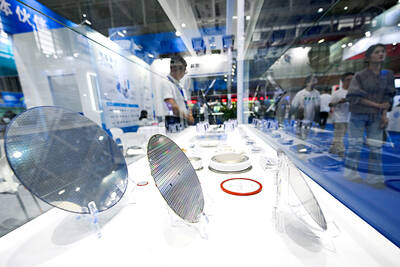
China’s top chipmaker has warned that breakaway spending on artificial intelligence (AI) chips is bringing forward years of future demand, raising the risk that some data centers could sit idle. “Companies would love to build 10 years’ worth of data center capacity within one or two years,” Semiconductor Manufacturing International Corp (SMIC, 中芯) cochief executive officer Zhao Haijun (趙海軍) said yesterday on a call with analysts. “As for what exactly these data centers will do, that hasn’t been fully thought through.” Moody’s Ratings projects that AI-related infrastructure investment would exceed US$3 trillion over the next five years, as developers pour eye-watering sums
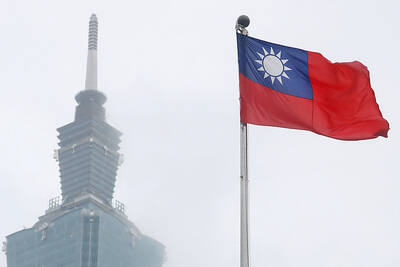
Bank of America Corp nearly doubled its forecast for the nation’s economic growth this year, adding to a slew of upgrades even after a rip-roaring last year propelled by demand for artificial intelligence (AI). The firm lifted its projection to 8 percent from 4.5 percent on “relentless global demand” for the hardware that Taiwanese companies make, according to a note dated yesterday by analysts including Xiaoqing Pi (皮曉青). Taiwan’s GDP expanded 8.63 percent last year, the fastest pace since 2010. The increase “reflects our sustained optimism over Taiwan’s technology driven expansion and is reinforced by several recent developments,” including a more stable currency,


 RSS
RSS