


Apple Inc and Foxconn Technology Group (富士康科技集團) have improved working conditions at the Chinese factories that make most of the world’s iPads and iPhones, according to auditors the firms enlisted to monitor the process, but tough tasks lie ahead.
The Fair Labor Association (FLA) said on Tuesday that local laws require the companies — which came under fire over conditions at the plants blamed for a series of suicides in 2010 — to reduce hours by almost one-third by next year for the hundreds of thousands working in Foxconn plants across southern China.
Foxconn said yesterday it would continue to cut overtime to less than nine hours a week from the current 20, even though that could raise labor costs while also making it difficult to attract workers.
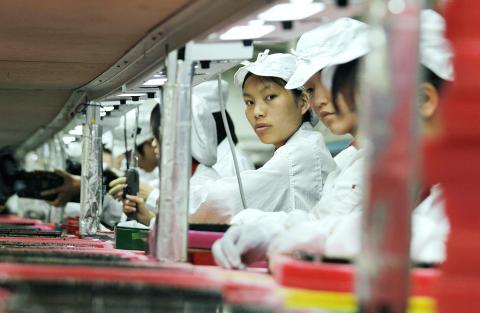
Photo: Reuters
“It is a challenge. When we reduce overtime it means we need to hire more people and implement more automation, more investment on robotic engineering. More workers also mean more dormitories and recreational facilities; it takes time,” said Louis Woo (胡國輝), special assistant to the CEO of Foxconn — the trading name of Taiwan’s Hon Hai Precision Industry Co (鴻海), whose clients also include Dell Inc, Sony Corp and Hewlett-Packard Co.
“But I expect more loyalty from workers as a result, and then we can save more costs on recruitment and retainment,” he said yesterday in an interview. “Yield rates will also improve. Efficiency in terms of productivity, yield gain, retention and lower turnover rates should be able to improve next year.”
Woo said Foxconn not only wants to do “the right thing” for its one million employees, it also wants to serve as a model for other companies.
However, FLA president and chief executive Auret van Heerden said that Foxconn faces a challenge from workers’ expectations.
“A lot of workers have clearly come to Shenzhen to make as much money as they can in as short a period as they can, and overtime hours are very important in that calculation,” he said. “We are picking up concerns now on the microblogs about what’s likely to happen as hours gets changed, and whether their incomes will be shaved as well.”
Many people would leave Foxcom if there is no overtime, according to a post by “Shenzhen Mars” on China’s microblogging site Sina Weibo (新浪微博) .
At Foxconn’s massive factory in Shenzhen’s Longhua District, six workers interviewed by media said overtime hours had been cut to between 48 hours to 60 hours per month, down from about 80 hours. Not all welcomed the move.
Some said more workers were quitting Foxconn to seek better-paid work elsewhere, with red posters plastered on walls everywhere calling for large-scale recruitment of replacements. Staff were getting text messages offering bonuses for referring friends or relatives to the factory.
“A lot of my friends have resigned,” a production line worker surnamed Li (李) said. “From just my home town alone, there have been at least ten people who have left. On a basic level, most workers were able to withstand [the pressures] of the previous overtime system.”
The FLA said in a statement yesterday that Foxconn workers were still unhappy and urged other Apple suppliers to be scrutinized as well.
“Workers have to complete the workload of 66 hours before within 60 hours now per week. As a result, the workers get lower wages, but have to work much harder and they are not satisfied with the current situation,” it said.
Apple CEO Tim Cook has shown a willingness to tackle the criticism head on.
“We’ve been making steady progress in reducing excessive work hours throughout our supply chain. We track working hours weekly for over 700,000 workers and currently have 97 percent compliance with the 60-hour maximum workweek specified in our code of conduct,” spokesman Steve Dowling said in a statement.

NEW IMPORTS: Car dealer PG Union Corp said it would consider introducing US-made models such as the Jeep Grand Cherokee and Stellantis’ RAM 1500 to Taiwan Tesla Taiwan yesterday said that it does not plan to cut its car prices in the wake of Washington and Taipei signing the Agreement on Reciprocal Trade on Thursday to eliminate tariffs on US-made cars. On the other hand, Mercedes-Benz Taiwan said it is planning to lower the price of its five models imported from the US after the zero tariff comes into effect. Tesla in a statement said it has no plan to adjust the prices of the US-made Model 3, Model S and Model X as tariffs are not the only factor the automaker uses to determine pricing policies. Tesla said

OpenAI has warned US lawmakers that its Chinese rival DeepSeek (深度求索) is using unfair and increasingly sophisticated methods to extract results from leading US artificial intelligence (AI) models to train the next generation of its breakthrough R1 chatbot, a memo reviewed by Bloomberg News showed. In the memo, sent on Thursday to the US House of Representatives Select Committee on China, OpenAI said that DeepSeek had used so-called distillation techniques as part of “ongoing efforts to free-ride on the capabilities developed by OpenAI and other US frontier labs.” The company said it had detected “new, obfuscated methods” designed to evade OpenAI’s defenses
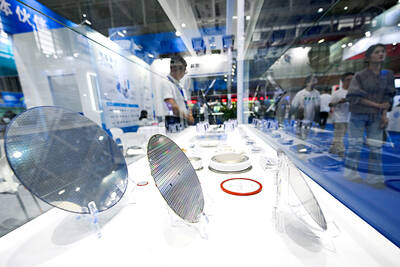
China’s top chipmaker has warned that breakaway spending on artificial intelligence (AI) chips is bringing forward years of future demand, raising the risk that some data centers could sit idle. “Companies would love to build 10 years’ worth of data center capacity within one or two years,” Semiconductor Manufacturing International Corp (SMIC, 中芯) cochief executive officer Zhao Haijun (趙海軍) said yesterday on a call with analysts. “As for what exactly these data centers will do, that hasn’t been fully thought through.” Moody’s Ratings projects that AI-related infrastructure investment would exceed US$3 trillion over the next five years, as developers pour eye-watering sums
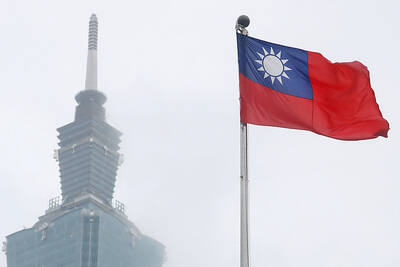
Bank of America Corp nearly doubled its forecast for the nation’s economic growth this year, adding to a slew of upgrades even after a rip-roaring last year propelled by demand for artificial intelligence (AI). The firm lifted its projection to 8 percent from 4.5 percent on “relentless global demand” for the hardware that Taiwanese companies make, according to a note dated yesterday by analysts including Xiaoqing Pi (皮曉青). Taiwan’s GDP expanded 8.63 percent last year, the fastest pace since 2010. The increase “reflects our sustained optimism over Taiwan’s technology driven expansion and is reinforced by several recent developments,” including a more stable currency,


 RSS
RSS