


British Prime Minister David Cameron has raised the prospect of a possible referendum on Britain’s future relationship with the EU, potentially threatening trade with the bloc and opening up another front against the Conservatives’ coalition partner.
Britain has had a long and painful history of infighting and changes of heart over how closely to integrate with the EU ever since it joined its precursor four decades ago.
Fears over closer fiscal union in the single currency bloc in response to the eurozone debt crisis has heightened concerns among backbenchers, especially among the eurosceptics on the right of the Conservative Party and the electorate.
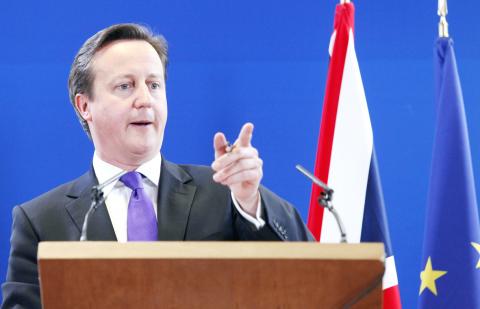
Photo: Reuters
Polls suggest that if given a chance, voters would opt out of the EU.
Cameron, writing in the Sunday Telegraph, said he believed the “vast majority of the British people,” like him, wanted to make changes to Britain’s current relationship.
He wrote that for those outside the eurozone, “far from there being too little Europe, there is too much of it” in terms of bureaucracy. The question was how to get the relationship right.
“As we get closer to the end point, we will need to consider how best to get the full-hearted support of the British people whether it is in a general election or in a referendum,” he wrote.
“As I have said, for me the two words ‘Europe’ and ‘referendum’ can go together, particularly if we really are proposing a change in how our country is governed, but let us get the people a real choice first,” he added.
A significant reason for holding back on a referendum is concerns surrounding the economic consequences of an exit from the free-trade bloc, Britain’s biggest export market.
Also, the junior partner in the coalition, the Liberal Democrats, are pro-Europe, and the two parties have already had their differences over key policies.
“Tactical and strategic patience” would need to be shown, the prime minister said.
Commentators suggested Cameron might use a referendum as an election fillip, ahead of the next parliamentary vote in 2015, especially after his party’s popularity took a knock after a budget in March.
The main opposition Labour Party has been debating about whether to hold a referendum around the time of the election.
An added pressure on Cameron has been the anti-EU UK Independence Party, which has grown in influence, doing well in local elections in May on a ticket of total withdrawal from the EU.
In the article, Cameron wrote: “As a trading nation Britain needs unfettered access to European markets and a say in how the rules of that market are written.”
“The single market is at the heart of the case for staying in the EU,” he added.
“I don’t agree with those who say we should leave and therefore want the earliest possible in/out referendum. Leaving would not be in our country’s best interests,” he wrote.
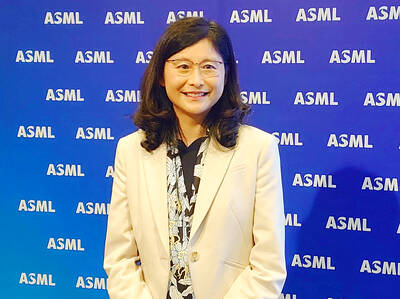
Netherlands-based semiconductor equipment supplier ASML Holding NV yesterday said that it is planning to hire an additional 1,000 people in Taiwan this year in response to growing demand from clients. ASML had previously planned to recruit 600 people this year, but that the plan has been adjusted upward, ASML vice president and ASML Taiwan general manager Grace Wang (汪佳慧) told reporters. ASML has a workforce of more than 4,500 in Taiwan, accounting for about 10 percent of its global total, Wang said. This year’s recruitment campaign would focus on adding people in the customer support, manufacturing and supply chain domains to assist ASML
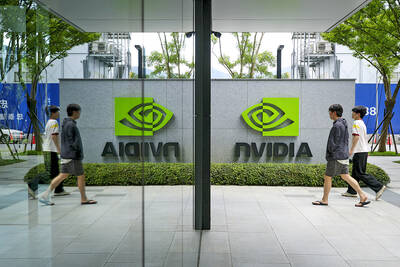
UNDER MICROSCOPE: Taiwan detained three people who allegedly conspired to buy servers in Taiwan and export them using fraudulent documentation, prosecutors said Nvidia Corp chief executive officer Jensen Huang (黃仁勳) on Saturday urged Super Micro Computer Inc to tighten up on compliance after Taiwan detained three people this week for allegedly making fraudulent declarations about artificial intelligence (AI) servers made by its US partner. The development marked the nation’s first crackdown on semiconductor smuggling, which grew after the US slapped restrictions on exports of high-end chips such as Nvidia AI accelerators to China. Nvidia is “rigorous” in explaining regulations to all of its partners, Huang told reporters after arriving in Taipei. “Ultimately Super Micro has to run their own company,” he said in response to

Nvidia Corp yesterday announced that CEO Jensen Huang (黃仁勳) would attend an employee meeting in Taipei tomorrow to celebrate the launch of the company’s Taiwan headquarters project. Huang would attend a gathering at the site of Nvidia’s planned headquarters in Beitou Shilin Technology Park (北投士林科技園區), the company said in a statement. After arriving in Taiwan on Saturday last week, Huang told reporters that he plans to meet with Quanta Computer Inc (廣達) chairman Barry Lam (林百里) and Taiwan Semiconductor Manufacturing Co (TSMC, 台積電) chairman C.C. Wei (魏哲家), and would attend the groundbreaking ceremony for Nvidia’s Taiwan headquarters tomorrow. Nvidia has not yet applied

Huawei Technologies Co (華為) said it has come up with a new pathway to shorten its gap with industry leader Taiwan Semiconductor Manufacturing Co (TSMC, 台積電), potentially achieving a breakthrough in making advanced semiconductors without cutting-edge equipment. Right now there is about a five-year gap between what TSMC is capable of and what Huawei, together with its manufacturing partner Semiconductor Manufacturing International Corp (中芯), can produce. Huawei is to start making 1.4-nanometer chips by 2031 with its own “LogicFolding” technology, Huawei semiconductor chief He Tingbo (何庭波) said in a rare public appearance during a chip conference yesterday, while TSMC has


 RSS
RSS