


Singapore Telecom yesterday said it would buy US mobile advertising start-up Amobee for US$321 million to expand group revenues from ads and marketing across Asia.
SingTel, Southeast Asia’s biggest telecom firm by revenue, said its 100 percent buyout would boost mobile ad sales in India, Thailand, the Philippines, Indonesia, Bangladesh and Pakistan, where it has large affiliates.
“A vast majority of our 400 million [clients] are in emerging markets,” said Allen Lew, chief executive of the SingTel Group’s newly formed “digital life” unit announced yesterday as part of a top-level reorganization.
EXPLODING MARKET
Citing data from technology research firm Gartner, Lew said the global mobile ad market is likely to exceed US$20 billion by 2015 from about US$7 billion this year, with 35 percent of it generated in Asia-Pacific.
Amobee, founded in 2005 and based in Redwood City, California, has offices in Europe, Asia and Latin America.
Its management team will remain in control and Amobee and will “serve operators, publishers, advertisers and agencies with leading edge mobile advertising technology and services,” SingTel said in a statement.
Despite Amobee having unaudited net assets worth only US$600,000 as of November last year, Lew told a news conference SingTel was not overpaying for the firm with the all-cash acquisition.
“The way we value this company is not based on the net tangible assets. We value this company based on what we think is eventually going to be worth,” he said.
EXPANDING REVENUES
SingTel has been expanding its revenue base beyond its small domestic market, where the mobile phone penetration rate stood at nearly 150 percent as of Dec. 11, according to Singapore government data.
SingTel has a wholly owned subsidiary in Australia called Optus.
It also owns strategic stakes in India’s Bharti Airtel, Thailand’s Advanced Info Service, Globe Telecom of the Philippines, Indonesia’s Telkomsel, Pacific Bangladesh Telecom Ltd and Warid Telecom in Pakistan.
Lew said it would take time for the buyout of Amobee to bear fruit.
“The company is currently a start-up so we are going to have to do a lot of things for it to achieve its potential,” he said. “We don’t normally discuss how long it takes for these things to break even but you know it all depends on how good we are at delivering a solution, it all depends on how fast the market grows.”
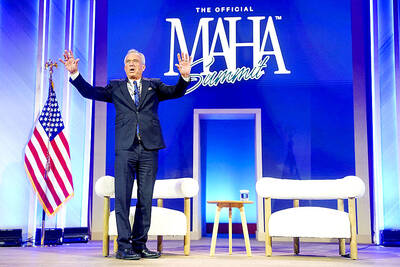
Sweeping policy changes under US Secretary of Health and Human Services Robert F. Kennedy Jr are having a chilling effect on vaccine makers as anti-vaccine rhetoric has turned into concrete changes in inoculation schedules and recommendations, investors and executives said. The administration of US President Donald Trump has in the past year upended vaccine recommendations, with the country last month ending its longstanding guidance that all children receive inoculations against flu, hepatitis A and other diseases. The unprecedented changes have led to diminished vaccine usage, hurt the investment case for some biotechs, and created a drag that would likely dent revenues and

Macronix International Co (旺宏), the world’s biggest NOR flash memory supplier, yesterday said it would spend NT$22 billion (US$699.1 million) on capacity expansion this year to increase its production of mid-to-low-density memory chips as the world’s major memorychip suppliers are phasing out the market. The company said its planned capital expenditures are about 11 times higher than the NT$1.8 billion it spent on new facilities and equipment last year. A majority of this year’s outlay would be allocated to step up capacity of multi-level cell (MLC) NAND flash memory chips, which are used in embedded multimedia cards (eMMC), a managed

CULPRITS: Factors that affected the slip included falling global crude oil prices, wait-and-see consumer attitudes due to US tariffs and a different Lunar New Year holiday schedule Taiwan’s retail sales ended a nine-year growth streak last year, slipping 0.2 percent from a year earlier as uncertainty over US tariff policies affected demand for durable goods, data released on Friday by the Ministry of Economic Affairs showed. Last year’s retail sales totaled NT$4.84 trillion (US$153.27 billion), down about NT$9.5 billion, or 0.2 percent, from 2024. Despite the decline, the figure was still the second-highest annual sales total on record. Ministry statistics department deputy head Chen Yu-fang (陳玉芳) said sales of cars, motorcycles and related products, which accounted for 17.4 percent of total retail rales last year, fell NT$68.1 billion, or

In the wake of strong global demand for AI applications, Taiwan’s export-oriented economy accelerated with the composite index of economic indicators flashing the first “red” light in December for one year, indicating the economy is in booming mode, the National Development Council (NDC) said yesterday. Moreover, the index of leading indicators, which gauges the potential state of the economy over the next six months, also moved higher in December amid growing optimism over the outlook, the NDC said. In December, the index of economic indicators rose one point from a month earlier to 38, at the lower end of the “red” light.


 RSS
RSS