


Reserves up on currency gains
The nation’s foreign-exchange reserves totaled US$393.33 billion last month, up US$4.15 billion from the previous month, because of gains on the euro and other major reserve currencies, as well as returns on reserves management strategy, the central bank said in a statement yesterday.
The euro and other major currencies continued to appreciate against the US dollar — the base currency — last month, making foreign-exchange reserves denominated in those currencies worth more, the central bank said.
The market value of securities and deposits held by foreign portfolio investors as at the end of last month was US$201.2 billion, equivalent to 51 percent of the nation’s foreign-exchange reserves, the bank said.
Taiwan remained the world’s fourth-largest holder of foreign-exchange reserves, behind China, Japan and Russia.
Chinese bond rules relaxed
The Financial Supervisory Commission said it would further relax investment restrictions and allow local banks to buy government and corporate bonds in China.
Commission official Chiu Shu-chen (邱淑貞) said late on Thursday that the move would help improve local banks’ earnings. He said some Chinese bonds have an interest rate of about 3 percent. Taiwanese bond interest rates hover just below 2 percent.
Under the Economic Co--operation Framework Agreement (ECFA), several local banks have set up subsidiaries in China, but they are barred from engaging in yuan-denominated deals in their first two years of operation.
However, officials said their overseas branches that are not regulated by China would soon be able to buy Chinese bonds.
Yang Ming eyes bigger vessels
Yang Ming Marine Transport Corp (陽明海運), the nation’s No. 2 -container shipper, said on Thursday it plans to submit a proposal to the company’s board next week to order five ships capable of carrying up to 16,000 20-foot equivalent unit (TEU) containers.
Yang Ming chairman Frank Lu (盧峰海) said on the sidelines of a legislative session that if his proposal is passed, the firm would get vessels twice the capacity of its current 8,000-TEU vessels. He said the world’s biggest container vessel is 18,000-TEU and building larger vessels is a trend among shippers.
Yang Ming has ordered 12,000-TEU vessels from Taiwan-based China Shipbuilding Corp (CSBC, 台灣國際造船) and it is scheduled to receive the ships next year.
Meanwhile, Evergreen Marine Corp (長榮海運), the nation’s largest and the world’s fourth-largest shipper, owns 7,000-TEU vessels and it has commissioned CSBC to build it 8,000-TEU vessels, which are scheduled to be delivered in 2013.
Concept ‘green’ cars unveiled
Feng Chia University in Taichung on Thursday unveiled the first hydrogen fuel station in the nation that supplies biologically produced hydrogen.
Two mini hydrogen concept cars were also introduced at the launch ceremony and there was a demonstration of how to change the biohydrogen batteries in the vehicles. The technology was developed in a joint collaboration between the university, the National Science Council and the Ministry of Economic Affairs’ Bureau of Energy which began in 1998.
Researchers succeeded in using microbiological technology to produce hydrogen fuel from agricultural waste. The cars, each fueled by six containers of hydrogen, produce no air pollutants, only water, the university’s vice president, Lee Bing-jean (李秉乾), said.
The concept cars will be test driven by students for a year, with the evaluations and results recorded for future hydrogen energy research, the university said.
Staff writer, with agencies
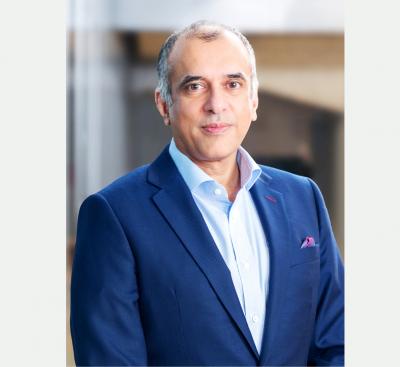
HSBC Holdings PLC is deepening its commitment to Taiwan as the economy emerges as one of the bank’s fastest-growing markets globally, driven by an artificial intelligence (AI) investment boom, expanding cross-border trade, and rising wealth creation. “The advantage that Taiwan has is a growth story linked to the semiconductor and broader AI industries, strong underlying corporate performance, and wealth creation,” said Surendra Rosha, HSBC’s co-chief executive for Asia and the Middle East, in an exclusive interview with the Taipei Times on June 2, during this year’s HSBC Taiwan Conference. That combination has helped HSBC cement its position as the most profitable international
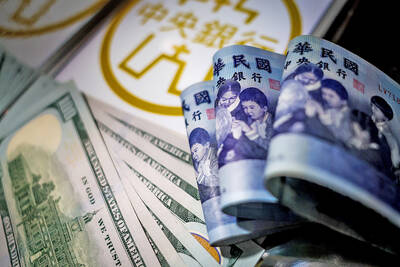
The New Taiwan dollar yesterday fell sharply against the US dollar to close at its lowest level since May 22 amid a massive outflow of funds from the country because of investors panicking over global equity markets. The NT dollar ended at NT$31.580 against the US dollar, slightly lower than its close of NT$31.568 on May 22, after moving between NT$31.5 and NT$31.648 on combined turnover of US$3.062 billion on the Taipei Foreign Exchange and the Cosmos Foreign Exchange. The NT dollar received a significant hit in the morning session, slumping as much as NT$0.173 at a time when other Asian currencies
Taiwan Semiconductor Manufacturing Co (TSMC, 台積電) is now ranked ninth among the world’s 100 most valuable companies after its market capitalization more than doubled over the past year, PricewaterhouseCoopers (PwC) Taiwan said in a report last month. TSMC’s market capitalization surged 101 percent year-on-year to US$1.427 trillion as of March 31, the accounting and consulting firm’s 2026 Global Top 100 Companies by Market Capitalization report said. The gain catapulted the world’s largest contract chipmaker from 12th place to ninth in the rankings, and it was the fastest-growing among the global top 10, it said. TSMC was the only Taiwanese company among the top
Taiwan Semiconductor Manufacturing Co (TSMC, 台積電) yesterday reported record revenue of NT$416.975 billion (US$13.17 billion) for last month, putting the world’s largest contract chipmaker on track to set a record for quarterly revenue. Last month’s figure surpassed March’s record NT$415.19 billion and represented increases of 1.5 percent from April and 30.1 percent from a year earlier. For the first five months of the year, TSMC generated NT$1.96 trillion in revenue, up 30 percent year-on-year, it said in a statement. TSMC has forecast second-quarter revenue of between US$39 billion and US$40.2 billion, representing sequential growth of about 10 percent and year-on-year growth of about


 RSS
RSS