


The regional government in Portugal’s Madeira Islands failed to report debts amounting to more than 1 billion euros (US$1.4 billion), the Bank of Portugal and the National Statistics Institute said on Friday.
The revelation was a setback for Portugal’s efforts to reduce its unsustainably high debt load through austerity measures that include tax hikes and welfare cuts.
The discovery of the hidden debt was also likely to fuel market jitters about the fiscal health of the eurozone, which includes Portugal. Greece’s financial woes stemmed in part from underreporting its debt load to European authorities.
BAILOUT
Like Greece, ailing Portugal needed a bailout and got a 78 billion euros loan from its European partners and the IMF earlier this year to spare it from looming bankruptcy.
The Madeira Islands off northwest Africa elect their own regional authorities but receive funding from the central government in Lisbon and the EU. It gets most of its own revenue from tourism.
The finance ministry said the failure to report the true extent of Madeira’s debts was a “grave irregularity.”
Polish Finance Minister Vitor Gaspar said earlier this month that Madeira’s authorities had asked the Lisbon government for help in putting its finances in order. A special rescue package is due to be announced by the end of the month. Unconfirmed reports say Madeira may need 5 billion euros.
Portugal’s Audit Court raised the alarm five months ago when it said Madeira’s accounts did not add up. The central bank and statistics agency began examining Madeira’s books in August.
LEADER
Madeira has been governed by the same man, Alberto Joao Jardim, since 1978, making him one of Europe’s longest-serving elected leaders.
A populist, he has maintained his support by investing heavily in public works and thumbing his nose at politicians in Lisbon. He is standing for re-election next month.
Speaking at the opening of a kindergarten, Jardim said “there is no hidden debt” in Madeira and added that his administration had not concealed anything.
A recently introduced law governing regional finance had halted investments, put a stop to ongoing bank arrangements and interrupted accounting and auditing processes, he said.
Jardim is one of the founders of Portugal’s center-right Social Democratic Party, which is the senior partner in the coalition government, and Madeira’s financial problems have caused embarrassment for Social Democrat Prime Minister Pedro Passos Coelho.
The leader of the main opposition Socialist Party, Antonio Jose Seguro, challenged Passos Coelho to disown Jardim.
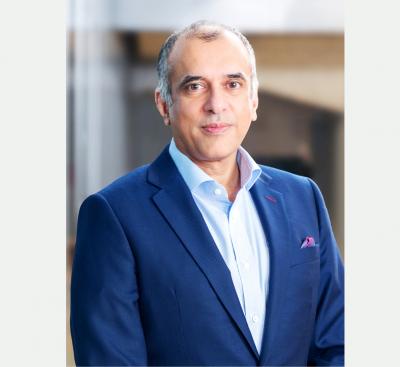
HSBC Holdings PLC is deepening its commitment to Taiwan as the economy emerges as one of the bank’s fastest-growing markets globally, driven by an artificial intelligence (AI) investment boom, expanding cross-border trade, and rising wealth creation. “The advantage that Taiwan has is a growth story linked to the semiconductor and broader AI industries, strong underlying corporate performance, and wealth creation,” said Surendra Rosha, HSBC’s co-chief executive for Asia and the Middle East, in an exclusive interview with the Taipei Times on June 2, during this year’s HSBC Taiwan Conference. That combination has helped HSBC cement its position as the most profitable international

The New Taiwan dollar yesterday fell sharply against the US dollar to close at its lowest level since May 22 amid a massive outflow of funds from the country because of investors panicking over global equity markets. The NT dollar ended at NT$31.580 against the US dollar, slightly lower than its close of NT$31.568 on May 22, after moving between NT$31.5 and NT$31.648 on combined turnover of US$3.062 billion on the Taipei Foreign Exchange and the Cosmos Foreign Exchange. The NT dollar received a significant hit in the morning session, slumping as much as NT$0.173 at a time when other Asian currencies
Taiwan Semiconductor Manufacturing Co (TSMC, 台積電) is now ranked ninth among the world’s 100 most valuable companies after its market capitalization more than doubled over the past year, PricewaterhouseCoopers (PwC) Taiwan said in a report last month. TSMC’s market capitalization surged 101 percent year-on-year to US$1.427 trillion as of March 31, the accounting and consulting firm’s 2026 Global Top 100 Companies by Market Capitalization report said. The gain catapulted the world’s largest contract chipmaker from 12th place to ninth in the rankings, and it was the fastest-growing among the global top 10, it said. TSMC was the only Taiwanese company among the top
Taiwan Semiconductor Manufacturing Co (TSMC, 台積電) yesterday reported record revenue of NT$416.975 billion (US$13.17 billion) for last month, putting the world’s largest contract chipmaker on track to set a record for quarterly revenue. Last month’s figure surpassed March’s record NT$415.19 billion and represented increases of 1.5 percent from April and 30.1 percent from a year earlier. For the first five months of the year, TSMC generated NT$1.96 trillion in revenue, up 30 percent year-on-year, it said in a statement. TSMC has forecast second-quarter revenue of between US$39 billion and US$40.2 billion, representing sequential growth of about 10 percent and year-on-year growth of about


 RSS
RSS