


Barbary fig oil, celebrated as an effective anti-ageing skin potion, is following argan oil as a great new cosmetic export from Morocco.
However, the tiny amount of oil extracted from each cactus fruit makes Barbary fig oil the most expensive on the market, about 1,000 euros (US$1,440) a liter.
Beyond its cosmetic virtues, the UN is urging Morocco to develop the plant in a country where 80 percent of farming is carried out in arid or semi-arid regions.
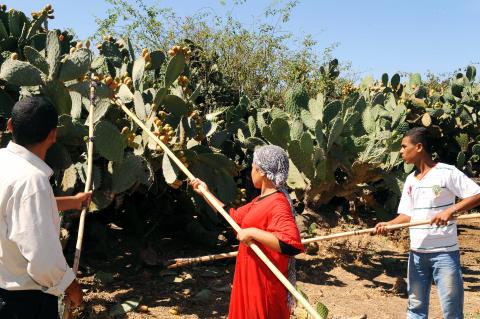
Photo: AFP
The push to develop Barbary fig, a cactus fruit well-adapted to extreme weather conditions, comes with a belief that several revenue streams could stem from it. If successful, the cactus could stand as a business model to other countries looking for cash crops suitable to inhospitably hot climates.
Eight tonnes of the Barbary fig fruit — sometimes known as prickly pear — are needed to produce a liter of oil used for cosmetics, said Karim Anegay, head of the cactus program at the economic promotion office for southern Morocco.
“This oil is commercialized by Moroccan companies as its anti-ageing virtues are of excellent quality, but it’s still early days,” he said.
In Casablanca, cosmetics company Azabane uses Barbary fig oil in shampoo and creams.
Redouane Stouti, a 27-year-old entrepreneur, owns a farm in the Errhamana region, where he produces 10 liters a month from his vast plantation.
“With the help of a machine, the fruit seeds are pressed as is,” he said.
“I have 20 points of sale in Morocco under the ‘Coeur de Figue’ appellation,” he said as he toured a series of alleys where about 30 women were picking the thorny fruit.
Researcher Mohammed Boujnah said the oil was “rich in Vitamin E with a great anti-oxidant power.”
Sofia, a 50-year-old customer, said the oil was “wonderful.”
“Ever since I’ve used it I’ve seen an improvement and elasticity in my skin,” she said.
In the Gulemim and Sidi Ifni regions, both extremely arid, Morocco began an ambitious program to increase cactus production.
The UN Development Programme contributed US$1.7 million to the program and provided technical assistance, said program director El Kebir Alaouoi M’Daghri.
Annual production of Barbary fig fruit in Morocco is 1.2 million tonnes from 150,000 hectares of plantations, mostly in southern regions.
Originally imported from the Americas in the 16th century, the cactus and its fruit are used traditionally, often as food. Orangish-red when ripe, the fruit’s juicy insides taste something like a very sweet watermelon.
UN experts say the fruit can even be used as sustenance during famines.
In southern regions, “conventional farming can no longer provide added value and that is why we have found cactus cultivation as an alternative,” M’Daghri said.
The Sidi Ifni Province recently held a festival to promote the cactus fruit and the UN-backed program is currently building installations to improve production of Morocco’s latest agricultural initiative.

Shares of contract chipmaker Taiwan Semiconductor Manufacturing Co (TSMC, 台積電) came under pressure yesterday after a report that Apple Inc is looking to shift some orders from the Taiwanese company to Intel Corp. TSMC shares fell NT$55, or 2.4 percent, to close at NT$2,235 on the local main board, Taiwan Stock Exchange data showed. Despite the losses, TSMC is expected to continue to benefit from sound fundamentals, as it maintains a lead over its peers in high-end process development, analysts said. “The selling was a knee-jerk reaction to an Intel-Apple report over the weekend,” Mega International Investment Services Corp (兆豐國際投顧) analyst Alex Huang
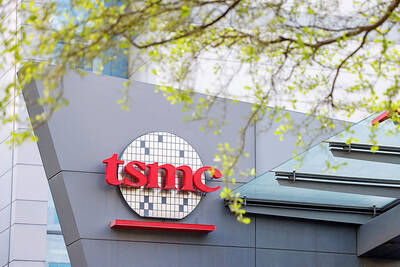
Taiwan Semiconductor Manufacturing Co (TSMC, 台積電) is expected to remain Apple Inc’s primary chip manufacturing partner despite reports that Apple could shift some orders to Intel Corp, industry experts said yesterday. The comments came after The Wall Street Journal reported on Friday that Apple and Intel had reached a preliminary agreement following more than a year of negotiations for Intel to manufacture some chips for Apple devices. Taiwan Institute of Economic Research (台灣經濟研究院) economist Arisa Liu (劉佩真) said TSMC’s advanced packaging technologies, including integrated fan-out and chip-on-wafer-on-substrate, remain critical to the performance of Apple’s A-series and M-series chips. She said Intel and Samsung
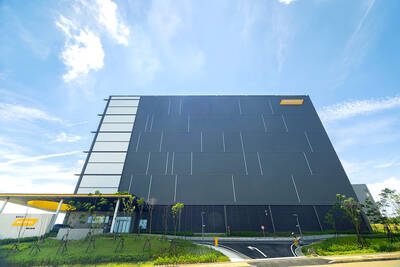
POWER BUILDUP: Powered by Nvidia’s B200 Blackwell chips, the data center would support MediaTek’s computing power demand and business growth, the company said Smartphone chip designer MediaTek Inc (聯發科) yesterday launched a new artificial intelligence (AI) data center with a maximum capacity of 45 megawatts to meet its rising demand for computing power required to develop new advanced chips for AI applications. The company has completed the first-phase computing power buildup at the data center in Miaoli County’s Tongluo Township (銅鑼), providing 15 megawatts of capacity to support its research and development (R&D) capabilities, despite an industrywide shortage of key components, MediaTek said. Supply constraints have plagued a wide range of key components, including memory chips, solid-state drives, power supply units and central
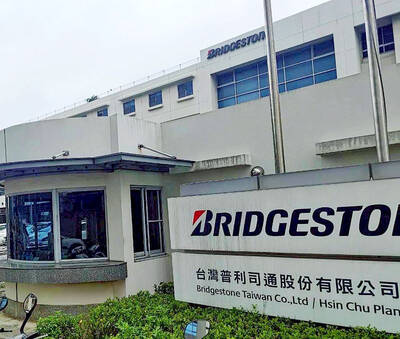
TRANSITION: With the closure, the company would reorganize its Taiwanese unit to a sales and service-focused model, Bridgestone said Bridgestone Corp yesterday announced it would cease manufacturing operations at its tire plant in Hsinchu County’s Hukou Township (湖口), affecting more than 500 workers. Bridgestone Taiwan Co (台灣普利司通) said in a statement that the decision was based on the Tokyo-based tire maker’s adjustments to its global operational strategy and long-term market development considerations. The Taiwanese unit would be reorganized as part of the closure, effective yesterday, and all related production activities would be concluded, the statement said. Under the plan, Bridgestone would continue to deepen its presence in the Taiwanese market, while transitioning to a sales and service-focused business model, it added. The Hsinchu


 RSS
RSS