


Housing transactions in Taipei last month were nearly flat compared with a month earlier, but recorded a double-digit drop from a year ago as prospective investors stayed on the sidelines because of the luxury tax, real-estate analysts said yesterday.
Home transfers totaled 4,552 units in Taipei last month, edging up 0.18 percent from 4,544 units in May, according to Taipei City Government statistics released yesterday.
On a year-on-year basis, however, transactions dropped 13.78 percent from the same month last year, the -lowest figure for June in eight years.
“The data showed that prospective home buyers remained cautious after the implementation of the luxury tax, although the levy failed to trigger a heavy price correction,” said Doris Chang (張心妮), an associate manager at Chinatrust Real Estate Co (中信房屋).
Starting on June 1, houses resold within one to two years of purchase are subject to a special sales levy of 10 to 15 percent of the transaction price.
The city’s soaring housing prices also helped slow the market, Chang said, adding that mortgage payments take up more than 50 percent of household incomes in Taipei.
Jessica Hsu (徐佳馨), head -researcher at H&B Realty (住商不動產), the nation’s largest real-estate broker by number of outlets, said that housing transactions in Wenshan District (文山) more than doubled last month from May because the area offered relatively more affordable prices.
“Relatively low prices are also why home sales in Wanhua District (萬華) increased 12.98 percent month-on-month [last month],” Hsu said.
For the first six months of this year, housing transactions amounted to 29,200 units, down 12.57 percent from a year earlier and only slightly better than the 27,926 units recorded in the first half of 2009, when the global financial crisis dragged down the market.
Stanley Su (蘇啟榮), head of research at Sinyi Realty Co (信義房屋), the nation’s only listed broker, said the figures affirmed the luxury tax’s success in cooling the real--estate market after a series of tightening measures failed to do so.
The central bank has since June last year raised interest rates by 12.5 basis points per quarter and twice reduced the loan-to-value ratio on homes in Taipei and popular areas of New Taipei City (新北市).
The Financial Supervisory Commission has also raised the capital requirements for holdings of -undeveloped land by insurance firms and stepped up inspections on mortgage operations by lenders.
Analysts expect the market to remain sluggish this quarter, but added that solid demand and excess liquidity would support housing prices.
“Expectations of a price fall appear increasingly dim now that the luxury tax has been in place for more than one month and the market is quite stable,” Hsu said.
Su agreed, saying the market was likely to regain momentum in the fourth quarter when it enters its high season and as the presidential and legislative elections draw nearer.
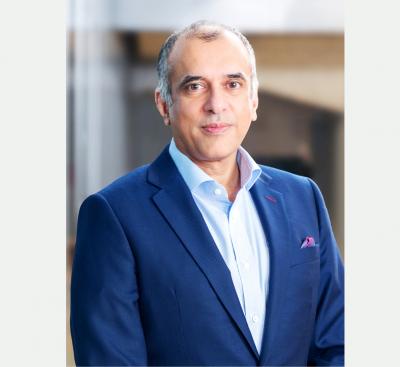
HSBC Holdings PLC is deepening its commitment to Taiwan as the economy emerges as one of the bank’s fastest-growing markets globally, driven by an artificial intelligence (AI) investment boom, expanding cross-border trade, and rising wealth creation. “The advantage that Taiwan has is a growth story linked to the semiconductor and broader AI industries, strong underlying corporate performance, and wealth creation,” said Surendra Rosha, HSBC’s co-chief executive for Asia and the Middle East, in an exclusive interview with the Taipei Times on June 2, during this year’s HSBC Taiwan Conference. That combination has helped HSBC cement its position as the most profitable international
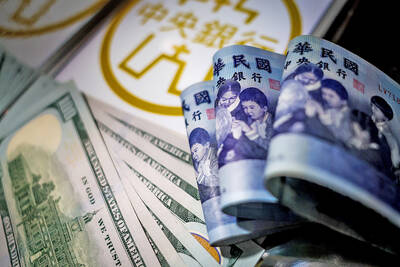
The New Taiwan dollar yesterday fell sharply against the US dollar to close at its lowest level since May 22 amid a massive outflow of funds from the country because of investors panicking over global equity markets. The NT dollar ended at NT$31.580 against the US dollar, slightly lower than its close of NT$31.568 on May 22, after moving between NT$31.5 and NT$31.648 on combined turnover of US$3.062 billion on the Taipei Foreign Exchange and the Cosmos Foreign Exchange. The NT dollar received a significant hit in the morning session, slumping as much as NT$0.173 at a time when other Asian currencies
Taiwan Semiconductor Manufacturing Co (TSMC, 台積電) is now ranked ninth among the world’s 100 most valuable companies after its market capitalization more than doubled over the past year, PricewaterhouseCoopers (PwC) Taiwan said in a report last month. TSMC’s market capitalization surged 101 percent year-on-year to US$1.427 trillion as of March 31, the accounting and consulting firm’s 2026 Global Top 100 Companies by Market Capitalization report said. The gain catapulted the world’s largest contract chipmaker from 12th place to ninth in the rankings, and it was the fastest-growing among the global top 10, it said. TSMC was the only Taiwanese company among the top
Taiwan Semiconductor Manufacturing Co (TSMC, 台積電) yesterday reported record revenue of NT$416.975 billion (US$13.17 billion) for last month, putting the world’s largest contract chipmaker on track to set a record for quarterly revenue. Last month’s figure surpassed March’s record NT$415.19 billion and represented increases of 1.5 percent from April and 30.1 percent from a year earlier. For the first five months of the year, TSMC generated NT$1.96 trillion in revenue, up 30 percent year-on-year, it said in a statement. TSMC has forecast second-quarter revenue of between US$39 billion and US$40.2 billion, representing sequential growth of about 10 percent and year-on-year growth of about


 RSS
RSS