


Imagine buying shares in a company that could be closed down overnight.
That is in some ways what Renren (人人網), dubbed the Facebook of China, asked investors to do.
Last week, investors complied: Renren raised US$743.4 million in an initial public offering (IPO) and its shares jumped 29 percent on their first day of trading on the New York Stock Exchange.
However, Renren’s operations, which include social networking, gaming and online commerce, walk a thin line of compliance with strict Chinese regulations around freedom of information — and if they cross the line, the consequences could be very severe.
“People at any social network in China that is going to be successful are going to be very sensitive to playing the game by the rules,” said Dixon Doll, cofounder and general partner of venture capital firm DCM, which is an investor in Renren. “You’re going to have to pay attention to the will of the Chinese government because they are going to ... keep a very close look on the kinds of activities that go on.”
China’s rules for sharing information online have become stricter since authoritarian regimes across North Africa and the Middle East have been toppled or challenged by protesters.
STAMPING OUT DISSENT
The Chinese Communist Party leadership is determined to stamp out even the hint of such protests immediately. It learned a harsh lesson in 1989 when mass demonstrations threatened its control and triggered a bloody military crackdown in Tiananmen Square.
“They may regard [Renren] as a friendly enterprise, but if an enterprise turns unfriendly, I think they would cut the cord,” said Donald Straszheim, senior managing director of China Research at International Strategy & Investment Group.
China has already blocked social networking sites Twitter, Flickr, Facebook and YouTube, while Google Inc essentially pulled out of China last year after run-ins with the government over censorship and hacking.
The government routinely shuts sites down or more commonly blocks content it sees as a security risk — and recently, Chinese President Hu Jintao (胡錦濤) called for yet more oversight and “mechanisms to guide online public opinion.”
However, Beijing also sees social media as a valuable gauge of public sentiment and a way to show the Chinese it is sensitive to what they want, said Michal Meidan, a China analyst at political risk consultancy Eurasia Group.
In this peculiar environment, China-bred Internet ventures have adapted, learning to skillfully navigate the system.
In the case of a company like Renren, that means blocking whatever you are told to block by the authorities and also by self censoring, which means reading the political winds so that you block other material you fear could be controversial.
“It’s a constant game of cat and mouse,” Meidan said.
Renren itself acknowledges the tenuousness of its position in the risk factors section of its IPO prospectus. While these disclosures are notorious for listing the most extreme risks, in this case, they may well be worth a closer reading.
The company says it is prohibited from allowing content that, among other things, “impairs the national dignity of China,” is “superstitious” or “socially destabilizing.”
If Renren fails to comply, which would be determined by the authorities, the company says its business could be shut down.
In the cases of more serious, or “material” violations, the penalties could include “a revocation of our operating licenses or a suspension or shutdown of our online operations, which would materially and adversely affect our business, results of operations and reputation,” Renren said.
LIABLE
The social networking company said it was liable for all material posted on its Web sites, from advertisements — some of which must be vetted by government officials before being posted — to individual communications between users.
With that much responsibility, Renren said it may not always know what content could cause problems and may only find out about the violation after it has already happened.
Renren’s structure also presents problems.
For example, the fact that Renren is incorporated in the Cayman Islands puts it in danger of being subject to new limitations if foreign investment rules or their interpretation change. Renren’s online gaming operations, which provided 45 percent of the company’s revenue last year, could also be affected by Beijing’s efforts to curb gaming addiction in minors.
All told, Renren used variations of the word “uncertain” nearly 70 times in its prospectus and the word, “regulation” nearly 300 times. By way of comparison, US Internet phone services provider Skype used “uncertain” about 60 times in its prospectus, but only used “regulation” about 170 times.
MURKY RULES
Many risks lie in the uncertain and changing nature of China’s Internet laws, which Renren said are enforced and interpreted in an “evolving” way, are often not published on a timely basis — or at all — and may be applied retroactively.
The Chinese government has been wary of online content that stirs up the population for some time.
In 2007, Chinese government officials struggled with what to do with China Central Television anchor Rui Chenggang’s (芮成鋼) blog call for the Forbidden City Palace Museum to evict Starbucks. It drew 500,000 signatures to an online petition and dozens of domestic newspaper articles, according to a February 2007 diplomatic cable sent from the US embassy in Beijing.
The post was patriotic, but also showed just how a massive protest movement might emerge in the world’s biggest Internet market, according to the cable, which was obtained by Wikileaks and provided to Reuters by a third party.
“Blog content that spurs extremist passions is precisely the kind of material the Government would like to control,” according to an executive at a Chinese Internet company, cited in the cable. “The paramount concern [is] that a mass movement might emerge, born on blogs or through another electronic medium, to reduce the Government’s maneuvering room on a sensitive issue, or challenge Party authority.”
Since that time, though, Beijing has radically stepped up its online information control.
It put a ban on postings containing the word “Egypt” as protesters in Egypt demanded and finally succeeded in bringing down the government of former Egyptian president Hosni Mubarak.
The level of paranoia increased even more when overseas Chinese-language Web site Boxun (博訊網) made an online call for gatherings at various places around the country. Police were sent out and detained and beat foreign journalists who went to see if there were protests in downtown Beijing and Shanghai.
After then-US ambassador Jon Huntsman was seen in a crowd at one of the pro-democracy gatherings in Beijing, censors cracked down on microblog searches for his Chinese name. They have also blocked searches for “jasmine,” “jasmine revolution” and “Hillary Clinton” on popular Web sites.
So far, China’s rapid economic growth has outpaced its political problems, bringing many people from poverty into the middle classes. It has also ironically allowed China’s security apparatus to get all the funds it needs for surveillance.
LITTLE DANGER
Despite concerns about inflation and corruption — which both helped to trigger the Tiananmen protests — few think China’s rulers are in any danger of being threatened like the leaders in North Africa and the Middle East.
However, there have been protests and strikes and the authorities fear that if the nation’s economic growth were to slow significantly, unrest could bubble up. As social media-powered protests elsewhere have proven, Web sites like Renren could find themselves in the middle of a perfect storm.
“I don’t think there’s a threat in China of anything comparable to the Middle East,” but the fear of mass-mobilization is enough to create a sense of urgency around social media, Meidan said.
“Ahead of the political leadership transition in 2012, it’s going to remain very, very volatile,” she said, referring to the expected power handover from Hu.
Renren’s self censorship should be enough to protect it under normal circumstances, but if the Chinese leadership felt really threatened, the story might be very different.
One of Renren’s biggest appeals for US investors is its access to the biggest Internet user base in the world in a country that has put up walls to major global competitors.
However, that’s exactly what might be Renren’s Achilles’ heel. If a government can’t accommodate the Googles of this world, then what will happen to the local equivalent if it is implicated, even if unwittingly, in a major political eruption?
Shares of contract chipmaker Taiwan Semiconductor Manufacturing Co (TSMC, 台積電) came under pressure yesterday after a report that Apple Inc is looking to shift some orders from the Taiwanese company to Intel Corp. TSMC shares fell NT$55, or 2.4 percent, to close at NT$2,235 on the local main board, Taiwan Stock Exchange data showed. Despite the losses, TSMC is expected to continue to benefit from sound fundamentals, as it maintains a lead over its peers in high-end process development, analysts said. “The selling was a knee-jerk reaction to an Intel-Apple report over the weekend,” Mega International Investment Services Corp (兆豐國際投顧) analyst Alex Huang
Taiwan Semiconductor Manufacturing Co (TSMC, 台積電) is expected to remain Apple Inc’s primary chip manufacturing partner despite reports that Apple could shift some orders to Intel Corp, industry experts said yesterday. The comments came after The Wall Street Journal reported on Friday that Apple and Intel had reached a preliminary agreement following more than a year of negotiations for Intel to manufacture some chips for Apple devices. Taiwan Institute of Economic Research (台灣經濟研究院) economist Arisa Liu (劉佩真) said TSMC’s advanced packaging technologies, including integrated fan-out and chip-on-wafer-on-substrate, remain critical to the performance of Apple’s A-series and M-series chips. She said Intel and Samsung

POWER BUILDUP: Powered by Nvidia’s B200 Blackwell chips, the data center would support MediaTek’s computing power demand and business growth, the company said Smartphone chip designer MediaTek Inc (聯發科) yesterday launched a new artificial intelligence (AI) data center with a maximum capacity of 45 megawatts to meet its rising demand for computing power required to develop new advanced chips for AI applications. The company has completed the first-phase computing power buildup at the data center in Miaoli County’s Tongluo Township (銅鑼), providing 15 megawatts of capacity to support its research and development (R&D) capabilities, despite an industrywide shortage of key components, MediaTek said. Supply constraints have plagued a wide range of key components, including memory chips, solid-state drives, power supply units and central
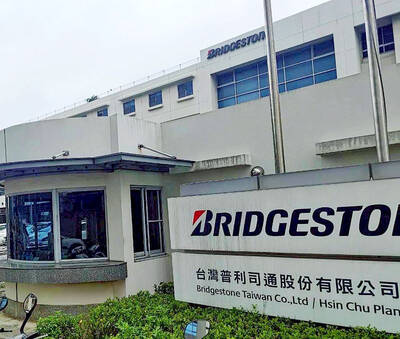
TRANSITION: With the closure, the company would reorganize its Taiwanese unit to a sales and service-focused model, Bridgestone said Bridgestone Corp yesterday announced it would cease manufacturing operations at its tire plant in Hsinchu County’s Hukou Township (湖口), affecting more than 500 workers. Bridgestone Taiwan Co (台灣普利司通) said in a statement that the decision was based on the Tokyo-based tire maker’s adjustments to its global operational strategy and long-term market development considerations. The Taiwanese unit would be reorganized as part of the closure, effective yesterday, and all related production activities would be concluded, the statement said. Under the plan, Bridgestone would continue to deepen its presence in the Taiwanese market, while transitioning to a sales and service-focused business model, it added. The Hsinchu


 RSS
RSS