


Taipei 101 Mall has reduced its annual carbon emissions by 3,532 tonnes and cut its power bill by nearly 10 percent after adopting “green” measures, including installing LED lighting, figures released by the mall's engineering team show.
The mall spent NT$119 million (US$4 million) on electricity bills in 2008. However, after adopting green measures, it shaved 9.6 percent, or about NT$10 million, off its bills, said Sheu Jau-fa (許招發), head of the mall’s engineering operations management.
These green measures include changing over to energy-saving lights in the parking lot and installing LED lighting and infrared sensors to control brightness, he said.
Sheu made the remarks at an activity the Ministry of Economic Affairs organized yesterday to promote the work of its energy conservation and greenhouse gas emissions reduction service team.
The team was formed in May as part of the administration’s efforts to synergize the resources of various government agencies to provide a one-stop shop for energy conservation matters.
The agencies include the Bureau of Energy, the Industrial Development Bureau, the National Science Council, the Ministry of Education and the Ministry of the Interior.
The team has six divisions covering sectors such as educational institutions, small and medium businesses, manufacturers and green construction.
“In the past, various agencies had similar initiatives to encourage energy conservation, but the resources were scattered,” said Steven Wu (吳志偉), a section chief at the Bureau of Energy.
With the establishment of the team, it is able to combine different agencies’ know-how to better address the needs of the private sector, Wu said.
The team has consultants that can conduct on-site inspections if requested by companies and offer advice and solutions on conserving energy and reducing carbon emissions.
The ministry said the team conducted 3,141 on-site inspections last year, and its analyses showed that those projects could reduce carbon emissions by 735,000 tonnes a year.
Taoyuan-based Yuan Ze University has also employed the team’s services.
The university’s dean of general affairs, Wei Jung-tzung (魏榮宗), said the school was trying hard to reduce its utility bills, which amounted to about NT$60 million a year.
“That amount took up half the annual subsidy from the Ministry of Education,” he said.
Yuan Ze decided to install solar systems to heat water and supply electricity to the campus and dormitories, among other measures.
Now it enjoys savings of about NT$20 million in annual utility bills, Wei said.
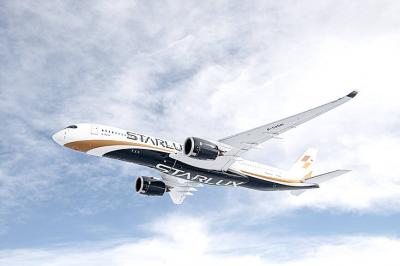
Starlux Airlines Co (星宇航空) today unveiled a long-haul network expansion plan at a shareholders’ meeting in Taipei, including direct flights to Barcelona, Spain, and Zurich, Switzerland, as well as a service connecting Taipei, Sydney and New Zealand. Starlux is to become the first Taiwanese carrier to offer non-stop services to the two European cities, while the inaugural oceanic route is expected to expand transit opportunities within the Australia-New Zealand market, Starlux said. Flight services to Chicago, Dallas, Washington and New York are under evaluation, the airline added. Prior to the shareholders’ meeting, the airline earlier this year announced that it would be

Netherlands-based semiconductor equipment supplier ASML Holding NV yesterday said that it is planning to hire an additional 1,000 people in Taiwan this year in response to growing demand from clients. ASML had previously planned to recruit 600 people this year, but that the plan has been adjusted upward, ASML vice president and ASML Taiwan general manager Grace Wang (汪佳慧) told reporters. ASML has a workforce of more than 4,500 in Taiwan, accounting for about 10 percent of its global total, Wang said. This year’s recruitment campaign would focus on adding people in the customer support, manufacturing and supply chain domains to assist ASML

Cairo’s new monorail slices across the city skyline, running above the familiar chaos of blaring horns and aging buses’ exhaust fumes that mark rush hour below. The US$4.5 billion monorail, opened this month, is among Egypt’s most prominent new transport projects, part of a debt-funded infrastructure drive criticized for sapping state finances while bringing limited benefits to most of the country’s 109 million people. “It feels like you’re in a different country,” said Ramy Sayed, a restaurant manager, aboard a driverless Innovia 300 train. “No noise, no traffic, we’re not used to this.” The eastern line runs 56km from the bustling middle-class
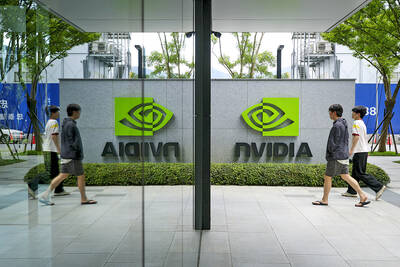
UNDER MICROSCOPE: Taiwan detained three people who allegedly conspired to buy servers in Taiwan and export them using fraudulent documentation, prosecutors said Nvidia Corp chief executive officer Jensen Huang (黃仁勳) on Saturday urged Super Micro Computer Inc to tighten up on compliance after Taiwan detained three people this week for allegedly making fraudulent declarations about artificial intelligence (AI) servers made by its US partner. The development marked the nation’s first crackdown on semiconductor smuggling, which grew after the US slapped restrictions on exports of high-end chips such as Nvidia AI accelerators to China. Nvidia is “rigorous” in explaining regulations to all of its partners, Huang told reporters after arriving in Taipei. “Ultimately Super Micro has to run their own company,” he said in response to


 RSS
RSS