


The first oil pipeline between Russia and China, feted as a mark of growing ties between the world’s biggest oil producer and its biggest energy consumer, started operation on Saturday, state media said.
Oil began flowing through the pipeline that links Siberia with refineries in the northeastern Chinese city of Daqing at 11:50am after two months of testing, Xinhua news agency reported.
Chinese President Hu Jintao (胡錦濤) and Russian President Dmitry Medvedev had symbolically opened the pipeline — which stretches for 2,694km on the Russian side and 930km in China — on Sept. 27.
The pipeline has the capacity to carry 30 million tonnes of oil annually and will make an important contributuion to China’s attempts to diversify energy imports, state media said. Under a 2009 deal, China will receive oil for 20 years in exchange for loans worth US$25 billion.
China has already overtaken the US as the largest energy consumer. It derives 70 percent of its energy from coal combustion, but aims to diversify sources to include gas, nuclear and renewables, such as wind energy.
In October 2009, during a visit to Beijing by Russian Prime Minister Vladimir Putin, the Russian giant Gazprom and China National Petroleum Co signed a framework agreement providing for deliveries of 70 billion cubic meters of Russian gas to China each year.
However, the agreement has yet to come into force because of disagreements between Chinese and Russian negotiators over gas prices.

Taiwan Semiconductor Manufacturing Co (TSMC, 台積電) last week recorded an increase in the number of shareholders to the highest in almost eight months, despite its share price falling 3.38 percent from the previous week, Taiwan Stock Exchange data released on Saturday showed. As of Friday, TSMC had 1.88 million shareholders, the most since the week of April 25 and an increase of 31,870 from the previous week, the data showed. The number of shareholders jumped despite a drop of NT$50 (US$1.59), or 3.38 percent, in TSMC’s share price from a week earlier to NT$1,430, as investors took profits from their earlier gains

In a high-security Shenzhen laboratory, Chinese scientists have built what Washington has spent years trying to prevent: a prototype of a machine capable of producing the cutting-edge semiconductor chips that power artificial intelligence (AI), smartphones and weapons central to Western military dominance, Reuters has learned. Completed early this year and undergoing testing, the prototype fills nearly an entire factory floor. It was built by a team of former engineers from Dutch semiconductor giant ASML who reverse-engineered the company’s extreme ultraviolet lithography (EUV) machines, according to two people with knowledge of the project. EUV machines sit at the heart of a technological Cold
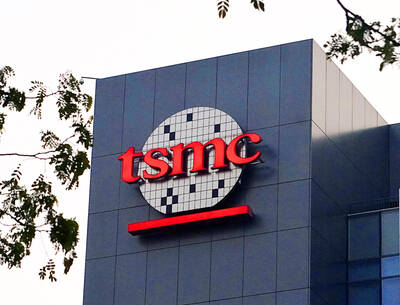
Taiwan’s long-term economic competitiveness will hinge not only on national champions like Taiwan Semiconductor Manufacturing Co. (TSMC, 台積電) but also on the widespread adoption of artificial intelligence (AI) and other emerging technologies, a US-based scholar has said. At a lecture in Taipei on Tuesday, Jeffrey Ding, assistant professor of political science at the George Washington University and author of "Technology and the Rise of Great Powers," argued that historical experience shows that general-purpose technologies (GPTs) — such as electricity, computers and now AI — shape long-term economic advantages through their diffusion across the broader economy. "What really matters is not who pioneers
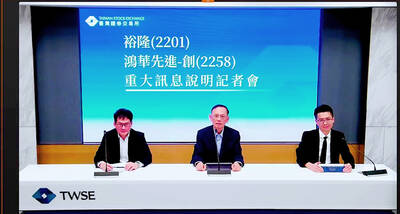
TAIWAN VALUE CHAIN: Foxtron is to fully own Luxgen following the transaction and it plans to launch a new electric model, the Foxtron Bria, in Taiwan next year Yulon Motor Co (裕隆汽車) yesterday said that its board of directors approved the disposal of its electric vehicle (EV) unit, Luxgen Motor Co (納智捷汽車), to Foxtron Vehicle Technologies Co (鴻華先進) for NT$787.6 million (US$24.98 million). Foxtron, a half-half joint venture between Yulon affiliate Hua-Chuang Automobile Information Technical Center Co (華創車電) and Hon Hai Precision Industry Co (鴻海精密), expects to wrap up the deal in the first quarter of next year. Foxtron would fully own Luxgen following the transaction, including five car distributing companies, outlets and all employees. The deal is subject to the approval of the Fair Trade Commission, Foxtron said. “Foxtron will be


 RSS
RSS