


Sweden’s government raised its growth forecast on Friday, saying the economy recovered faster than expected in the first half of this year.
Swedish Finance Minister Anders Borg revised his forecast for this year’s Swedish GDP growth to 4.5 percent from the previously expected 3.3 percent.
The minister also upgraded his outlook for next year to 4 percent, from 3.8 percent, and said he expects to reach the target of a 1 percent public finance surplus by 2012.
Sweden holds parliamentary elections on Sept. 19. Considering the strong public finances, the center-right governing alliance said it sees room for tax reforms of 10 billion kronor (US$1.4 billion) next year, if it is re-elected.
Borg said additional tax reforms may also be possible toward the end of the next four-year mandate period, but said the government should be cautious not to promise too much.
“The GDP growth is strong. But the risks are big, primarily if we look at the world around us, where many countries have very big problems with their public finances,” Borg said in a statement.
“Our highest priority is to return to a surplus to be able to defend Sweden against new threats,” he said.
Meanwhile, France has cut its growth forecast for next year to 2 percent from 2.5 percent, French President Nicolas Sarkozy’s office said on Friday, after he met senior economic officials.
A government statement said it expects France’s GDP to “meet or exceed” this year’s target of 1.4 percent, but that economic growth next year would be slower than had been hoped.
The government has pledged to narrow the public deficit, covering central and regional government spending along with social welfare, from a record 8 percent of GDP this year to 6 percent next year.
However, at the same time, Sarkozy has promised not to raise general taxation.
Friday’s statement promised to abolish around 10 billion euros (US$12.1 billion) per year in tax breaks for specific groups and professions.
Public spending will be frozen, by maintaining a policy of replacing only one retiring public servant in two.
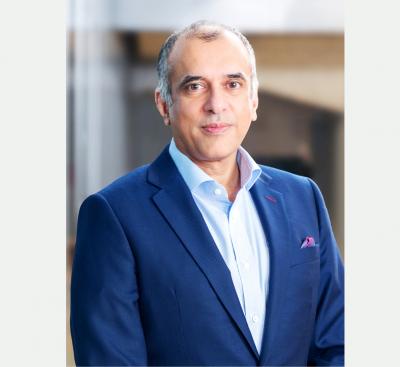
HSBC Holdings PLC is deepening its commitment to Taiwan as the economy emerges as one of the bank’s fastest-growing markets globally, driven by an artificial intelligence (AI) investment boom, expanding cross-border trade, and rising wealth creation. “The advantage that Taiwan has is a growth story linked to the semiconductor and broader AI industries, strong underlying corporate performance, and wealth creation,” said Surendra Rosha, HSBC’s co-chief executive for Asia and the Middle East, in an exclusive interview with the Taipei Times on June 2, during this year’s HSBC Taiwan Conference. That combination has helped HSBC cement its position as the most profitable international

The New Taiwan dollar yesterday fell sharply against the US dollar to close at its lowest level since May 22 amid a massive outflow of funds from the country because of investors panicking over global equity markets. The NT dollar ended at NT$31.580 against the US dollar, slightly lower than its close of NT$31.568 on May 22, after moving between NT$31.5 and NT$31.648 on combined turnover of US$3.062 billion on the Taipei Foreign Exchange and the Cosmos Foreign Exchange. The NT dollar received a significant hit in the morning session, slumping as much as NT$0.173 at a time when other Asian currencies
Taiwan Semiconductor Manufacturing Co (TSMC, 台積電) is now ranked ninth among the world’s 100 most valuable companies after its market capitalization more than doubled over the past year, PricewaterhouseCoopers (PwC) Taiwan said in a report last month. TSMC’s market capitalization surged 101 percent year-on-year to US$1.427 trillion as of March 31, the accounting and consulting firm’s 2026 Global Top 100 Companies by Market Capitalization report said. The gain catapulted the world’s largest contract chipmaker from 12th place to ninth in the rankings, and it was the fastest-growing among the global top 10, it said. TSMC was the only Taiwanese company among the top
Taiwan Semiconductor Manufacturing Co (TSMC, 台積電) yesterday reported record revenue of NT$416.975 billion (US$13.17 billion) for last month, putting the world’s largest contract chipmaker on track to set a record for quarterly revenue. Last month’s figure surpassed March’s record NT$415.19 billion and represented increases of 1.5 percent from April and 30.1 percent from a year earlier. For the first five months of the year, TSMC generated NT$1.96 trillion in revenue, up 30 percent year-on-year, it said in a statement. TSMC has forecast second-quarter revenue of between US$39 billion and US$40.2 billion, representing sequential growth of about 10 percent and year-on-year growth of about


 RSS
RSS