


Growing numbers of Taiwanese designers are working in the country’s bicycle industry, although the majority of them are still focusing on consumer electronics, a local executive said on Thursday.
Shikuan Chen (陳禧冠), vice president of Compal Electronics Inc’s (仁寶電腦) innovation design and technology section, said that many young people at local design schools are attracted to electronics products, as that is where most resources are invested in design terms.
His remarks came in response to a question from Mark Sanders, a noted bicycle designer from the UK, on the sidelines of a workshop at the Taipei International Cycle Show, one of the world’s three largest bicycle shows.
During his presentation at the workshop, Sanders said that Taiwan has one of the best education systems in the world.
“Why are there so few engineering and design graduates in the bicycle industry?” he asked.
“Do they prefer the electronics industry? Is bicycle engineering seen as ‘low, old technology’?”
Chen said that more young people have been taking up bicycle design in the past few years since Taiwan’s bicycle industry began to enjoy a boom.
“However, people are still waiting to see whether it is a temporary phenomenon or a permanent one,” Chen said.
Chen and Sanders also shared their ideas on the difference between designers in the East and in the West.
Asked to elaborate on the differences, Chen said Western designers excel at innovation and originality, while their Taiwanese counterparts specialize in putting ideas into practice.
He attributed this to the differences in educational philosophies in Western countries and in Taiwan.
“We encourage less in the way of innovative thinking, while stressing practical experience,” Chen said.
He also said Taiwanese people pay more attention to saving on costs than creating added value through branding, for instance.
Chen added that designers from the East and the West would make good teams, with each playing to their own strengths.
Han Goes, the moderator of the workshop and a judge of the 2009 International Bicycle Design Competition, said he had observed that the performance of Taiwanese designers in the bicycle industry is “rapidly growing.”
“I think it’s not a coincidence,” he said. “It comes together with a bicycle explosion in Taiwan.”
Goes said he foresees even greater potential for Taiwan if the country’s bike industry and design schools can work together.

SECOND-RATE: Models distilled from US products do not perform the same as the original and undo measures that ensure the systems are neutral, the US’ cable said The US Department of State has ordered a global push to bring attention to what it said are widespread efforts by Chinese companies, including artificial intelligence (AI) start-up DeepSeek (深度求索), to steal intellectual property from US AI labs, according to a diplomatic cable. The cable, dated Friday and sent to diplomatic and consular posts around the world, instructs diplomatic staff to speak to their foreign counterparts about “concerns over adversaries’ extraction and distillation of US AI models.” Distillation is the process of training smaller AI models using output from larger, more expensive ones to lower the costs of training a powerful new
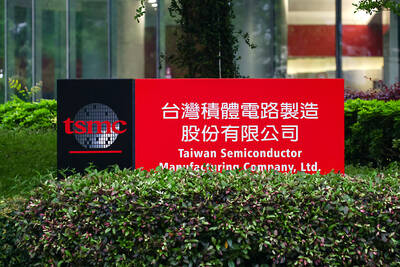
Shares of Taiwan Semiconductor Manufacturing Co (TSMC, 台積電) have repeatedly hit new highs, but an equity analyst said the stock’s valuation remains within a reasonable range and any pullback would likely be technical. The contract chipmaker’s historical price-to-earnings (P/E) ratio has ranged between 20 and 30, Cathay Futures Consultant Co (國泰證期) analyst Tsai Ming-han (蔡明翰) told Central News Agency. With market consensus projecting that TSMC would post earnings per share of about NT$100 (US$3.17) this year, supported by strong global demand for artificial intelligence (AI) applications, and the stock currently trading at a P/E ratio of below 25, Tsai said the valuation
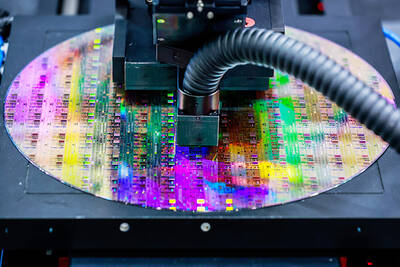
The artificial intelligence (AI) boom has triggered a seismic reshuffling of global equity markets, with Taiwan and South Korea muscling past European nations one by one. With its stock market now valued at nearly US$4.3 trillion, Taiwan surpassed the UK, Europe’s biggest market, earlier this month, data compiled by Bloomberg showed. South Korea is about US$140 billion away from doing the same. The tech-heavy Asian markets have shot past Germany and France in the past seven months. The shift is largely down to massive gains in shares of three companies that provide essential hardware for AI: Taiwan Semiconductor Manufacturing Co (TSMC, 台積電),
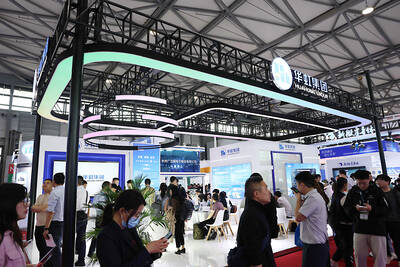
The US Department of Commerce last week ordered multiple chip equipment companies to halt shipments of certain tools to China’s second-largest chipmaker, Hua Hong Semiconductor Ltd (華虹半導體), its latest action to slow the country’s development of advanced chips, two people familiar with the matter said. The department sent letters to at least a handful of companies informing them of restrictions on tools and other materials destined for two Hua Hong facilities US officials believe make China’s most sophisticated chips, the people said. Top US chip equipment companies Lam Research Corp, Applied Materials Inc and KLA Corp, each of which has significant


 RSS
RSS