


TAIEX rises 1.32 percent
Taiwanese shares closed up 1.32 percent yesterday, tracking gains on Wall Street and regional markets, dealers said.
The TAIEX index rose 98.07 points to 7,536.05 on turnover of NT$146.02 billion (US$4.57 billion).
Gainers led losers by 1,783 to 748 with 238 stocks unchanged.
The market rose on gains in Wall Street and Asian bourses as well as a stronger local currency against the US dollar, Capital Securities trader Diana Wu said.
“Some are concerned about the impact of the rising Taiwan dollar on technology companies, but other currencies ... are also rising, so it may not necessarily hurt Taiwan’s competitiveness,” she said.
CPC may use various currencies
State-run CPC Corp, Taiwan (CPC, 台灣中油) said it was studying whether to use a basket of currencies to pay for crude oil purchases.
“Our finance department is studying where to use a variety of currencies, including the yen, the euro and the dollar, for crude oil trade, compared with only the dollar now,” CPC vice president Lin Maw-wen (林茂文) said in a telephone interview yesterday. “Our purchases are relatively small, so we’ll just follow the trend.”
Criticism of the US dollar’s role as the world’s main reserve currency has grown in the wake of the global financial crisis. Formosa Petrochemical Corp (台塑石化), CPC’s smaller rival, has been using euros and yen to pay for crude oil purchases from Iran, Lin Keh-yen (林克彥), a spokesman for the Taiwanese refiner, said by telephone.
THSRC holiday volume rises
Taiwan High Speed Rail Co (THSRC, 台灣高鐵) said in a statement yesterday that passenger volume rose 20 percent during the Mid-Autumn Festival between last Friday and Monday from last year.
THSRC added 29 trains over the holiday period to carry an extra 71,000 passengers, the statement said, adding that all trains arrived at their destinations on time.
Passengers totaled more than 430,000 during the four days with 539 trains in service, the statement said, putting the load factor at 53.05 percent, up 5.5 percentage points from last year.
The company encouraged passengers to make reservations, saying doing so online can get a 5 percent discount.
WiMAX trial run in Hsinchu
Local WiMAX license holder Global Mobile Corp (全球一動) introduced on Monday its first WiMAX trial-run service in Hsinchu, with an official commercial launch in January at the latest.
The company said 70 percent of the base station’s deployment was completed.
At present, it covers more than 70 percent of the population there and it aims to extend the coverage to 95 percent before the commercial rollout.
The company said it will launch more exciting applications to attract subscribers, in addition to the main selling point of fast Internet connection.
Companies such as Vmax Telecom Co (威邁思), Vee Telecom Multimedia Co (威達超舜) and Far EasTone Telecommunications Co (遠傳電信), the nation’s No. 3 mobile carrier, are also expected to launch WiMAX services by the end of the year or early next year.
NT dollar gains on greenback
The NT dollar gained ground against the US dollar on the Taipei Foreign Exchange yesterday, rising NT$0.075 to close at NT$32.180.
A total of US$1.39 billion changed hands during the day’s trading.
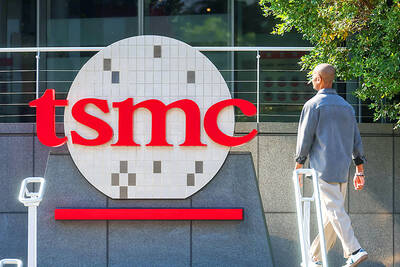
Shares of contract chipmaker Taiwan Semiconductor Manufacturing Co (TSMC, 台積電) came under pressure yesterday after a report that Apple Inc is looking to shift some orders from the Taiwanese company to Intel Corp. TSMC shares fell NT$55, or 2.4 percent, to close at NT$2,235 on the local main board, Taiwan Stock Exchange data showed. Despite the losses, TSMC is expected to continue to benefit from sound fundamentals, as it maintains a lead over its peers in high-end process development, analysts said. “The selling was a knee-jerk reaction to an Intel-Apple report over the weekend,” Mega International Investment Services Corp (兆豐國際投顧) analyst Alex Huang
Taiwan Semiconductor Manufacturing Co (TSMC, 台積電) is expected to remain Apple Inc’s primary chip manufacturing partner despite reports that Apple could shift some orders to Intel Corp, industry experts said yesterday. The comments came after The Wall Street Journal reported on Friday that Apple and Intel had reached a preliminary agreement following more than a year of negotiations for Intel to manufacture some chips for Apple devices. Taiwan Institute of Economic Research (台灣經濟研究院) economist Arisa Liu (劉佩真) said TSMC’s advanced packaging technologies, including integrated fan-out and chip-on-wafer-on-substrate, remain critical to the performance of Apple’s A-series and M-series chips. She said Intel and Samsung
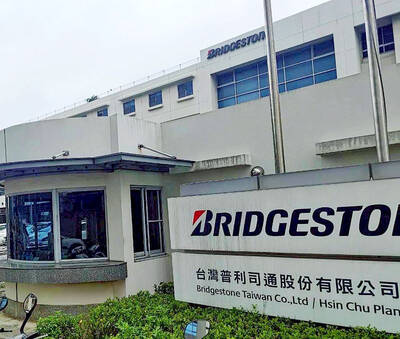
TRANSITION: With the closure, the company would reorganize its Taiwanese unit to a sales and service-focused model, Bridgestone said Bridgestone Corp yesterday announced it would cease manufacturing operations at its tire plant in Hsinchu County’s Hukou Township (湖口), affecting more than 500 workers. Bridgestone Taiwan Co (台灣普利司通) said in a statement that the decision was based on the Tokyo-based tire maker’s adjustments to its global operational strategy and long-term market development considerations. The Taiwanese unit would be reorganized as part of the closure, effective yesterday, and all related production activities would be concluded, the statement said. Under the plan, Bridgestone would continue to deepen its presence in the Taiwanese market, while transitioning to a sales and service-focused business model, it added. The Hsinchu
Taiwan Semiconductor Manufacturing Co (TSMC, 台積電) has approved a capital budget of US$31.28 billion for production expansion to meet long-term development needs during the artificial intelligence (AI) boom. The company’s board meeting yesterday approved the capital appropriation plan for purposes such as the installation of advanced technology capacity and fab construction, the world’s largest contract chipmaker said in a statement. At an earnings conference last month, TSMC forecast that its capital expenditure for this year would be at the higher end of the US$52 billion to US$56 billion range it forecast in January in response to robust demand for 5G, AI and


 RSS
RSS