


As political tensions ease and trade ties boom, China is taking on a new challenge — to win over Taiwan with its culinary clout.
A number of China’s leading restaurant brands, notably Peking Quanjude (全聚德), Tianjin Goubuli (狗不理) and Chongqing Cygnet (小天鵝), are aiming to expand their business to the island as early as this year, the companies and reports said. Others might follow, with a delegation from more than 20 restaurant chains scheduled to visit Taiwan next month on a fact-finding trip, the Beijing-based China Cuisine Association said.
The expansion became possible when Taiwan recently lifted a decade-old ban on investment by Chinese firms or individuals — the latest step in rapidly improving ties.
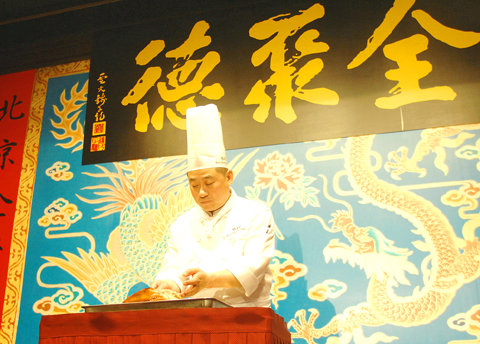
PHOTO: AFP
Under the investment measures in effect since June 30, Chinese investors are permitted to buy into 100 categories in the Taiwan’s infrastructure, manufacturing and service sectors, including restaurants.
Over the years, various Chinese cuisines have taken root in Taiwan.
Famous dishes such as Peking duck and Sichuan hot pot are regular favorites. China still claims sovereignty over Taiwan but business and civil exchanges have boomed since President Ma Ying-jeou (馬英九) took office last year.
The main challenge for Chinese investors is to find the right local partner and serve genuine cuisine despite the lack of original ingredients — the reason hot pot chains Tanyutou (譚魚頭) and Little Sheep (小肥羊)stumbled in Taiwan after managing to invest indirectly through Hong Kong, observers say.
“Tanyutou’s partner wasn’t an industry pro while Little Sheep just can’t pull it off when its key ingredient, the Inner Mongolian sheep, was unavailable,” said food critic Wang Jue-yao.
Quanjude, China’s oldest Peking duck restaurant, is facing similar obstacles because of Taiwan’s ban on Chinese poultry imports over bird flu concerns.
“We want to make authentic Peking roast duck but Peking duck has fatty skin and tender meat while Taiwanese duck is leaner. There is still some gap” in taste, said Quanjude chef Bi Quansheng (畢全盛) at a recent promotion in Taipei.
The stakes are even higher now for the Chinese players looking to conquer Taiwan’s competitive culinary world, critic Wang said.
“Since none had been successful, for companies like Quanjude, which sees itself as China’s No. 1 restaurant brand, it must succeed at the first try. It is a face issue,” Wang said.
“The Taiwan market is very symbolic. It would be a sort of an ideological victory to be the first Chinese company to succeed here,” she said.
Some local restaurateurs, however, are skeptical about their Chinese peers’ plans for expansion.
“It is already very difficult to turn profits in Taiwan’s restaurant business and recent economic downturns make it even harder,” said Chuang Li-yu, who has run a Peking duck restaurant in Taipei for 30 years.
“I think those big-name Chinese restaurants can generate some buzz at first but after the novelty wears off they have to manage to build a loyal clientele,” she said.
Jennifer Shang (尚哈玲), chief of Beijing-based China Cuisine Association’s (中國烹飪協會) international division, is optimistic, saying Tanyutou’s closure in Taiwan was “an individual case” that should not discourage others.
“Members of our delegation are interested in the Taiwan market. They are looking forward to seeing it first hand and exchanging ideas with Taiwanese restaurateurs,” she told reporters.
Quanjude got a boost during a recent two-week food festival in the island’s two largest cities, Taipei and Kaohsiung, with patrons fully booking its duck banquet priced at around NT$7,260 (US$220) for a table of five.
“We are confident and it has long been our wish to make roast duck for Taiwanese people,” Quanjude vice general manager Liu Xiaohung (劉小虹) said in Taipei. “We believe it will meet most people’s taste.”

NEW IMPORTS: Car dealer PG Union Corp said it would consider introducing US-made models such as the Jeep Grand Cherokee and Stellantis’ RAM 1500 to Taiwan Tesla Taiwan yesterday said that it does not plan to cut its car prices in the wake of Washington and Taipei signing the Agreement on Reciprocal Trade on Thursday to eliminate tariffs on US-made cars. On the other hand, Mercedes-Benz Taiwan said it is planning to lower the price of its five models imported from the US after the zero tariff comes into effect. Tesla in a statement said it has no plan to adjust the prices of the US-made Model 3, Model S and Model X as tariffs are not the only factor the automaker uses to determine pricing policies. Tesla said

OpenAI has warned US lawmakers that its Chinese rival DeepSeek (深度求索) is using unfair and increasingly sophisticated methods to extract results from leading US artificial intelligence (AI) models to train the next generation of its breakthrough R1 chatbot, a memo reviewed by Bloomberg News showed. In the memo, sent on Thursday to the US House of Representatives Select Committee on China, OpenAI said that DeepSeek had used so-called distillation techniques as part of “ongoing efforts to free-ride on the capabilities developed by OpenAI and other US frontier labs.” The company said it had detected “new, obfuscated methods” designed to evade OpenAI’s defenses
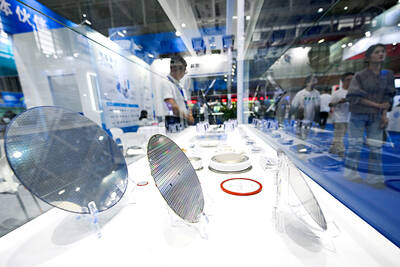
China’s top chipmaker has warned that breakaway spending on artificial intelligence (AI) chips is bringing forward years of future demand, raising the risk that some data centers could sit idle. “Companies would love to build 10 years’ worth of data center capacity within one or two years,” Semiconductor Manufacturing International Corp (SMIC, 中芯) cochief executive officer Zhao Haijun (趙海軍) said yesterday on a call with analysts. “As for what exactly these data centers will do, that hasn’t been fully thought through.” Moody’s Ratings projects that AI-related infrastructure investment would exceed US$3 trillion over the next five years, as developers pour eye-watering sums
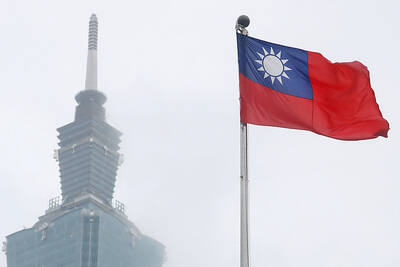
Bank of America Corp nearly doubled its forecast for the nation’s economic growth this year, adding to a slew of upgrades even after a rip-roaring last year propelled by demand for artificial intelligence (AI). The firm lifted its projection to 8 percent from 4.5 percent on “relentless global demand” for the hardware that Taiwanese companies make, according to a note dated yesterday by analysts including Xiaoqing Pi (皮曉青). Taiwan’s GDP expanded 8.63 percent last year, the fastest pace since 2010. The increase “reflects our sustained optimism over Taiwan’s technology driven expansion and is reinforced by several recent developments,” including a more stable currency,


 RSS
RSS