

Microsoft Corp is showcasing four new operating systems (OS) at Computex in Taipei tomorrow that it says will cater to all facets of an end-user’s computing life.
The Redmond, Washington-based company has been working on the four operating systems — Windows 7, Windows Embedded, Windows Mobile and Windows Server — to regain consumer and corporate confidence following its unsuccessful launch of Vista OS in 2005.
Windows 7 RC (the trial version currently available called release candidate) has won wide acclaim. The software giant’s introduction of Touch Pack for Windows 7, a set of games and applications optimized for multi-touch computing, has generated interest from the touch-screen liquid-crystal-display (LCD) panel makers and LCD component suppliers.
At this year’s Computex, Microsoft will collaborate with 16 personal computer manufacturers on more than 30 products running on the new operating system, the Taipei Times’ sister newspaper, the Liberty Times, reported yesterday.
The report said the Windows 7 products on display would include notebooks, tablet PCs, all-in-one PCs and netbooks.
PC makers in collaboration with Microsoft include Acer Inc (宏碁), Asustek Computer Inc (華碩), Gigabyte Technology Corp (技嘉), BenQ Corp (明基), Dell Inc, Hewlett-Packard Co, Lenovo Group Ltd (聯想), MiTAC International Corp (神達), Micro-Star International Co (微星), Sharp Corp and Toshiba Corp, the paper said.
Global PC shipments are likely to surpass 322 million units by 2011 from 282 million units this year, the International Data Corp (IDC) forecast early last month, with shipments of notebooks increasing from this year’s 54 percent of the total PC market to 61 percent by 2011.
Microsoft and global PC makers hope the Windows 7 release will spur a wave of hardware upgrades, creating business opportunities for all parties involved.
However, Gartner Inc predicts a complete phase out of corporate XP by the end of 2012 at the latest, as various information technology companies are contemplating technology migration during the economic downturn. They will be forced to do so when their XP versions no longer receive XP upgrades or customer support.
To rally consumer support for its new operating system, Steven Guggenheimer, a Microsoft vice president in charge of the global original equipment manufacturing (OEM) division, and Eddie Wu (吳勝雄), general manager for Microsoft’s OEM division in Asia, will jointly deliver keynote speeches at the Nangang Exhibition Hall tomorrow.
Kevin Dallas, general manager of Microsoft Windows embedded business, will address the company’s four operating systems on Wednesday at the Taipei International Conference Center.
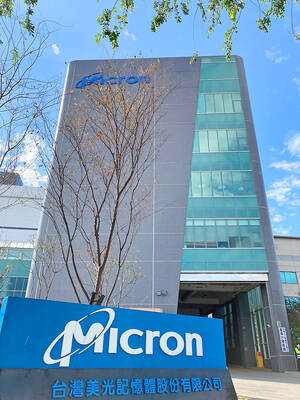
STOCK, CASH: Quarterly profit-sharing bonuses would supplement payments under the Incentive Pay Plan, offering ‘transparency’ and ‘predictability,’ an executive said Micron Memory Taiwan Co (台灣美光) yesterday unveiled a new profit-sharing program and structural wage hikes as part of its efforts to build a predictable and transparent compensation framework in response to feedback from unions. The memorychip maker, a subsidiary of US-based Micron Technology Inc, announced the major compensation structural overhaul during an online news conference following a milestone agreement with the union representing more than 10,000 workers at its Taichung facility. Under the new framework, quarterly profit-sharing bonuses would supplement payments under the Incentive Pay Plan (IPP), the company said. The IPP formula has also been substantially enhanced, it said. “Profit-sharing mechanisms are common

Luxury powerhouses including Hermes and Cartier are suffering steeper slumps in China, in a sign that a spending pullback by the country’s wealthy consumers is hitting even the most resilient brands. Sales at the brands in mainland China fell as much as double-digits in August and last month compared to the same period a year ago, two research firms surveyed by Bloomberg that track industry data said. The drop is significant as Hermes International SCA and Cie Financiere Richemont SA’s Cartier had been relatively unaffected in the country as a broader slowdown in luxury consumption took hold in June, the firms’
Micron Memory Taiwan and a union representing workers at its Taichung operations today said they had signed a labor-management agreement covering multiple issues, prompting both sides to withdraw from mediation scheduled for tomorrow. The joint statement did not disclose the terms of the agreement, saying the company and the union would separately communicate details to affected employees in the coming days. Idaho-based Micron, the world's third-largest memory chipmaker, employs about 15,000 people in Taiwan, a key manufacturing base where it produces DRAM and high-bandwidth memory chips used in artificial intelligence (AI) servers. Any disruption to Micron's Taiwan operations could affect already strained global
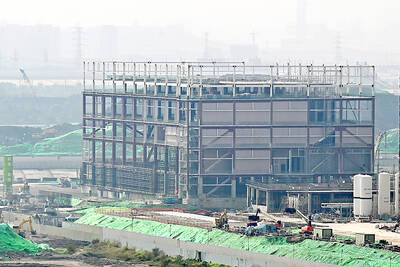
Taiwan Semiconductor Manufacturing Co (TSMC, 台積電) is suspending some construction work after an accident at one of its building sites in southern Taiwan led to the deaths of four workers. The incident took place on Tuesday during steel structure construction at TSMC’s Fab 22 in Kaohsiung, the company said. Workers fell from a height while performing steel structure hoisting and installation, a report from the Central News Agency said. A cause might be aged bolts, it said, citing a preliminary assessment by the Southern Taiwan Science Park Bureau. The bureau said that work would only resume after Shang Hao Machinery Co (上昊機械),


 RSS
RSS