


British Chancellor of the Exchequer Alistair Darling yesterday defended the government’s bailout of crippled banks after one of the institutions involved said it expected to make huge losses.
Lloyds Banking Group (LBG) warned on Friday that its HBOS division could suffer a pre-tax loss of £10 billion (US$14.5 billion) last year because of the credit crunch.
LBG’s share price slumped by more than 40 percent in reaction to the surprise warning from the partly nationalized bank.
The group, which was created earlier this year from the merger of Lloyds TSB and the crisis-hit HBOS, is 43 percent owned by the British taxpayer after a major recapitalization.
Darling said the government had “no alternative” but to act swiftly last year to prevent the bank’s collapse.
“The problem we had last October was we had a banking system which was about to collapse,” Darling told BBC television.
INTERVENTION
“We had to intervene. We had to do it very quickly. We didn’t have months or weeks to do it,” he said.
“Now what we have asked the new management to do is go through the books, so we can deal with the assets that have gone bad and the other problems that have emerged,” Darling said.
Britain’s bailout of banks has been hailed by Prime Minister Gordon Brown as a blueprint for other countries’ plans.
LBG said the massive losses were caused by the tumbling value of HBOS assets and a £7 billion writedown on its corporate division.
Martin Slaney, head of derivatives at GFT, said: “This merger is turning out to be the merger from hell for Lloyds.
“The figure for the expected losses is a good five or six times worse than the market was expecting and dispels any view that the worst of the writedowns are over,” he said.
LBG chief executive Eric Daniels said HBOS’ results last year had been adversely affected by the impact of market dislocation, which accelerated significantly in the last quarter, and the additional impairments required on the HBOS corporate lending portfolios.
“These impairments primarily reflect the application of a more conservative recognition of risk and the further deterioration in the economic environment,” he said.
The news comes days after HBOS’ former bosses apologized this week to British lawmakers for failing to foresee the global financial crisis that led to their institutions being bailed out.
‘SORRY’
Former HBOS chairman Dennis Stevenson told parliament’s Treasury Select Committee, which is investigating the crisis, that he and former chief executive Andy Hornby were “profoundly sorry.”
Royal Bank of Scotland, which is almost 70 percent owned by the British government, warned this month that last year’s losses could reach £28 billion.
The bank attributed the loss — which would be a record in British corporate history — to the drying-up of the money markets and the costly consortium takeover of Dutch lender ABN Amro before the credit crunch began in 2007.
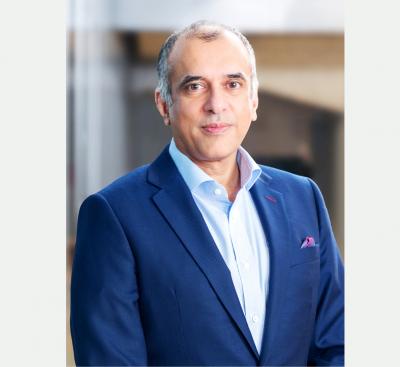
HSBC Holdings PLC is deepening its commitment to Taiwan as the economy emerges as one of the bank’s fastest-growing markets globally, driven by an artificial intelligence (AI) investment boom, expanding cross-border trade, and rising wealth creation. “The advantage that Taiwan has is a growth story linked to the semiconductor and broader AI industries, strong underlying corporate performance, and wealth creation,” said Surendra Rosha, HSBC’s co-chief executive for Asia and the Middle East, in an exclusive interview with the Taipei Times on June 2, during this year’s HSBC Taiwan Conference. That combination has helped HSBC cement its position as the most profitable international
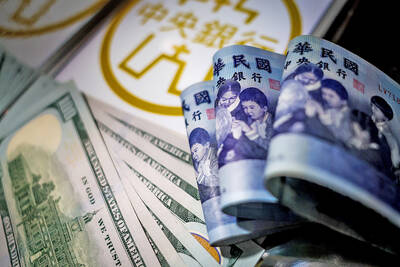
The New Taiwan dollar yesterday fell sharply against the US dollar to close at its lowest level since May 22 amid a massive outflow of funds from the country because of investors panicking over global equity markets. The NT dollar ended at NT$31.580 against the US dollar, slightly lower than its close of NT$31.568 on May 22, after moving between NT$31.5 and NT$31.648 on combined turnover of US$3.062 billion on the Taipei Foreign Exchange and the Cosmos Foreign Exchange. The NT dollar received a significant hit in the morning session, slumping as much as NT$0.173 at a time when other Asian currencies
Taiwan Semiconductor Manufacturing Co (TSMC, 台積電) is now ranked ninth among the world’s 100 most valuable companies after its market capitalization more than doubled over the past year, PricewaterhouseCoopers (PwC) Taiwan said in a report last month. TSMC’s market capitalization surged 101 percent year-on-year to US$1.427 trillion as of March 31, the accounting and consulting firm’s 2026 Global Top 100 Companies by Market Capitalization report said. The gain catapulted the world’s largest contract chipmaker from 12th place to ninth in the rankings, and it was the fastest-growing among the global top 10, it said. TSMC was the only Taiwanese company among the top
Taiwan Semiconductor Manufacturing Co (TSMC, 台積電) yesterday reported record revenue of NT$416.975 billion (US$13.17 billion) for last month, putting the world’s largest contract chipmaker on track to set a record for quarterly revenue. Last month’s figure surpassed March’s record NT$415.19 billion and represented increases of 1.5 percent from April and 30.1 percent from a year earlier. For the first five months of the year, TSMC generated NT$1.96 trillion in revenue, up 30 percent year-on-year, it said in a statement. TSMC has forecast second-quarter revenue of between US$39 billion and US$40.2 billion, representing sequential growth of about 10 percent and year-on-year growth of about


 RSS
RSS