


Hypermarkets and department stores saw double-digit growth in sales over the Lunar New Year holiday as a result of consumer voucher promotions, but it remains to be seen whether the vouchers will raise GDP by at least 0.66 percentage points as hoped, analysts said.
Retailers said sales volume had increased 20 percent over the holiday.
Carrefour Taiwan (家樂福), the nation’s largest hypermarket chain, said its holiday sales jumped 20 percent from last year, with shopping vouchers contributing half of the increase.
RT-Mart (大潤發), the second-largest hypermarket chain, reported a sales growth of between 20 percent and 30 percent during the same period, while Far Eastern Geant Co (愛買), the No. 3 chain, saw retail transactions expand nearly 30 percent.
Consumer vouchers constituted 40 percent and 50 percent of transactions for RT-Mart and Far Eastern Geant respectively, the companies said.
The government has printed NT$85.7 billion (US$2.54 billion) in vouchers — NT$3,600 for each citizen and foreign spouse — in the hope of boosting domestic demand amid the economic downturn.
Qualified recipients collected NT$76.2 billion in vouchers on Jan. 18 and another NT$2.01 billion on Saturday, government statistics showed.
As of Thursday, NT$24.28 billion in vouchers had been cashed, accounting for 31.8 percent of the amount distributed, the Bank of Taiwan (台灣銀行) said. The bank expected the ratio to hit 35 percent this week.
The vouchers also boosted department store chains over the holiday.
Pacific Sogo Department Stores Co (太平洋崇光百貨), Shin Kong Mitsukoshi Department Store (新光三越百貨) and Far Eastern Department Store (遠東百貨) all reported sales increases of 10 percent.
Pacific Sogo and Shin Kong Mitsukoshi attributed a quarter of the increase to deals for customers who paid with vouchers, while Far Eastern said the promotions accounted for 32 percent of sales.
Cheng Cheng-mount (鄭貞茂), chief economist at Citigroup Inc Taiwan, said the vouchers could raise GDP growth by 1 percentage point in the first quarter based on the preliminary estimate of his company.
“The voucher plan appears to have been effective in boosting consumer activity, as seen over the holiday,” Cheng said by telephone. “The private sector has been supportive and offered various discounts limited to transactions with the vouchers.”
But Cheng said it was too early to judge the full effect of the vouchers.
Tony Phoo (符銘財), a Taipei-based economist at Standard Chartered Bank, said it remained to be seen whether the public had increased their spending because of the vouchers or used them to pay their usual expenses.
“In the latter scenario, the vouchers will do little to spur economic growth,” Phoo said by telephone.
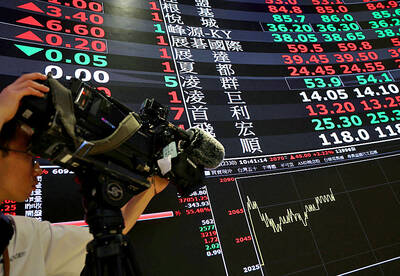
After several years flying high as Asia’s best Nvidia Corp proxy, Taiwan Semiconductor Manufacturing Co (TSMC, 台積電) is increasingly vying with other artificial intelligence (AI) stocks for investor attention. Stock traders are chasing a wider array of beneficiaries as mainstream usage of AI creates demand for hardware beyond the most-advanced chips TSMC makes for Nvidia. Subthemes from the deepening memory crunch to advances in robotics are also luring bids. At the same time, investment caps on single stocks are pushing funds to diversify, while retail investors long familiar with TSMC through its US depositary receipts are being offered a broader set of
UNDER MICROSCOPE: Taiwan detained three people who allegedly conspired to buy servers in Taiwan and export them using fraudulent documentation, prosecutors said Nvidia Corp chief executive officer Jensen Huang (黃仁勳) on Saturday urged Super Micro Computer Inc to tighten up on compliance after Taiwan detained three people this week for allegedly making fraudulent declarations about artificial intelligence (AI) servers made by its US partner. The development marked the nation’s first crackdown on semiconductor smuggling, which grew after the US slapped restrictions on exports of high-end chips such as Nvidia AI accelerators to China. Nvidia is “rigorous” in explaining regulations to all of its partners, Huang told reporters after arriving in Taipei. “Ultimately Super Micro has to run their own company,” he said in response to
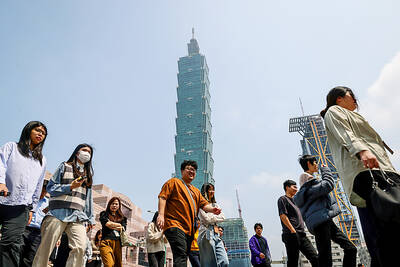
TECH RELIANCE: Growth is increasingly reflecting an unequal K-shaped distribution, where technology sectors outperform and other industries struggle, an expert said Standard Chartered Bank has significantly raised its forecast for Taiwan’s economic growth to 9.5 percent this year, up from 7.6 percent previously, citing surging artificial intelligence (AI) demand driving exports, semiconductor production and investment. The upgrade reflects a sustained AI supercycle that continues to fuel demand for advanced chips and technology infrastructure, which form the backbone of Taiwan’s exports, the bank said in a report this week. “We raise our 2026 growth forecast to reflect a much stronger-than-expected first-quarter GDP figure,” Standard Chartered senior economist for greater China and Asia Tommy Wu (胡東安) said in the report. Driven largely by a 35.3 percent
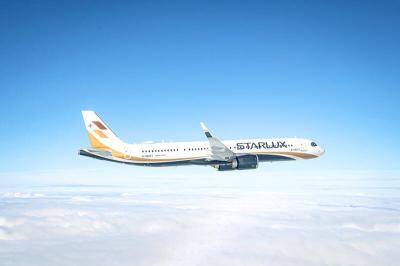
Two of Taiwan’s international carriers, Starlux Airlines Co (星宇航空) and EVA Airways Corp (長榮航空), have retained the five-star airline rating awarded by international airline review organization Skytrax. Starlux was awarded the distinction for a second consecutive year, while EVA Air received it for the 11th straight year, Skytrax said in statements released yesterday and on Thursday last week, respectively. The five-star rating is considered one of the airline industry's highest honors and is awarded following professional audits of airline product and frontline service standards, Skytrax said. The ratings are based on in-depth assessments using unified global quality standards rather than customer review scores


 RSS
RSS