


A top Chrysler LLC executive says the automaker should be viable by springtime because of its restructuring, introduction of new and improved vehicles, and higher sales due to loosened credit and sweetened incentives for buyers.
Vice chairman and president Jim Press defined “viable” as remaining solvent and continuing to invest in new products, with an ability in the future to repay government loans.
But he told reporters on Saturday at the National Automobile Dealers Association annual convention that he doesn’t know when the privately owned Auburn Hills, Michigan-based company will return to profitability.
Press said Chrysler can be viable if the US light vehicle market shrinks from last year’s 13.2 million in sales to just over 10 million. As recently as 2007, the market exceeded 16 million.
The struggling Chrysler has received US$4 billion in government loans so far to hold off bankruptcy, and it expects to get US$3 billion more after it files a viability plan with the government by Feb. 17. Without the loan money, its executives have said it would run out of cash.
Press told reporters that the country was living off loose credit and fast spending for years, and a correction probably is good. But that means automakers have to be prepared to make it on sales that are far lower than in previous years.
“Good business people will see this as normal and calibrate ourselves and our organizations as if today was the way life is going to be,” Press said. “We shouldn’t bank on some of these easy monies.”
He said Chrysler’s retail market share through Thursday was 10.1 percent, the highest it’s been in recent months. Sales, he said, have been better than last month, and a normal seasonal uptick in March, April and May should help Chrysler become viable, he said.
Chrysler’s sales were down 30 percent last year compared with 2007, and they were off 53 percent last month. The poor showing led several industry analysts to predict the company could not make it through this year without a merger, alliance or some other combination.
Last week Chrysler announced a nonbinding preliminary deal for Fiat Group SpA to take a 35 percent stake in Chrysler in exchange for small-car and small-engine technology that will help Chrysler bring smaller, more fuel-efficient models to market faster.
But it could take two years for the Fiat products to arrive in the US, which is Chrysler’s primary market. Fiat is not putting any cash into the deal.
Chrysler employs about 66,000 people worldwide, with the bulk of them in the US.
Chrysler on Thursday announced employee pricing, plus an incentive, plus low-interest loans to help move its vehicles.
Chrysler shut down all 30 of its factories for much of last month and this month, but all plants will be back on line as of today, Press said.
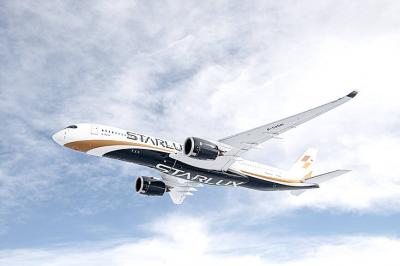
Starlux Airlines Co (星宇航空) today unveiled a long-haul network expansion plan at a shareholders’ meeting in Taipei, including direct flights to Barcelona, Spain, and Zurich, Switzerland, as well as a service connecting Taipei, Sydney and New Zealand. Starlux is to become the first Taiwanese carrier to offer non-stop services to the two European cities, while the inaugural oceanic route is expected to expand transit opportunities within the Australia-New Zealand market, Starlux said. Flight services to Chicago, Dallas, Washington and New York are under evaluation, the airline added. Prior to the shareholders’ meeting, the airline earlier this year announced that it would be
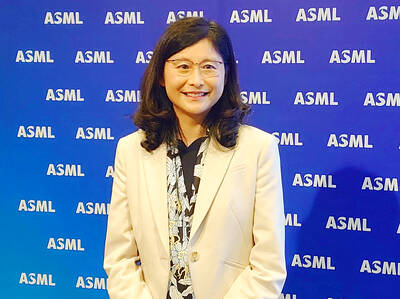
Netherlands-based semiconductor equipment supplier ASML Holding NV yesterday said that it is planning to hire an additional 1,000 people in Taiwan this year in response to growing demand from clients. ASML had previously planned to recruit 600 people this year, but that the plan has been adjusted upward, ASML vice president and ASML Taiwan general manager Grace Wang (汪佳慧) told reporters. ASML has a workforce of more than 4,500 in Taiwan, accounting for about 10 percent of its global total, Wang said. This year’s recruitment campaign would focus on adding people in the customer support, manufacturing and supply chain domains to assist ASML

UNDER MICROSCOPE: Taiwan detained three people who allegedly conspired to buy servers in Taiwan and export them using fraudulent documentation, prosecutors said Nvidia Corp chief executive officer Jensen Huang (黃仁勳) on Saturday urged Super Micro Computer Inc to tighten up on compliance after Taiwan detained three people this week for allegedly making fraudulent declarations about artificial intelligence (AI) servers made by its US partner. The development marked the nation’s first crackdown on semiconductor smuggling, which grew after the US slapped restrictions on exports of high-end chips such as Nvidia AI accelerators to China. Nvidia is “rigorous” in explaining regulations to all of its partners, Huang told reporters after arriving in Taipei. “Ultimately Super Micro has to run their own company,” he said in response to

Nvidia Corp yesterday announced that CEO Jensen Huang (黃仁勳) would attend an employee meeting in Taipei tomorrow to celebrate the launch of the company’s Taiwan headquarters project. Huang would attend a gathering at the site of Nvidia’s planned headquarters in Beitou Shilin Technology Park (北投士林科技園區), the company said in a statement. After arriving in Taiwan on Saturday last week, Huang told reporters that he plans to meet with Quanta Computer Inc (廣達) chairman Barry Lam (林百里) and Taiwan Semiconductor Manufacturing Co (TSMC, 台積電) chairman C.C. Wei (魏哲家), and would attend the groundbreaking ceremony for Nvidia’s Taiwan headquarters tomorrow. Nvidia has not yet applied


 RSS
RSS