


Market Intelligence Center (MIC,資訊市場情報中心), an Information and Communication Technologies industry and market research firm, forecasts that next year local telecom operators will need to go beyond providing simple fixed cellphone plans and customize plans for consumer needs in addition to offering various electronic goods and perks in order to attract new users and retain old ones.
Strategies of “bundle plans,” “NT$0 promotions” and “plan customization” implemented in the second half of this year to gain precious market share in the premium user segment will no longer be sufficient, the Taipei-based research group said in a report yesterday.
“Bundle plans” are packages that combine cellphone devices with operator plans, whereas “NT$0 promotions” are no-money-down devices, in lieu of higher monthly fees. “Plan customization” means more flexible plans.
MIC warned that currently the island’s data services currently accounts for roughly only 10 percent of the its total mobile revenues, hence when existing users renew their contracts, operators need to bear in mind that not every user will be willing to shell out additional money for a new phone or jump immediately onto its 3G network.
Therefore, offering other consumer electronics such as digital cameras, Sony Corp’s PlayStation 3, or Nintendo Co’s Wii might be a more attractive alternative to these users, as they renew their plans, MIC said.
With the furor created by Chunghuwa Telecom Co’s (中華電信) Apple Inc iPhones release in December, Research In Motion Ltd’s upcoming Storm release is bound to add fuel to an existing high-end touchscreen smartphone competition, MIC said.
The research house predicts smartphone battle will be in full rage during Chinese Lunar Year on Jan. 26, as local telecom operators fight to increase data plan revenues by rolling out new high-end models.
Carriers are typically more willing to provide large subsidies on high-end phones in order to increase its high margin 3G data services sales. Despite the focus on obtaining rights to sell brand name smartphones in Taiwan, MIC said that operators need to work on providing differentiating proprietary digital services as well.
As mobile 3G penetration increases, netbooks and other mobile Internet devices (MID) will add a stable revenue stream to carriers, therefore MIC expects to see more intense collaboration between mobile Internet devices (MID) manufacturers and operators this year.
Conversely 2G cellphones and simple cellphone plans are becoming carriers’ low margin businesses and consumers should expect further decreases in subsidies for these 2G devices, MIC said.
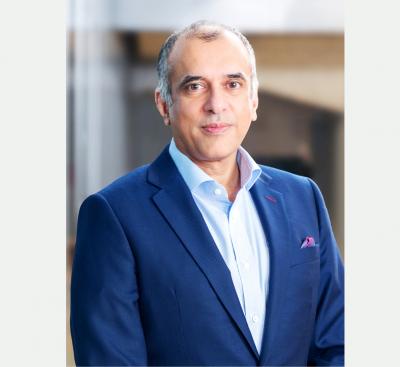
HSBC Holdings PLC is deepening its commitment to Taiwan as the economy emerges as one of the bank’s fastest-growing markets globally, driven by an artificial intelligence (AI) investment boom, expanding cross-border trade, and rising wealth creation. “The advantage that Taiwan has is a growth story linked to the semiconductor and broader AI industries, strong underlying corporate performance, and wealth creation,” said Surendra Rosha, HSBC’s co-chief executive for Asia and the Middle East, in an exclusive interview with the Taipei Times on June 2, during this year’s HSBC Taiwan Conference. That combination has helped HSBC cement its position as the most profitable international
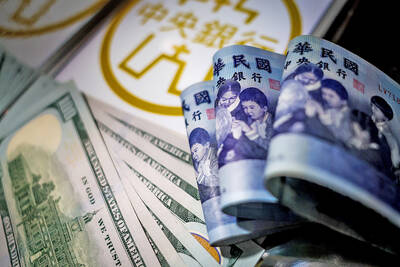
The New Taiwan dollar yesterday fell sharply against the US dollar to close at its lowest level since May 22 amid a massive outflow of funds from the country because of investors panicking over global equity markets. The NT dollar ended at NT$31.580 against the US dollar, slightly lower than its close of NT$31.568 on May 22, after moving between NT$31.5 and NT$31.648 on combined turnover of US$3.062 billion on the Taipei Foreign Exchange and the Cosmos Foreign Exchange. The NT dollar received a significant hit in the morning session, slumping as much as NT$0.173 at a time when other Asian currencies
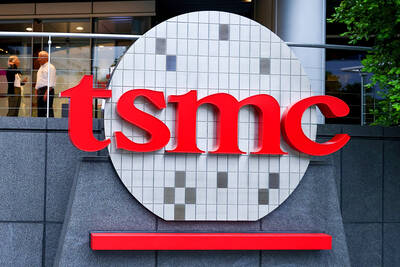
Taiwan Semiconductor Manufacturing Co (TSMC, 台積電) is now ranked ninth among the world’s 100 most valuable companies after its market capitalization more than doubled over the past year, PricewaterhouseCoopers (PwC) Taiwan said in a report last month. TSMC’s market capitalization surged 101 percent year-on-year to US$1.427 trillion as of March 31, the accounting and consulting firm’s 2026 Global Top 100 Companies by Market Capitalization report said. The gain catapulted the world’s largest contract chipmaker from 12th place to ninth in the rankings, and it was the fastest-growing among the global top 10, it said. TSMC was the only Taiwanese company among the top
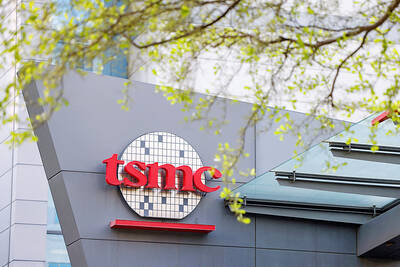
Taiwan Semiconductor Manufacturing Co (TSMC, 台積電) yesterday reported record revenue of NT$416.975 billion (US$13.17 billion) for last month, putting the world’s largest contract chipmaker on track to set a record for quarterly revenue. Last month’s figure surpassed March’s record NT$415.19 billion and represented increases of 1.5 percent from April and 30.1 percent from a year earlier. For the first five months of the year, TSMC generated NT$1.96 trillion in revenue, up 30 percent year-on-year, it said in a statement. TSMC has forecast second-quarter revenue of between US$39 billion and US$40.2 billion, representing sequential growth of about 10 percent and year-on-year growth of about


 RSS
RSS