

Dell Inc is seeking to sell all of its manufacturing plants worldwide and has approached contract computer manufacturers, the Wall Street Journal reported yesterday, citing people familiar with the matter.
The proposed factory sales, intended to slash costs, mark a significant shift from Dell’s long-standing strategy of making its own products, the Journal said. Instead, Dell plans to have contract manufacturers make all its computers, the paper reported.
Dell, the world’s No. 2 maker of personal computers, is seeking to raise profitability after reporting earnings that missed analysts’ estimates as it cut prices to take market share from industry leader Hewlett-Packard Co. Selling its production sites to focus on sales and marketing may aid efforts by the Round Rock, Texas-based company to expand its product range.
“As the company moves away from its direct sales business model, it needs to offer a wider range of products and respond more quickly to market demand,” said Wang Wanli (王萬里), a technology analyst at HSBC Holdings Plc in Taipei. “Outsourcing production to third-party manufacturers will help them become more flexible.”
Dell would ensure that any contract manufacturer who purchased a factory would agree to make hardware for the company, the Journal report said.
Dell may sell all of its plants within 18 months, the Journal said.
Dell last week reported fiscal second-quarter profit fell 17 percent to US$616 million, missing analysts’ estimates, as profit margins shrank after price cuts.
Last month, Dell introduced new notebooks with longer battery life aimed at business users. The company also started selling a slimmer laptop weighing 1kg after Hewlett-Packard offered a similar model in June.
Dell, which last year abandoned selling PCs only via telephone and the Internet, has forged agreements to sell its computers through retailers including Wal-Mart Stores Inc in the US, Gome Electrical Appliance Holdings Ltd in China, Carrefour SA in Europe, Bic Camera Inc in Japan and the Croma chain of electronics stores of India’s Tata group.
The company increased PC shipments 21 percent in the quarter ended June 30, compared with Hewlett-Packard’s 17 percent, and 15 percent for the market overall, research company IDC said.
The second-ranked PC maker cut prices by an average of 7 percent in the three months ended Aug. 1, as competition intensified, it said in a regulatory filing on Thursday.
Suppliers including Hon Hai Precision Industry Co (鴻海精密), Compal Electronics Inc (仁寶電腦) and Quanta Computer Inc (廣達電腦) will benefit from higher orders if Dell sells its own production facilities, HSBC’s Wang said.
Hon Hai hasn’t had any discussions with Dell to buy the company’s facilities, Edmund Ding (丁祈安) spokesman for the Taipei-based company said by phone yesterday.
Elton Yang (楊俊烈) and Carol Hsu (許昭瑾), spokesmen for Taoyuan-based Quanta, the world’s largest notebook maker and a supplier to Dell, didn’t answer calls.

INFRINGEMENT: The investigation comes after a complaint from Vicor Corp, with the company seeking a limited exclusion order as well as cease-and-desist orders, the ITA said The US International Trade Commission (USITC) has launched a Section 337 investigation naming Taiwanese technology companies, including Hon Hai Precision Industry Co (鴻海), Delta Electronics Inc (台達電) and Quanta Computer Inc (廣達), as respondents. The Ministry of Economic Affairs (MOEA) pledged assistance if needed. The USITC said on Friday in a statement that it had voted to institute an investigation under Section 337 of the US Tariff Act of 1930 into certain vertical power delivery systems, related components and computing devices incorporating such systems. The investigation covers 20 companies from Taiwan, China, Germany and the US, the commission said, adding that it

IN GOOD FAITH: Lai said he appreciates Micron’s commitment to Taiwan and that it would continue expanding its investment in the country, while also working with labor President William Lai (賴清德) yesterday called for US memory maker Micron Technology Inc and its workers to negotiate “sincerely” ahead of a possible strike by the company’s union in Taiwan. Last week, a Taiwanese union representing workers at Micron said it had secured authorization from its members to strike over a dispute concerning the company’s bonus scheme, escalating a labor conflict at the chipmaker’s largest manufacturing hub. Micron employs about 15,000 people in Taiwan and has said it invested more than NT$1.6 trillion (US$49.6 billion) in the country. Speaking in Taichung at the opening of a new Micron advanced assembly and testing facility,
A man charged along with Super Micro Computer Inc co-founder Yih-Shyan “Wally” Liaw (廖益賢) of conspiring to send cutting-edge chips to China in violation of US export controls pleaded guilty, court documents said. Ting-Wei “Willy” Sun (孫廷瑋), a former outside contractor described by US authorities as a “fixer” who allegedly aided in the sales, pleaded guilty on Thursday at a hearing in federal court in New York as part of an agreement with prosecutors, court filings showed. Prosecutors claimed the men were part of a scheme to send Nvidia Corp-powered servers to an unnamed Southeast Asian company and then divert them to
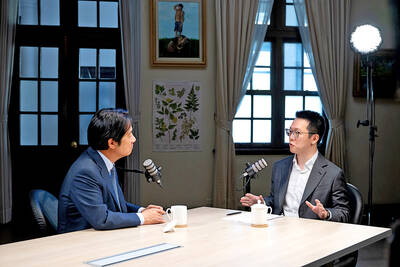
Taiwan should not rule out any energy source or abandon environmental sustainability in favor of ideology and short-term benefits, President William Lai (賴清德) said in an interview, calling for a “professional assessment” of whether nuclear power should be reintroduced into Taiwan’s energy mix. In an online interview with influencer Yu Ting-hao (游庭皓) that aired yesterday, Lai reiterated his position on nuclear power. SHIFT Lai’s remarks marked a shift from the Democratic Progressive Party’s (DPP’s) longstanding opposition to nuclear power. As premier from 2017 to 2019, Lai pushed for more gas-fired power capacity while sticking to the DPP’s nuclear free homeland ideology and rejected the


 RSS
RSS