


The Ministry of Economic Affairs said yesterday that it would prioritize easing restrictions to attract investors from China after eliminating the caps on China-bound investments today.
The ministry said it originally planned to ease restrictions on Taiwanese industries next month and relax restrictions on Chinese investment in Taiwan in September.
However, after discussing the matter with President Ma Ying-jeou (馬英九) on Monday, the ministry changed its plans as Ma sought to speed up the flow of capital across the strait by allowing Chinese capital into Taiwan.
In contrast to lifting restrictions on domestic companies investing in China, the ministry said allowing Chinese investors to enter the domestic market would require a lot of negotiations with other agencies and would take longer.
“Although there’s not much time, the ministry hopes to complete planning procedures by the end of next month,” Minister of Economic Affairs Yiin Chii-ming (尹啟銘) told reporters at his office yesterday evening.
“Basically the ministry is working toward lifting policy restrictions to encourage foreign investment in Taiwan,” Yiin said.
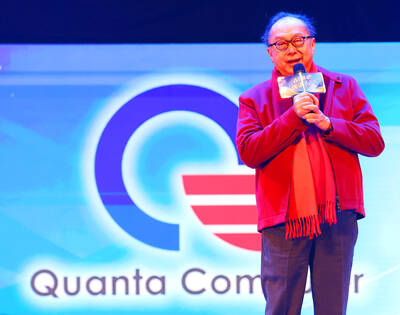
Quanta Computer Inc (廣達) chairman Barry Lam (林百里) is expected to share his views about the artificial intelligence (AI) industry’s prospects during his speech at the company’s 37th anniversary ceremony, as AI servers have become a new growth engine for the equipment manufacturing service provider. Lam’s speech is much anticipated, as Quanta has risen as one of the world’s major AI server suppliers. The company reported a 30 percent year-on-year growth in consolidated revenue to NT$1.41 trillion (US$43.35 billion) last year, thanks to fast-growing demand for servers, especially those with AI capabilities. The company told investors in November last year that
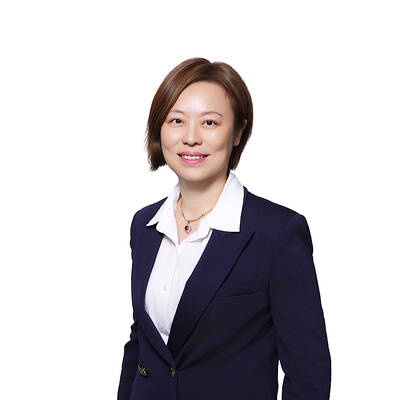
Intel Corp has named Tasha Chuang (莊蓓瑜) to lead Intel Taiwan in a bid to reinforce relations between the company and its Taiwanese partners. The appointment of Chuang as general manager for Intel Taiwan takes effect on Thursday, the firm said in a statement yesterday. Chuang is to lead her team in Taiwan to pursue product development and sales growth in an effort to reinforce the company’s ties with its partners and clients, Intel said. Chuang was previously in charge of managing Intel’s ties with leading Taiwanese PC brand Asustek Computer Inc (華碩), which included helping Asustek strengthen its global businesses, the company
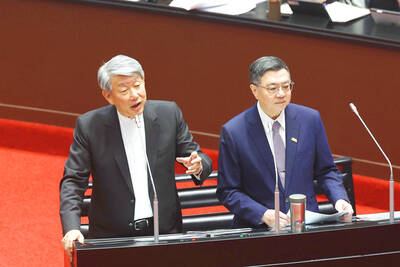
Taiwanese suppliers to Taiwan Semiconductor Manufacturing Co. (TSMC, 台積電) are expected to follow the contract chipmaker’s step to invest in the US, but their relocation may be seven to eight years away, Minister of Economic Affairs J.W. Kuo (郭智輝) said yesterday. When asked by opposition Chinese Nationalist Party (KMT) Legislator Niu Hsu-ting (牛煦庭) in the legislature about growing concerns that TSMC’s huge investments in the US will prompt its suppliers to follow suit, Kuo said based on the chipmaker’s current limited production volume, it is unlikely to lead its supply chain to go there for now. “Unless TSMC completes its planned six
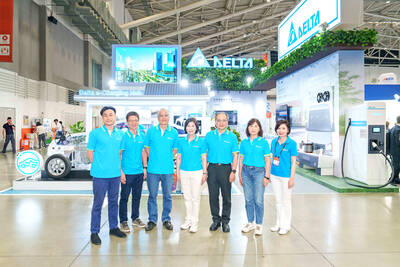
Power supply and electronic components maker Delta Electronics Inc (台達電) yesterday said it plans to ship its new 1 megawatt charging systems for electric trucks and buses in the first half of next year at the earliest. The new charging piles, which deliver up to 1 megawatt of charging power, are designed for heavy-duty electric vehicles, and support a maximum current of 1,500 amperes and output of 1,250 volts, Delta said in a news release. “If everything goes smoothly, we could begin shipping those new charging systems as early as in the first half of next year,” a company official said. The new


 RSS
RSS