


Taipei Times: Why should publishers join the federation to make their circulation transparent and how do they benefit?
Glenn Hansen: Well, you have external benefits and internal benefits. The internal benefits ... Everyone has goals they wish to accomplish.
And the use of a circulation audit helps the management determine that the staff have in fact accomplished all the goals that they have established for them, but have done so in an acceptable way.

PHOTO: VIVIAN LIANG, TAIPEI TIMES
So it’s used very much to get things organized inside the company. When you have no auditor, there is no interest in being organized. And when the auditor comes in and says I want to see this, this and this, everyone has to get much more organized. And it does help the publisher identify areas of inefficiency so that they can fix those areas and become more efficient.
But you wouldn’t do it for that reason only. That will also need to be the external benefit.
There is just so much at stake now in the media environment that the person responsible for the marketing budget in the company — typically we call them the chief marketing officer, or the CMO — wants some measurement on success.
Different media have different key performance indicators [KPIs] that allow them to measure how successfully their money was spent.
In print media, the first one should be that you got what you paid for.
If you think you [the advertisers] are buying 60,000 copies, you should have that independently verified that it is 60,000 copies and not 6,000 copies. So the first external benefit of the audit for the publisher is to satisfy the needs of the chief marketing officer for one of those key performance indicators.
So, as one requirement of the international federation, every ABC [Audit Bureaux of Circulations] must be not-for-profit and it must be tripartite — three parties: media owners, advertisers and media buyers. They are the members who own the organization. The reason that it’s done that way is so there is total transparency and the media buyers have just as much a voice in what their requirements are as the media owners.
TT: How do you ensure the accuracy of your data?
Hansen: You have to first start with the manufacture. How many newspapers or magazines were actually created. The only way you will ever know that is you have to go to the printing plant and you have to watch them print.
You can’t do that every issue, every day. It will be too expensive. You can periodically check. If it’s a daily newspaper, maybe once or twice a month, to check, unannounced. And with that done periodically at least you know they are being honest on those days.
For all the other days — that needs documentation from the press as to how many copies were produced and in the printing world, you need to know the capacity of the machine — how many copies could have actually been manufactured.
The second question is how are they distributed, whether that it is through the retail channel to the dealer network, through subscriptions, or through free bulk giveaways like in hotels or something like that. And then you have to count every copy that has been distributed.
Then the question is — in every category [dealer, retail sale, subscriptions, free], you want to make sure that the numbers are not being mixed up; that the copies in the paid subscription category are true and that the copies in the dealer category are true. So now you have to do certain audit tests to prove that.
So you get manufacture [and] distribution to verify the channel of distribution and then at the end the last step is the confirmation check, where you actually talk to people who are getting the product and interview them about whatever the publisher says is true and verify that it’s true.
TT: Has anybody ever challenged IFABC findings? How do you deal with it?
Hansen: Sure. The first type is we discover that the claim is not true. Whatever category we will be measuring — like the dealer situation I was saying before, through the confirmations, we find out that people aren’t really getting the magazine, or they are dead, or they don’t live there any more.
So in the audit, we are trained to do so many steps that someone on the publishing side can’t think of all the steps and doesn’t remember that when they do this, they have to do this too and they have to do this over here. And we find out these things are not matching, something is wrong and we dig and dig and dig and dig until we find out what it is.
And the other part will be we call people up and they tell us what we have been told is not true.
The next stage will be someone is unhappy with their boss. That happens occasionally, but not that often. So you have the auditor face the challenge.
The next one will be where the competition thinks the other newspaper in the market is lying. So they file a complaint. That normally comes about because the publisher hires somebody from the other company who now works for them and tells them all the secrets they know. In English, we say incestuous. Publishing is a very incestuous business, meaning you work here today, tomorrow you work at the competition and then you work at the next one, so everyone knows everyone’s secret after a very short period of time.
TT: What are you going to do?
Hansen: Well, we’ll have to send the complaint to the other publisher and say: ‘A says this about you, is it true?’ Then you have to go back to the advertisers and tell them it was wrong. Tell them what the correct numbers are.
So there will a formal complaint process, a formal decision will be made and if they repeat that mistake over and over again, there’s a willful neglect of following the rules. The board of publishers, advertisers, advertising agencies have to issue a stiffer penalty or decision on someone who, despite being told they are doing it wrong, continue to act that way.
That’s when the board, the publishers, advertisers and agencies become a kind of a tribunal where ABC brings in the newspaper or the magazine and presents to you, a group of their peers, that this is what they have done, we told them to stop and they did it again. Now you as the industry have to tell the publisher that you are not going to accept that type of behavior or that type of conduct and what the penalty is now going to be, because we are a membership organization and when you become a member of our organization, you agree to abide by the rules.
TT: How do you make sure the auditors are doing their job?
Hansen: I can only speak about BPA, I don’t know how things are done here. BPA has 445 people to do this, with offices in the Untied States and Canada, in the UK, the UAE [United Arab Emirates] and in China, both Beijing and Hong Kong.
There is an internal audit department that checks the work of the auditors. So every audit that’s done gets re-checked by the internal audit department. And if they found something, the auditor claims that they found something wrong, it gets checked twice.
And maybe every 10 years, sometimes less, eight to 10 years, we invite an outside company in to conduct a review to make sure that around the world it’s all done to the same standard. In the public accounting profession, it’s called the peer review. We borrow that idea.
And then you have the ultimate test, which is the publisher can appeal every audit that we do. They have the right to file an appeal to the tribunal of publishers, advertisers and agencies, where they will come in and present why they find our findings are not fair. So again it’s enough check and balance to make sure that things are going the way they should be.
TT: There are AC Nelson reports in the market. How do you recommend media buyers take advantage of these two reports?
Hansen: I believe very strongly that audits complement research. They work together. They are not competitive products. One supports the other.
The audit is the foundation for the house or the building. You have to have a good, deep foundation in order for the house to survive, whatever natural catastrophe or otherwise may occur. And on that you can build, which is your research.
TT: Do you think the government should play a role in the study of the basic structural elements of the print media, including the circulation, readership and financial resources?
Hansen: I am an American, so I don’t think the government should play a role. If the government is interested in raw consumption of materials, then there is something for them to do. But in terms of getting involved in the measurement of the distribution, no, I don’t think the government has a role to play.
If people are found to be cheating, then the government has a role to play; it is a criminal offense. But in terms of market statistics, I think it’s best to be left to the industry to police itself than for the government to get involved, particularly because the government normally doesn’t understand every single market sector.
So it becomes a situation where you have people who are not involved in the industry trying to regulate the industry. It normally doesn’t work.
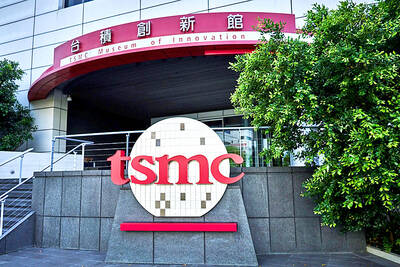
SEEKING CLARITY: Washington should not adopt measures that create uncertainties for ‘existing semiconductor investments,’ TSMC said referring to its US$165 billion in the US Taiwan Semiconductor Manufacturing Co (TSMC, 台積電) told the US that any future tariffs on Taiwanese semiconductors could reduce demand for chips and derail its pledge to increase its investment in Arizona. “New import restrictions could jeopardize current US leadership in the competitive technology industry and create uncertainties for many committed semiconductor capital projects in the US, including TSMC Arizona’s significant investment plan in Phoenix,” the chipmaker wrote in a letter to the US Department of Commerce. TSMC issued the warning in response to a solicitation for comments by the department on a possible tariff on semiconductor imports by US President Donald Trump’s

The government has launched a three-pronged strategy to attract local and international talent, aiming to position Taiwan as a new global hub following Nvidia Corp’s announcement that it has chosen Taipei as the site of its Taiwan headquarters. Nvidia cofounder and CEO Jensen Huang (黃仁勳) on Monday last week announced during his keynote speech at the Computex trade show in Taipei that the Nvidia Constellation, the company’s planned Taiwan headquarters, would be located in the Beitou-Shilin Technology Park (北投士林科技園區) in Taipei. Huang’s decision to establish a base in Taiwan is “primarily due to Taiwan’s talent pool and its strength in the semiconductor

An earnings report from semiconductor giant and artificial intelligence (AI) bellwether Nvidia Corp takes center stage for Wall Street this week, as stocks hit a speed bump of worries over US federal deficits driving up Treasury yields. US equities pulled back last week after a torrid rally, as investors turned their attention to tax and spending legislation poised to swell the US government’s US$36 trillion in debt. Long-dated US Treasury yields rose amid the fiscal worries, with the 30-year yield topping 5 percent and hitting its highest level since late 2023. Stocks were dealt another blow on Friday when US President Donald

UNCERTAINTY: Investors remain worried that trade negotiations with Washington could go poorly, given Trump’s inconsistency on tariffs in his second term, experts said The consumer confidence index this month fell for a ninth consecutive month to its lowest level in 13 months, as global trade uncertainties and tariff risks cloud Taiwan’s economic outlook, a survey released yesterday by National Central University found. The biggest decline came from the timing for stock investments, which plunged 11.82 points to 26.82, underscoring bleak investor confidence, it said. “Although the TAIEX reclaimed the 21,000-point mark after the US and China agreed to bury the hatchet for 90 days, investors remain worried that the situation would turn sour later,” said Dachrahn Wu (吳大任), director of the university’s Research Center for


 RSS
RSS