


Toyota Motor Corp, Japan’s largest automaker, introduced two minivans in the country to help stem a 2.4 percent drop in domestic sales this year.
The Alphard, revamped for the first time since its introduction in 2002, will be priced between ¥3 million (US$29,000) and ¥4.5 million, the company said in a release yesterday. The Vellfire will have the same price range.
The carmaker forecasts sales of 3,000 units a month for both models. Both models will compete with Honda Motor Co’s Elysion and Nissan Motor Co’s Elgrand.
Toyota needs to spur sales in Japan with new models because the market has one of the shortest model cycles of any country, analysts said. Including the revamped Crown sedan in February, the Toyota City, Japan-based company has introduced three models domestically so far this year.
The company plans to raise domestic sales by 0.6 percent to 1.6 million vehicles this year, it said in December. Toyota’s sales in Japan, which accounts for about 19 percent of the carmaker’s total sales, rose for the first time in five months last month.
Toyota last week forecast a drop in its net income for the first time in seven years as higher gasoline prices and an economic slowdown crimp demand in the US, its most profitable market. The company plans more cost cuts to help offset higher raw material prices, president Katsuaki Watanabe told reporters in Tokyo yesterday.
Toyota sold 114,675 vehicles last month, up 8.6 percent from a year earlier, according to the Japan Automobile Dealers Association. Sales of the Alphard have totaled 438,000 vehicles since May 2002.
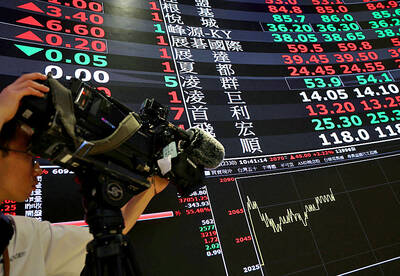
After several years flying high as Asia’s best Nvidia Corp proxy, Taiwan Semiconductor Manufacturing Co (TSMC, 台積電) is increasingly vying with other artificial intelligence (AI) stocks for investor attention. Stock traders are chasing a wider array of beneficiaries as mainstream usage of AI creates demand for hardware beyond the most-advanced chips TSMC makes for Nvidia. Subthemes from the deepening memory crunch to advances in robotics are also luring bids. At the same time, investment caps on single stocks are pushing funds to diversify, while retail investors long familiar with TSMC through its US depositary receipts are being offered a broader set of
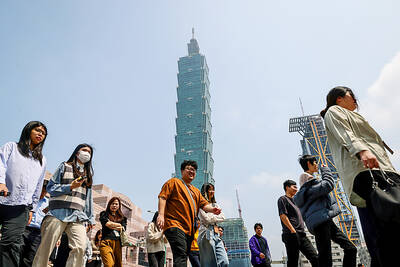
TECH RELIANCE: Growth is increasingly reflecting an unequal K-shaped distribution, where technology sectors outperform and other industries struggle, an expert said Standard Chartered Bank has significantly raised its forecast for Taiwan’s economic growth to 9.5 percent this year, up from 7.6 percent previously, citing surging artificial intelligence (AI) demand driving exports, semiconductor production and investment. The upgrade reflects a sustained AI supercycle that continues to fuel demand for advanced chips and technology infrastructure, which form the backbone of Taiwan’s exports, the bank said in a report this week. “We raise our 2026 growth forecast to reflect a much stronger-than-expected first-quarter GDP figure,” Standard Chartered senior economist for greater China and Asia Tommy Wu (胡東安) said in the report. Driven largely by a 35.3 percent
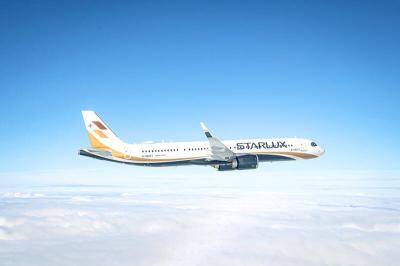
Two of Taiwan’s international carriers, Starlux Airlines Co (星宇航空) and EVA Airways Corp (長榮航空), have retained the five-star airline rating awarded by international airline review organization Skytrax. Starlux was awarded the distinction for a second consecutive year, while EVA Air received it for the 11th straight year, Skytrax said in statements released yesterday and on Thursday last week, respectively. The five-star rating is considered one of the airline industry's highest honors and is awarded following professional audits of airline product and frontline service standards, Skytrax said. The ratings are based on in-depth assessments using unified global quality standards rather than customer review scores
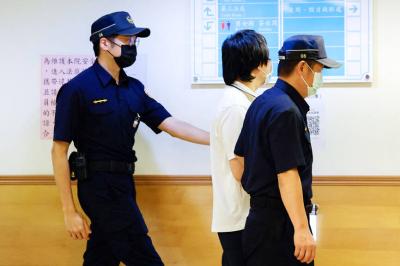
Tokyo Electron's Taiwan unit today said in a written response that it respects the judicial process, takes the court ruling seriously and would not appeal in the Taiwan Semiconductor Manufacturing Co (TSMC, 台積電) trade secrets case. Last month, a court fined the Taiwan unit of Japan's Tokyo Electron NT$150 million (US$4.74 million) in a case involving trade secrets related to TSMC's sensitive chip technology.


 RSS
RSS