


East Asian nations must act promptly to ease the burden of mounting food and fuel prices on the region's poor, the World Bank said yesterday. Inflation poses a greater challenge to the region's economies than the current financial turmoil, it said.
In its half-yearly update on the region's outlook, the bank said growth in developing East Asian economies could slip by 1 to 2 percentage points this year to 8.5 percent as the US credit crisis unfolds, damping demand for exports.
But it warned that food and fuel prices that have soared in recent years are a more pressing problem for governments to tackle. Since 2003, oil and many other commodity prices have more than tripled and doubled respectively.
"While the subprime crisis will have its impacts -- possibly on some countries more than others -- the more immediate concern is that in virtually every East Asian country, inflation is climbing to uncomfortable levels," Jim Adams, vice president of the bank's East Asia and the Pacific region, was quoted as saying in a release.
The urban poor and landless rural workers who devote between a third and two thirds of their expenditures on food are seeing their real incomes decline substantially, the report said.
Similarly, "while higher fuel prices hurt everyone, the poor are hurt disproportionately," it said.
The region could suffer an aggregate income loss of about 1 percent of GDP this year from the effect of higher food prices and additional increases in oil and metals prices, the bank said.
The report noted that some economies that are net exporters of commodities are enjoying gains in overall national income and that higher food prices do help some farmers -- although small farmers are usually hurt because they tend to be net consumers of food.
The bank warned that controlling prices to temporarily curb inflation distorts market signals and encourages black markets over the long term.
East Asian governments have dealt with such challenges in the past with a variety of solutions that include targeted subsidies, conditional cash handouts or school lunch programs, the report said.
"These programs now need to be considered again and reintroduced before the problem becomes too acute," it said.
Growth of 8.5 percent would be the lowest for developing East Asia since 2002, and down from 10.2 percent last year.
"East Asian economies will face testing times in 2008," said the bank, which based its forecast on expected US growth of between 0.5 percent and 1.4 percent this year, down from 2.2 percent last year, and to be followed by a recovery in the 1 percent to 2 percent range next year.
China's growth is expected to dip to 8.6 percent after five years at rates of above 10 percent, mainly due to lower export growth.
In Indonesia, Malaysia, Thailand and the Philippines, economic growth is expected to ease more modestly to the 5 percent to 6 percent range.
Growth in the economies of Hong Kong, Singapore, Taiwan and South Korea is forecast to slow slightly to around 4.6 percent, as a group.
Still, despite the US credit crisis, the region's economies are likely to stay buoyant as investments in sound macroeconomic policy and structural reforms over the past decade have brought greater resilience and flexibility, the bank said.
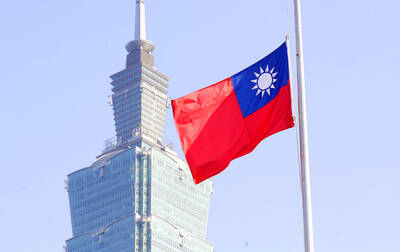
ELECTRONICS BOOST: A predicted surge in exports would likely be driven by ICT products, exports of which have soared 84.7 percent from a year earlier, DBS said DBS Bank Ltd (星展銀行) yesterday raised its GDP growth forecast for Taiwan this year to 4 percent from 3 percent, citing robust demand for artificial intelligence (AI)-related exports and accelerated shipment activity, which are expected to offset potential headwinds from US tariffs. “Our GDP growth forecast for 2025 is revised up to 4 percent from 3 percent to reflect front-loaded exports and strong AI demand,” Singapore-based DBS senior economist Ma Tieying (馬鐵英) said in an online briefing. Taiwan’s second-quarter performance beat expectations, with GDP growth likely surpassing 5 percent, driven by a 34.1 percent year-on-year increase in exports, Ma said, citing government
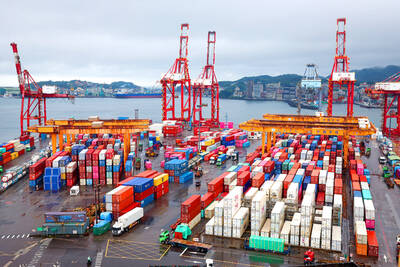
‘REMARKABLE SHOWING’: The economy likely grew 5 percent in the first half of the year, although it would likely taper off significantly, TIER economist Gordon Sun said The Taiwan Institute of Economic Research (TIER) yesterday raised Taiwan’s GDP growth forecast for this year to 3.02 percent, citing robust export-driven expansion in the first half that is likely to give way to a notable slowdown later in the year as the front-loading of global shipments fades. The revised projection marks an upward adjustment of 0.11 percentage points from April’s estimate, driven by a surge in exports and corporate inventory buildup ahead of possible US tariff hikes, TIER economist Gordon Sun (孫明德) told a news conference in Taipei. Taiwan’s economy likely grew more than 5 percent in the first six months
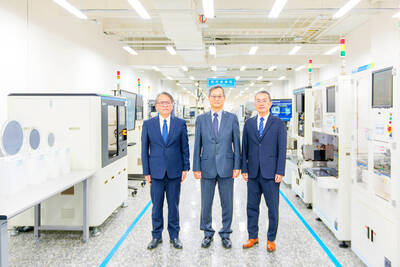
SMART MANUFACTURING: The company aims to have its production close to the market end, but attracting investment is still a challenge, the firm’s president said Delta Electronics Inc (台達電) yesterday said its long-term global production plan would stay unchanged amid geopolitical and tariff policy uncertainties, citing its diversified global deployment. With operations in Taiwan, Thailand, China, India, Europe and the US, Delta follows a “produce at the market end” strategy and bases its production on customer demand, with major site plans unchanged, Delta president Simon Chang (張訓海) said on the sidelines of a company event yesterday. Thailand would remain Delta’s second headquarters, as stated in its first-quarter earnings conference, with its plant there adopting a full smart manufacturing system, Chang said. Thailand is the firm’s second-largest overseas

SUPPLY RESILIENCE: The extra expense would be worth it, as the US firm is diversifying chip sourcing to avert disruptions similar to the one during the pandemic, the CEO said Advanced Micro Devices Inc (AMD) chief executive officer Lisa Su (蘇姿丰) on Wednesday said that the chips her company gets from supplier Taiwan Semiconductor Manufacturing Co (TSMC, 台積電) would cost more when they are produced in TSMC’s Arizona facilities. Compared with similar parts from factories in Taiwan, the US chips would be “more than 5 percent, but less than 20 percent” in terms of higher costs, she said at an artificial intelligence (AI) event in Washington. AMD expects its first chips from TSMC’s Arizona facilities by the end of the year, Su said. The extra expense is worth it, because the company is


 RSS
RSS