


The Taipei Computer Association (TCA, 台北市電腦公會) yesterday presented a petition to presidential candidates Frank Hsieh (謝長廷) of the Democratic Progressive Party (DPP) and Ma Ying-jeou (
TCA chairman Wang Jen-tang (
Wang said the TCA could influence 1 million votes in next month's presidential election through its member companies and associated manufacturers, their employees and workers' families.
After Wang's statement, both camps appointed staff to look into the proposal.
Wang said limitations on foreign labor are forcing businesses, including high value-added industries such as pharmaceutical manufacturing, to move to China.
With operational costs on the rise in China, the time is ripe for a new export-processing zone, Wang said.
The TCA has calculated that the ration of foreign labor must be increased to 60 percent to persuade Taiwanese businesses to return from China. This leaves 40 percent of the employment opportunities to locals, which would be sufficient to boost the economy significantly once companies begin returning.
Chen said that the implementation of the Labor Contract Law (勞動合同法) in China raised operational costs there considerably. Workers wages paid by Walton Advanced Engineering (華東) rose from 750 yuan (US$105) to 850 yuan, he said, not including an additional 8 percent property purchase bonus.
With factors such as taxation and foreign exchange, businesses face up to a 30 percent rise in costs, the TCA said.
Meanwhile, many industrial facilities stand empty in Taiwan. If foreign labor policies are relaxed or workers wages lowered, businesses could return, it said.
Wang said that an international business' headquarters is mobile, but Taiwan must beat out competition from Singapore, Malaysia and Vietnam to win them. The TCA said the government should offer tax incentives, adding that infrastructure and a time line for opening the three direct links with China are also essential.
Chen Yi-min (
At the same time, lowering wages for foreign workers could violate the International Labor Code, Chen Yi-min said.
Chen Yi-min also said that lowered wages for foreign workers could cause a backlash through concern over competition.
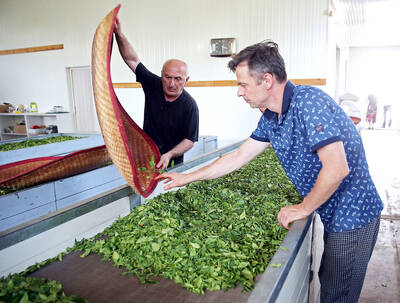
When Lika Megreladze was a child, life in her native western Georgian region of Guria revolved around tea. Her mother worked for decades as a scientist at the Soviet Union’s Institute of Tea and Subtropical Crops in the village of Anaseuli, Georgia, perfecting cultivation methods for a Georgian tea industry that supplied the bulk of the vast communist state’s brews. “When I was a child, this was only my mum’s workplace. Only later I realized that it was something big,” she said. Now, the institute lies abandoned. Yellowed papers are strewn around its decaying corridors, and a statue of Soviet founder Vladimir Lenin
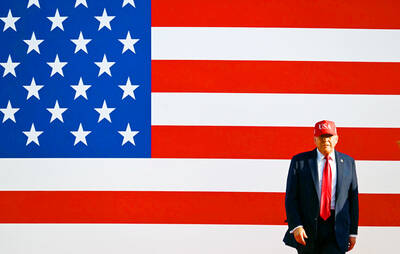
UNIFYING OPPOSITION: Numerous companies have registered complaints over the potential levies, bringing together rival automakers in voicing their reservations US President Donald Trump is readying plans for industry-specific tariffs to kick in alongside his country-by-country duties in two weeks, ramping up his push to reshape the US’ standing in the global trading system by penalizing purchases from abroad. Administration officials could release details of Trump’s planned 50 percent duty on copper in the days before they are set to take effect on Friday next week, a person familiar with the matter said. That is the same date Trump’s “reciprocal” levies on products from more than 100 nations are slated to begin. Trump on Tuesday said that he is likely to impose tariffs
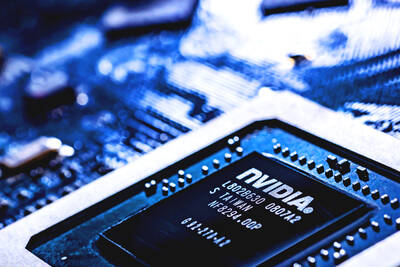
HELPING HAND: Approving the sale of H20s could give China the edge it needs to capture market share and become the global standard, a US representative said The US President Donald Trump administration’s decision allowing Nvidia Corp to resume shipments of its H20 artificial intelligence (AI) chips to China risks bolstering Beijing’s military capabilities and expanding its capacity to compete with the US, the head of the US House Select Committee on Strategic Competition Between the United States and the Chinese Communist Party said. “The H20, which is a cost-effective and powerful AI inference chip, far surpasses China’s indigenous capability and would therefore provide a substantial increase to China’s AI development,” committee chairman John Moolenaar, a Michigan Republican, said on Friday in a letter to US Secretary of
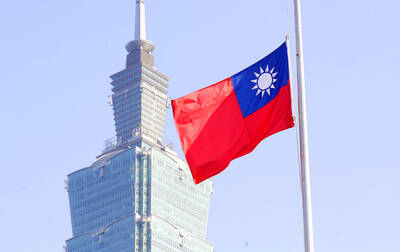
ELECTRONICS BOOST: A predicted surge in exports would likely be driven by ICT products, exports of which have soared 84.7 percent from a year earlier, DBS said DBS Bank Ltd (星展銀行) yesterday raised its GDP growth forecast for Taiwan this year to 4 percent from 3 percent, citing robust demand for artificial intelligence (AI)-related exports and accelerated shipment activity, which are expected to offset potential headwinds from US tariffs. “Our GDP growth forecast for 2025 is revised up to 4 percent from 3 percent to reflect front-loaded exports and strong AI demand,” Singapore-based DBS senior economist Ma Tieying (馬鐵英) said in an online briefing. Taiwan’s second-quarter performance beat expectations, with GDP growth likely surpassing 5 percent, driven by a 34.1 percent year-on-year increase in exports, Ma said, citing government


 RSS
RSS