


China eased new Internet controls that limited video-sharing to state companies, saying yesterday that private companies already operating in the fast-growing industry are allowed to continue.
However, any new competitors must comply with the rules, which took effect last Thursday, the government said.
The rules, announced abruptly in December, appeared to be aimed at extending China's pervasive Web censorship ahead of the Beijing Olympics and prevent unflattering videos from popping up. But industry analysts said regulators would be reluctant to enforce them strictly and possibly damage a promising industry.
"Companies that began operation legally before the regulation was issued and have not violated laws or regulations can be licensed and continue operating," said a statement issued by the two agencies that imposed the rules, the Ministry of Information Industry and the State Administration of Radio Film and Television.
Video-sharing services that were launched after the rules were issued "must comply," the statement said.
China's video-sharing sites are all privately owned, and the rules could have forced some out of business. Industry analysts had expected companies to try to comply by forming partnerships with state-owned broadcasters or newspapers. No such deals have been announced.
Online video has exploded in popularity in China, which has 210 million people online and says it expects to surpass the US this year as the country with the biggest population of Internet users.
Estimates of the number of video-sharing sites in China runs into the hundreds. The most popular, such as Tudou.com (
That rapid growth appears to have caught regulators by surprise and prompted them to rush new rules into place.
A key question in the industry has been how regulators will treat amateur videos. The statement yesterday gave no indication whether they would still be allowed.
Such videos have made stars of some of their amateur creators, but the phenomenon is at odds with the government's insistence that all media be state-owned.
Online video revenues, mostly from advertising, are modest but are growing nearly 100 percent a year, and investors are pouring money into sites.
The government-sanctioned Internet Society of China is forecasting total revenues this year of 160 million yuan (US$22 million) this year -- nearly double last year's level.
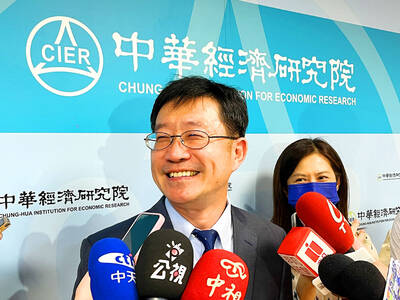
WEAKER ACTIVITY: The sharpest deterioration was seen in the electronics and optical components sector, with the production index falling 13.2 points to 44.5 Taiwan’s manufacturing sector last month contracted for a second consecutive month, with the purchasing managers’ index (PMI) slipping to 48, reflecting ongoing caution over trade uncertainties, the Chung-Hua Institution for Economic Research (CIER, 中華經濟研究院) said yesterday. The decline reflects growing caution among companies amid uncertainty surrounding US tariffs, semiconductor duties and automotive import levies, and it is also likely linked to fading front-loading activity, CIER president Lien Hsien-ming (連賢明) said. “Some clients have started shifting orders to Southeast Asian countries where tariff regimes are already clear,” Lien told a news conference. Firms across the supply chain are also lowering stock levels to mitigate
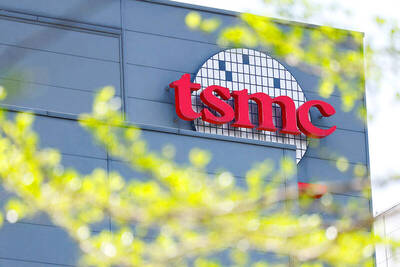
Six Taiwanese companies, including contract chipmaker Taiwan Semiconductor Manufacturing Co (TSMC, 台積電), made the 2025 Fortune Global 500 list of the world’s largest firms by revenue. In a report published by New York-based Fortune magazine on Tuesday, Hon Hai Precision Industry Co (鴻海精密), also known as Foxconn Technology Group (富士康科技集團), ranked highest among Taiwanese firms, placing 28th with revenue of US$213.69 billion. Up 60 spots from last year, TSMC rose to No. 126 with US$90.16 billion in revenue, followed by Quanta Computer Inc (廣達) at 348th, Pegatron Corp (和碩) at 461st, CPC Corp, Taiwan (台灣中油) at 494th and Wistron Corp (緯創) at
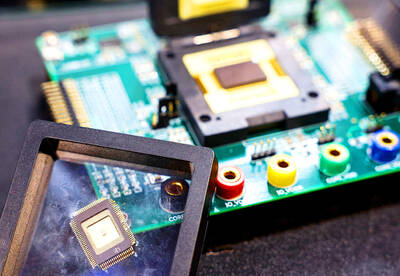
NEGOTIATIONS: Semiconductors play an outsized role in Taiwan’s industrial and economic development and are a major driver of the Taiwan-US trade imbalance With US President Donald Trump threatening to impose tariffs on semiconductors, Taiwan is expected to face a significant challenge, as information and communications technology (ICT) products account for more than 70 percent of its exports to the US, Chung-Hua Institution for Economic Research (CIER, 中華經濟研究院) president Lien Hsien-ming (連賢明) said on Friday. Compared with other countries, semiconductors play a disproportionately large role in Taiwan’s industrial and economic development, Lien said. As the sixth-largest contributor to the US trade deficit, Taiwan recorded a US$73.9 billion trade surplus with the US last year — up from US$47.8 billion in 2023 — driven by strong
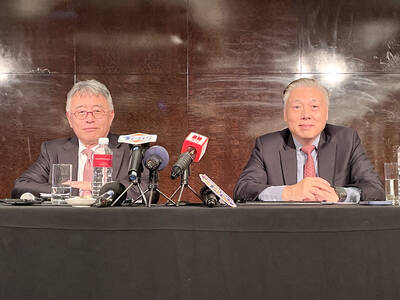
ASE Technology Holding Co (ASE, 日月光投控), the world’s biggest chip assembly and testing service provider, yesterday said it would boost equipment capital expenditure by up to 16 percent for this year to cope with strong customer demand for artificial intelligence (AI) applications. Aside from AI, a growing demand for semiconductors used in the automotive and industrial sectors is to drive ASE’s capacity next year, the Kaohsiung-based company said. “We do see the disparity between AI and other general sectors, and that pretty much aligns the scenario in the first half of this year,” ASE chief operating officer Tien Wu (吳田玉) told an


 RSS
RSS