


ITRI releases energy patents
The Industrial Technology Research Institute (ITRI) has decided to release 233 patents in the fields of solar energy conversion, energy storage and energy saving solutions to local manufacturers, officials at the Hsinchu-based institute disclosed yesterday.
The majority of the patents released cover solar power generation technology, including photovoltaic conversion, solar thermal conversion, multi-crystalline silicon solar cells, non-crystalline silicon solar cells and multi-potent solar cells, according to the officials.
LG, Chunghwa end disputes
LG.Philips LCD Co, the world's second-largest maker of liquid-crystal displays, and Chunghwa Picture Tubes Ltd (中華映管) agreed to end patent disputes over technology for making LCDs.
The companies will share past and future patents related to LCD technology, Taoyuan, Taiwan-based Chunghwa Picture said in a filing to the Taiwan Stock Exchange yesterday. The agreement, signed on Wednesday, settles all patent-related litigation between the two companies, Chunghwa said, without disclosing financial terms.
"This deal may improve each other's competitiveness in the industry," Chunghwa, Taiwan's third-biggest maker of LCDs, said in the filing. The agreement will "further the technology development of the flat-panel display industry."
SanDisk opens Shanghai plant
SanDisk Corp, the world's biggest maker of flash memory cards, opened a US$170 million assembly plant in Shanghai yesterday, the company's first factory in China.
The plant will assemble and test flash memory products designed for use in mobile phones and other consumer electronics, Milpitas, California-based SanDisk said in an e-mailed statement. The company said in December it would spend about US$170 million on the Shanghai plant, budgeting about US$100 million this year.
SanDisk's new plant will bring the company closer to makers of handsets, digital cameras, and other consumer electronics that use memory cards to store data.
Housing loans at 18-month low
Taiwan's top five banks posted an 18-month low in new housing loans last month, according to central bank figures released on Wednesday night.
The largest five banks issued a total of NT$35.07 billion (US$1.07 billion) in new mortgage loans last month, the third successive monthly decline and the lowest since the NT$22.2 billion of loans made in February last year, a report from the central bank shows. February last year had fewer business days because of Lunar New Year celebrations.
Total loans, which includes business and consumer loans, declined to NT$617.5 billion last month, from NT$666 billion in July, according to the report.
The central bank report tracked new loans issued by Bank of Taiwan (臺灣銀行), Taiwan Cooperative Bank (合作金庫銀行), First Commercial Bank (第一銀行), Hua Nan Commercial Bank (華南銀行) and Chang Hwa Commercial Bank (彰化銀行).
Money supply rises 4.25 percent
The central bank said on Wednesday that the nation's M2 money supply rose 4.25 percent last month from a year earlier after expanding 4.65 percent year-on-year in the previous month. M2 is the broadest measure of money supply.
M1A, which tracks net currency in circulation plus checking accounts and passbook deposits, expanded 7.26 percent last month from a year ago, the central bank said in a statement.
M1B money supply, which excludes time deposits and foreign-currency deposits included in M2, grew 8.6 percent year-on-year last month, the bank said.
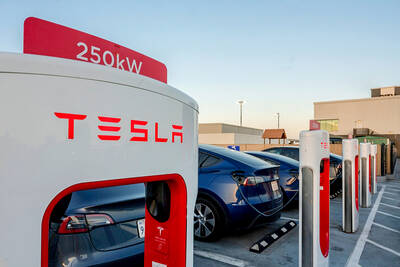
NEW IMPORTS: Car dealer PG Union Corp said it would consider introducing US-made models such as the Jeep Grand Cherokee and Stellantis’ RAM 1500 to Taiwan Tesla Taiwan yesterday said that it does not plan to cut its car prices in the wake of Washington and Taipei signing the Agreement on Reciprocal Trade on Thursday to eliminate tariffs on US-made cars. On the other hand, Mercedes-Benz Taiwan said it is planning to lower the price of its five models imported from the US after the zero tariff comes into effect. Tesla in a statement said it has no plan to adjust the prices of the US-made Model 3, Model S and Model X as tariffs are not the only factor the automaker uses to determine pricing policies. Tesla said

OpenAI has warned US lawmakers that its Chinese rival DeepSeek (深度求索) is using unfair and increasingly sophisticated methods to extract results from leading US artificial intelligence (AI) models to train the next generation of its breakthrough R1 chatbot, a memo reviewed by Bloomberg News showed. In the memo, sent on Thursday to the US House of Representatives Select Committee on China, OpenAI said that DeepSeek had used so-called distillation techniques as part of “ongoing efforts to free-ride on the capabilities developed by OpenAI and other US frontier labs.” The company said it had detected “new, obfuscated methods” designed to evade OpenAI’s defenses
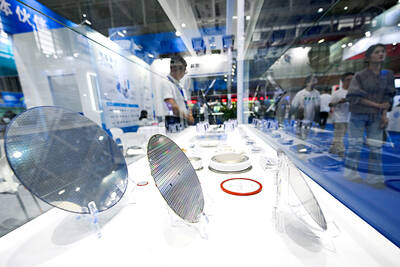
China’s top chipmaker has warned that breakaway spending on artificial intelligence (AI) chips is bringing forward years of future demand, raising the risk that some data centers could sit idle. “Companies would love to build 10 years’ worth of data center capacity within one or two years,” Semiconductor Manufacturing International Corp (SMIC, 中芯) cochief executive officer Zhao Haijun (趙海軍) said yesterday on a call with analysts. “As for what exactly these data centers will do, that hasn’t been fully thought through.” Moody’s Ratings projects that AI-related infrastructure investment would exceed US$3 trillion over the next five years, as developers pour eye-watering sums
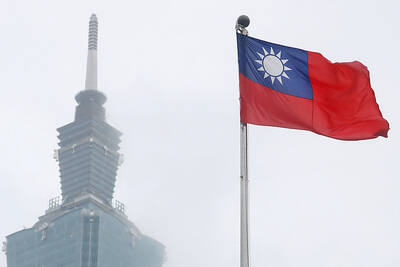
Bank of America Corp nearly doubled its forecast for the nation’s economic growth this year, adding to a slew of upgrades even after a rip-roaring last year propelled by demand for artificial intelligence (AI). The firm lifted its projection to 8 percent from 4.5 percent on “relentless global demand” for the hardware that Taiwanese companies make, according to a note dated yesterday by analysts including Xiaoqing Pi (皮曉青). Taiwan’s GDP expanded 8.63 percent last year, the fastest pace since 2010. The increase “reflects our sustained optimism over Taiwan’s technology driven expansion and is reinforced by several recent developments,” including a more stable currency,


 RSS
RSS